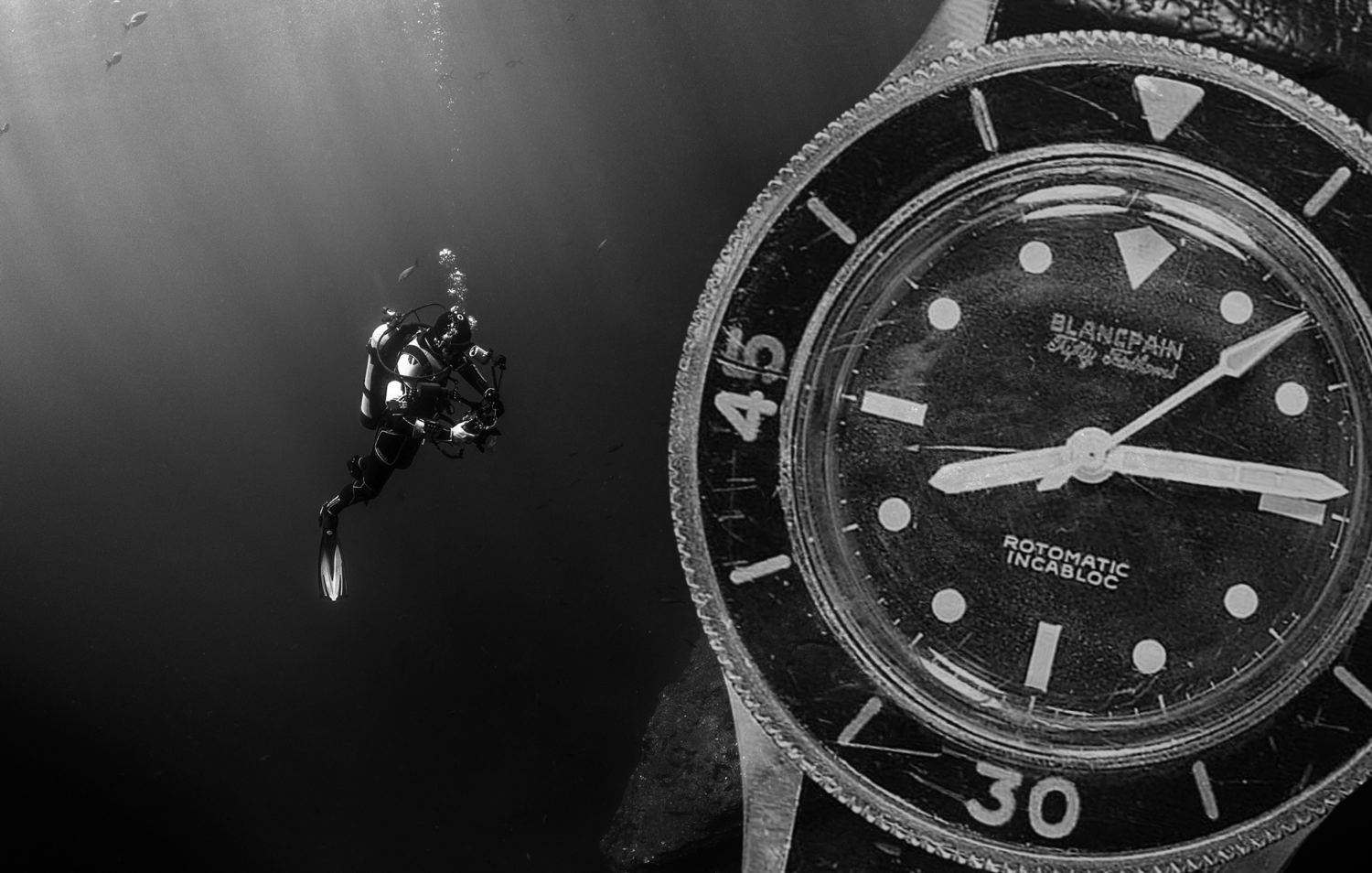
Dive Watch History: Rugged Utility & Timeless Style | VELOCE
Dive watches are more than just timekeepers; they're rugged symbols of adventure, born from necessity in the early 20th century. From the first water-resistant cases to iconic models like the Submariner, these watches embody a spirit of purpose and durability that still resonates with adventurers today.
 By Nick
August 5, 2025 4 min read 0 views
IN THIS ARTICLE
There are few objects in the world of menswear that so perfectly blend rugged utility with timeless style as the dive watch. Strapped to the wrist, it speaks of capability, of a readiness for adventure that transcends the day-to-day. But this now-iconic timepiece wasn't conceived in a design studio as a fashion accessory; it was forged in the crucible of necessity, born from the urgent need for a reliable, life-preserving tool for those who ventured beneath the waves. Its story is one of innovation, military daring, and an enduring spirit that remains as relevant today as it was 70 years ago.
Taming the Tides: The Dawn of Water Resistance
Long before the advent of SCUBA, the challenge of keeping water out of a delicate watch movement was a primary concern for watchmakers. The first great leap forward came not from a diver, but from a marketing genius. In 1926, Rolex founder Hans Wilsdorf developed the revolutionary Oyster case, a hermetically sealed enclosure with a screw-down crown and caseback. To prove its efficacy, he famously equipped swimmer Mercedes Gleitze with one for her grueling 10-hour swim across the English Channel. The watch emerged in perfect working order, and modern water resistance was born.
“The Oyster case was a monumental step, but it was a solution for keeping a watch safe from splashes and swimming, not the crushing pressures of the deep sea.”
The next major innovation came in 1932 with the Omega Marine, considered by many to be the first watch specifically designed and tested for diving. Its clever rectangular "double case" design allowed it to be pressure-tested to a depth of 73 meters. These early pioneers laid the crucial groundwork, proving that a watch could indeed conquer the aquatic realm.
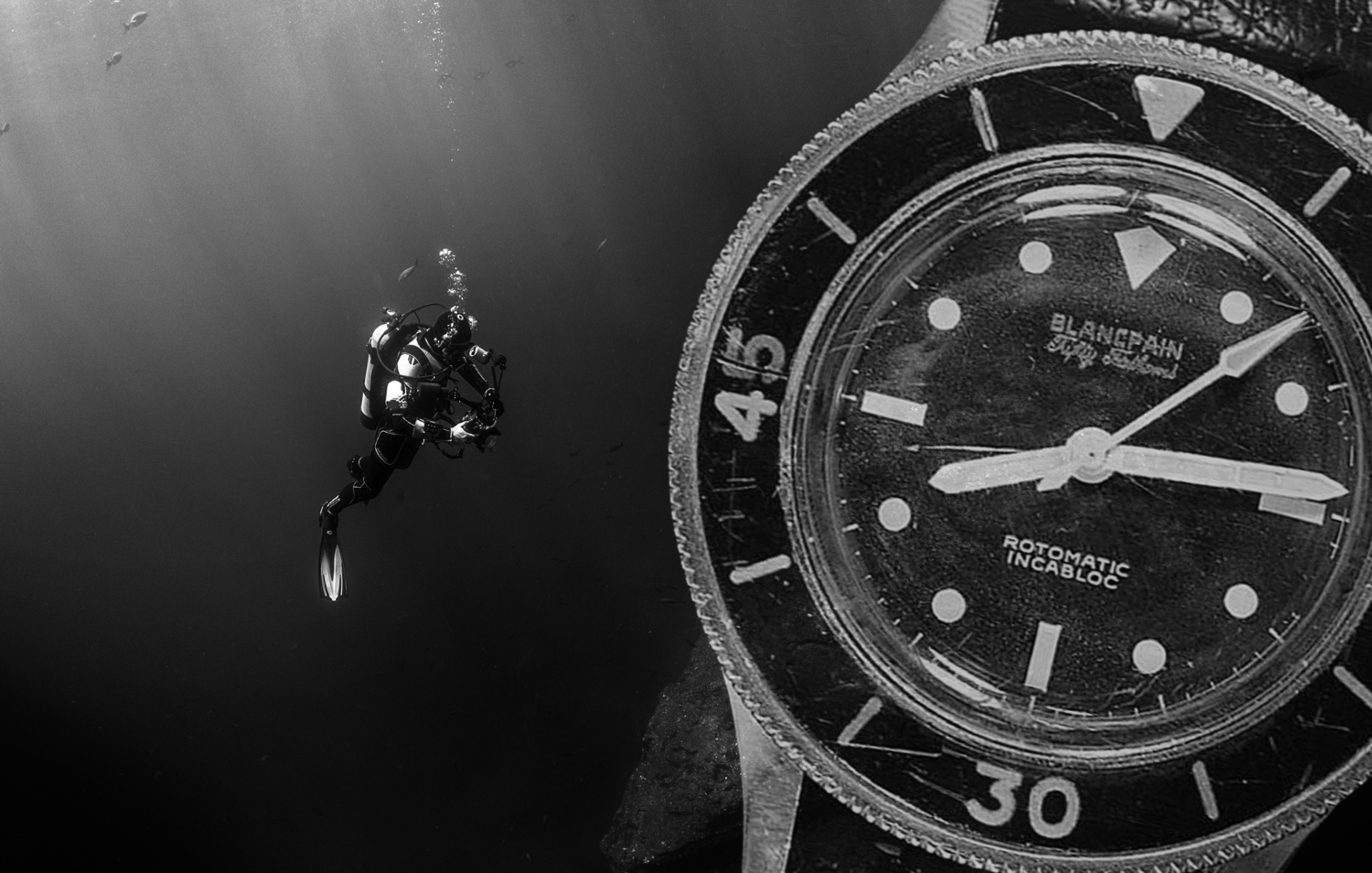
1953: The Golden Year of the Diver
The dive watch as we know it today truly came into its own in the post-war boom of the 1950s. Jacques Cousteau’s co-invention of the Aqua-Lung democratized underwater exploration, and with it came the demand for a purpose-built wrist-mounted instrument to track bottom time—a critical element for a diver’s survival.
The year 1953 proved to be the watershed moment, with two legendary models emerging that would codify the genre forever.
Blancpain Fifty Fathoms
Developed at the request of the elite French combat diving corps, the Nageurs de combat, the Blancpain Fifty Fathoms was a tool from the ground up. Captain Robert "Bob" Maloubier, a leader of the unit, laid out a set of non-negotiable requirements. The resulting watch, named for the maximum depth its creators believed a diver could withstand (approx. 91 meters), established the essential template for all future dive watches:
- A unidirectional rotating bezel: This allowed divers to set a marker for their dive time and know at a glance how long they’d been submerged. Making it unidirectional was a crucial safety feature—an accidental knock could only shorten the perceived dive time, never extend it.
- A high-contrast dial: Large, luminous markers and hands against a black dial ensured maximum legibility in murky, low-light conditions.
- An automatic movement: This eliminated the daily need to unscrew the crown for winding, thus preserving the integrity of the water-resistant seals.
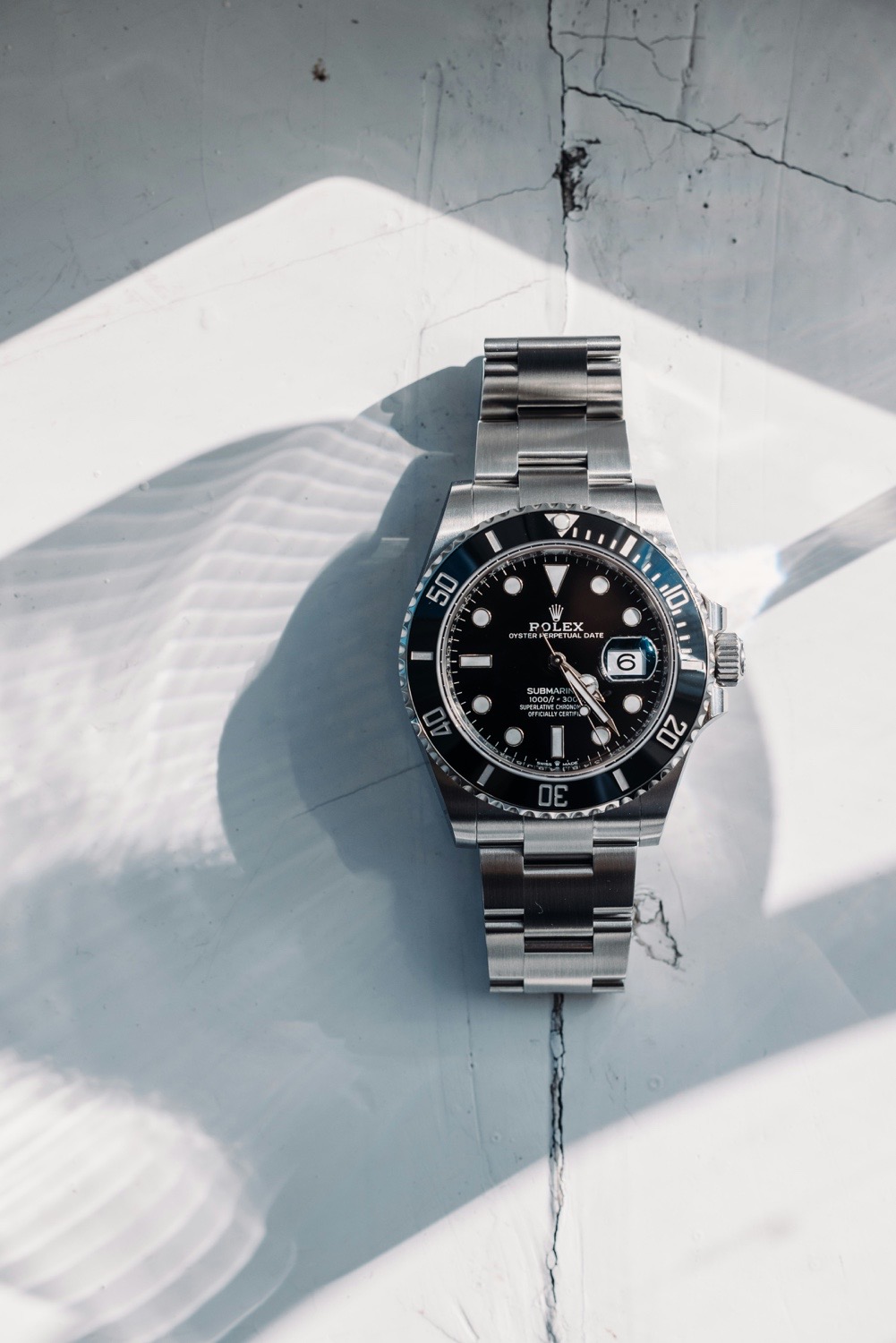
Released to the public shortly after the Fifty Fathoms, the Rolex Submariner brought the brand's legendary robustness to the deep. Building on the legacy of the Oyster case, the Submariner offered an initial depth rating of 100 meters, which was quickly improved upon. Its rugged construction, clean design, and Rolex’s formidable marketing power—including appearances on the wrist of James Bond—cemented its place in horological history. It became the benchmark against which all other dive watches would be measured.
An Enduring Symbol of Capability
In an age of digital dive computers, the mechanical dive watch is, for most, an anachronism. So why does it endure? Why does this over-engineered tool, built for a world most of us will never visit, remain one of the most popular watch categories on the planet?
The answer lies in what it represents. A dive watch is a masterpiece of purpose-built design. Every element, from the ratcheting bezel to the robust case and glowing lume, serves a clear, life-saving function. It is a tangible connection to a legacy of exploration and adventure. Even if the deepest you’ll go is the local swimming pool, wearing one imparts a sense of confidence and capability. It is a quiet statement that you appreciate things that are built to last, things that are designed to perform under pressure—a philosophy that is as valuable in the boardroom as it is 100 meters beneath the surface.
Slap it on a wrist over a business shirt or a worn flannel, and the message is the same. It’s more than a watch; it’s a piece of history, a tool of survival, and an icon of enduring, functional design.
GALLERY
WRITTEN BY
Nick
I originally started VELOCE to put my skills to work, hone my app design and web development practices, and dive deeper into the world of horology. I wanted to learn more about the watches, the brands, and the incredible people behind them - the creators, the designers, and the collectors. I love discovering new timepieces and sharing their stories with the world. VELOCE is my ultimate passion project and hobby, the creative space I head to after my full-time job to build something I truly care about.