The Journal By Nick·July 18, 2025· 7 min read
The Rolex That Survived the Deepest Place on Earth
By Nick·July 18, 2025· 7 min readDiscover the incredible true story of the experimental Rolex Deep Sea Special, which survived the crushing pressures of the Mariana Trench, forever shaping Rolex's legendary dive watch legacy.
0 views
IN THIS ARTICLE
Seven Miles Down: How the Rolex Deep Sea Special Conquered the Mariana Trench
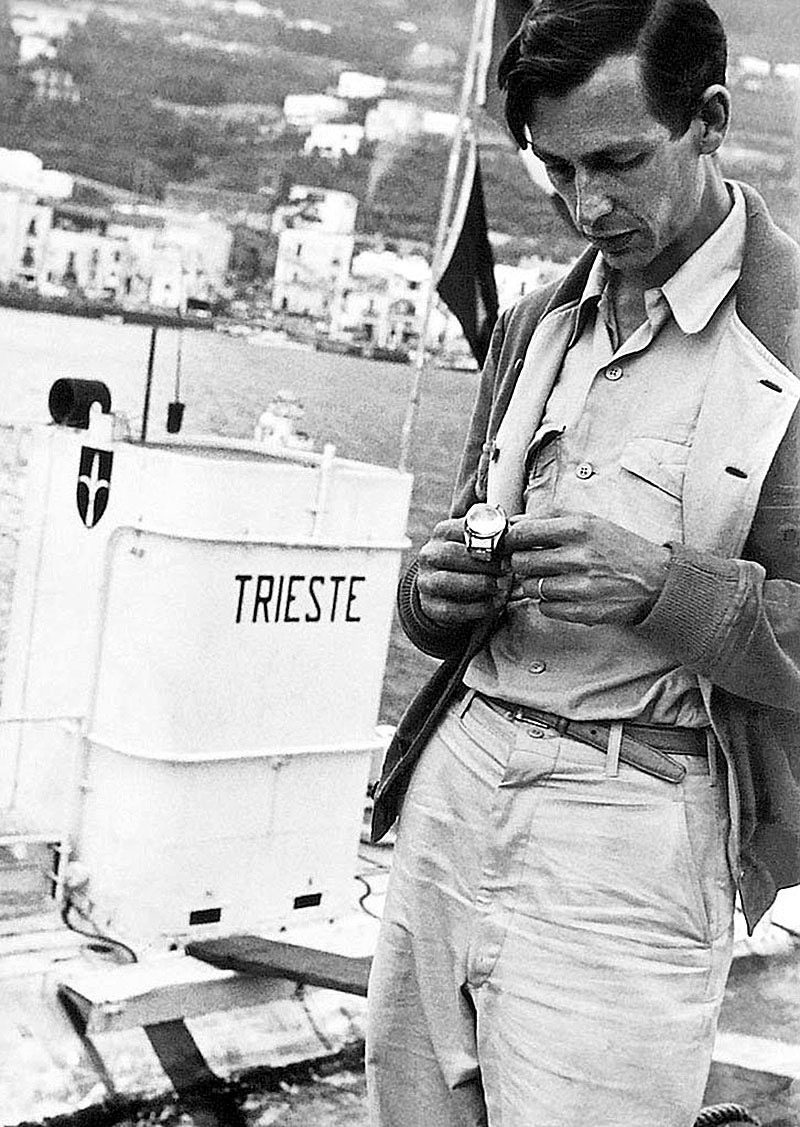
In 1960, an experimental Rolex watch did something no other timepiece had ever done—it traveled to the absolute deepest known point on Planet Earth, a feat that still thrills many a dialhead today. Attached to the exterior of the bathyscaphe Trieste, the Rolex Deep Sea Special survived a descent into the Challenger Deep, a staggering 35,800 feet (10,916 meters) down into the Mariana Trench. To put that in perspective, that’s roughly the height of Mount Everest, flipped entirely upside down, and buried under an ocean of freezing water.
The craziest part? The watch wasn’t safely tucked away inside the pressurized cabin with oceanographers Jacques Piccard and Don Walsh. It was strapped directly to the exterior hull, entirely exposed to the ungodly forces of the deep. Against all odds, the watch surfaced completely intact and still ticking perfectly. That single moment became the ultimate flex of mechanical engineering. It wasn't about building a luxury status symbol; it was about proving a point. The mechanical data gathered from this monstrous prototype laid the groundwork for Rolex's legendary dive watches for decades to come.
Table of Contents
Quick Overview: The Deep Sea Special
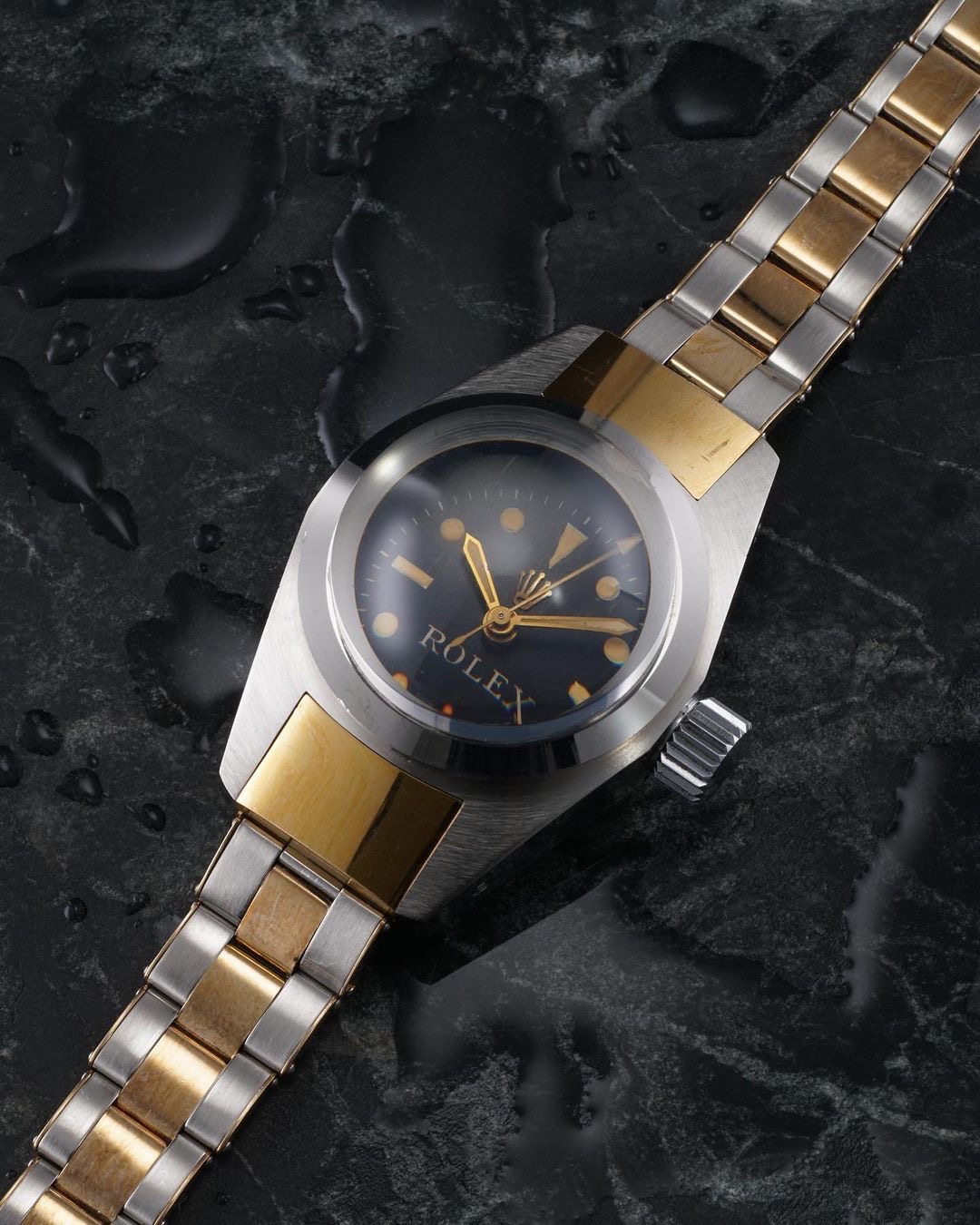
Reference / Era 1960 Experimental Prototype (No. 3)
Case Material Oyster architecture in Stainless Steel & Gold
Crystal 18mm thick domed Plexiglas (Acrylic)
Depth Rating Tested to 10,916 meters (approx. 35,800 feet)
Deep Dive: A Journey to the Challenger Deep
The late 1950s was an era defined by extreme exploration. While the space race had humanity looking up, a select few were looking down. Swiss oceanographer Jacques Piccard and US Navy Lieutenant Don Walsh were preparing the Trieste, a deep-diving research submersible, to explore the Mariana Trench. Rolex, already famous for creating the first truly waterproof watch in 1926, saw an opportunity to test their Oyster case technology at the absolute limits of physics.
At the bottom of the trench, the pressure exceeds 16,000 pounds per square inch (psi). If a standard submarine attempted the dive, it would be instantly crushed like an empty soda can. To survive, Rolex couldn't just build a better gasket; they had to completely rethink watch architecture.
Deep Dive: Engineering for the Abyss
Looking at the Deep Sea Special, the first thing you notice is the crystal. It's almost comical. Rather than a flat or gently domed piece of glass, the crystal is a massive, bulbous hemisphere of Plexiglas measuring nearly 1.8 centimeters thick. Why acrylic instead of standard mineral glass or modern sapphire? Acrylic has a unique physical property: under immense pressure, it flexes slightly rather than shattering. As the ocean pressed down on the crystal, it forced the acrylic tighter against the case seals, physically strengthening the water resistance as the watch went deeper.
Deep Dive: From Prototype to Modern Legacy
The Deep Sea Special was entirely unwearable for daily life. It was a proof of concept. But the engineering data gleaned from that 1960 dive trickled down into consumer watches. Seven years later, Rolex released the original Sea-Dweller, outfitted with a Helium Escape Valve to prevent crystals from popping off during decompression.
Today, that DNA lives on in the Rolex Deepsea collection, featuring the modern Ringlock system, capable of surviving depths of 3,900 meters. While most of us won’t be saturation diving or hitting the ocean floor anytime soon, there is a tangible cool factor in knowing the watch on your wrist was overbuilt to survive the most hostile environment on the planet.
"People look at the Deep Sea Special and laugh because it looks like a snow globe on a bracelet. But that 18mm thick chunk of acrylic is pure function. It flexes under 16,000 psi of water pressure to seal the case tighter. It's not pretty, it's just pure, brute-force engineering."
— Nick @ VELOCEFrequently Asked Questions
Q: Did anyone actually wear the Rolex Deep Sea Special?
A: No. With its massive domed crystal and size, it wasn’t practical to wear. It was built purely as an external piece of scientific testing equipment to prove Rolex's case technology.
Q: What happens to a normal dive watch in the Mariana Trench?
A: At nearly 11,000 meters deep, the water pressure is over 1,000 times standard atmospheric pressure. A normal recreational dive watch (usually rated to 200m or 300m) would suffer total structural failure; the crystal would crush inward and the case would instantly flood.
Q: Has Rolex been back to the Mariana Trench since 1960?
A: Yes! In 2012, filmmaker James Cameron piloted the Deepsea Challenger to the bottom of the trench, and Rolex attached a new experimental watch—the Rolex Deepsea Challenge—to his submersible's manipulator arm, which also survived perfectly.
GALLERY
WRITTEN BY
Nick
I originally started VELOCE to put my skills to work, hone my app design and web development practices, and dive deeper into the world of horology. I wanted to learn more about the watches, the brands, and the incredible people behind them - the creators, the designers, and the collectors. I love discovering new timepieces and sharing their stories with the world. VELOCE is my ultimate passion project and hobby, the creative space I head to after my full-time job to build something I truly care about.