The Journal By Nick·April 20, 2026· 5 min read
Inside the Seiko NH35A Movement
By Nick·April 20, 2026· 5 min readDiscover the raw horological data behind the Seiko NH35A, the undisputed king of affordable automatic watches. From its robust, tank-like architecture to its impact on case geometry, learn why this reliable caliber is the driving force behind the modern microbrand revolution.
0 views
Listen to this article
0:00
IN THIS ARTICLE
THE MICROBRAND WORKHORSE
If you've spent any time exploring the vibrant world of independent and microbrand watches over the last decade, you've undoubtedly encountered the Seiko NH35A. It’s the engine in the engine bay, the unsung hero humming away beneath the dials of countless dive watches, field watches, and everyday tool watches, a movement beloved by many a dialhead. From cult favorites to breakout hits, this movement has become the undisputed king of the affordable automatic world. But what makes this particular caliber so ubiquitous? It’s a story of smart engineering, robust reliability, and incredible value.
Stripping away the marketing jargon reveals the undisputed king of the entry-level automatic world, powering massive hits from independent brands like Zelos, Spinnaker, and Undone.
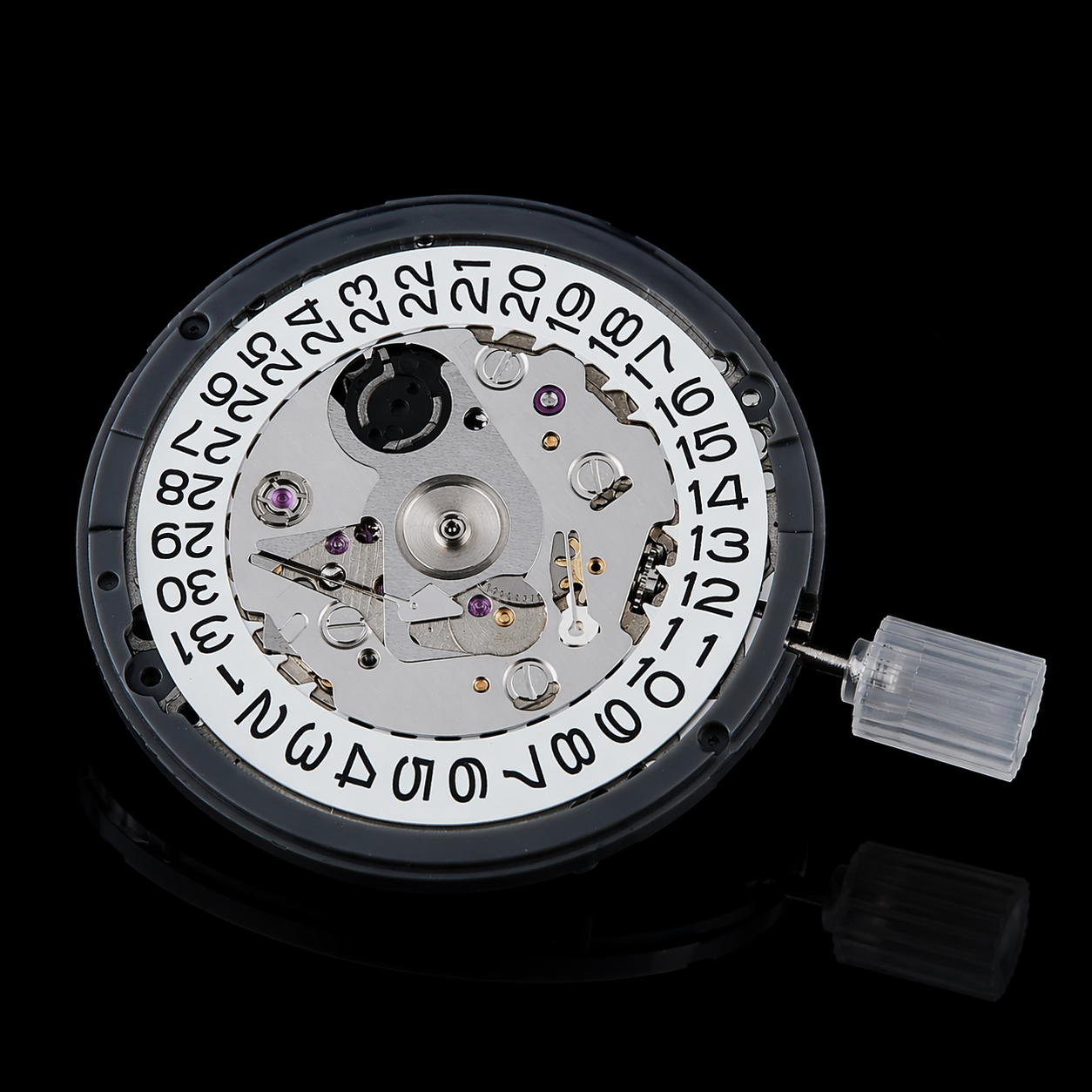
The NH35A is manufactured by Seiko Instruments Inc. (SII), a subsidiary of the Seiko Group that produces and supplies movements to third-party watch brands. You might also see it referred to as a TMI (Time Module Inc.) movement, which is another Seiko-owned entity responsible for its distribution. Essentially, the NH35A is the unbranded, commercially available version of Seiko's own in-house 4R35 caliber, an engine you'll find powering many of their own popular mid-range Prospex and Presage models. This lineage is key to its success; it carries the legacy and engineering prowess of one of the world's most respected watchmakers.
Engineered for Endurance, Not Exhibition
The NH35A was never designed to be admired through a sapphire caseback for its delicate finishing. It is a purpose-built machine, engineered for a long life of reliable service. Its architecture reflects a philosophy of durability and efficiency above all else.
Core Specifications
- Jewels: 24
- Beat Rate: 21,600 beats per hour (bph), or 6 ticks per second
- Power Reserve: Approximately 41 hours
- Winding: Automatic, Bi-Directional
- Features: Hacking seconds, hand-winding capability, quickset date
The choice of a 21,600 bph frequency is a deliberate engineering decision. While higher-beat movements like many of their Swiss counterparts operate at 28,800 bph (8 ticks per second) and produce a visibly smoother sweep of the seconds hand, the lower frequency reduces stress and wear on the movement's components. This trade-off results in greater long-term durability and potentially longer intervals between servicing—a crucial feature for a watch designed to be a daily companion.
The Technology Within
Beyond its base specs, the NH35A is packed with Seiko's proprietary and time-tested technology that elevates it above its competition, particularly the rival Miyota 8215.
Hacking and Hand-Winding
The NH35A is an evolution of Seiko's legendary 7S26 movement, which powered iconic watches like the SKX007. The key upgrades were the addition of hacking (the second hand stops when you pull the crown out to set the time) and the ability to hand-wind the mainspring via the crown. These features, now considered standard, allow for more precise time-setting and the convenience of powering up a watch that has stopped without having to shake it.
The "Magic Lever"
Perhaps the most ingenious piece of tech inside is Seiko's "Magic Lever" system. First introduced in 1959, this remarkably simple and efficient pawl-lever mechanism allows the rotor to wind the mainspring regardless of which direction it spins. While many Swiss movements use more complex and delicate reversing wheels to achieve bi-directional winding, the Magic Lever gets the job done with fewer parts, reducing potential points of failure and increasing winding efficiency. It means that even minimal wrist movement quickly translates into power for the watch.
Diashock Protection
Engineered for a tool watch's life of hard knocks, the NH35A features Seiko's proprietary Diashock anti-shock system. This spring-loaded mounting for the delicate balance wheel pivots absorbs impacts that could otherwise damage the heart of the movement. It’s Seiko's robust answer to the well-known Incabloc system and a critical component for any watch meant to withstand daily wear and tear.
The Ultimate Microbrand Caliber
So, why did this movement become the default choice for a generation of independent watchmakers? The answer lies in a perfect storm of performance, price, and practicality.
Reliability vs. The Competition
For a new brand, reputation is everything. Using a movement known for its toughness is a safe bet. When compared to its closest rival, the Miyota 8215, the NH35A boasts several key advantages. It offers bi-directional winding, hacking, and a quieter rotor, which many users prefer over the Miyota's sometimes noisy unidirectional winding. These features provide a superior user experience that belies the movement's affordable price point.
The Serviceability Superpower
Beyond its rugged architecture, the true superpower of the NH35A is its universal accessibility. Because millions of these movements are in circulation, replacement parts are everywhere and affordable. Any competent watchmaker on the planet can service, regulate, or entirely swap one out in minutes.
In fact, the cost of a brand new NH35A movement is often less than the labor cost of a full service on a more complex caliber. This makes long-term ownership incredibly worry-free. For a tool watch, which is meant to be used and not babied, this is the ultimate feature.
The Question of Accuracy
The official accuracy rating for the NH35A is a fairly broad -20 to +40 seconds per day. While this may seem underwhelming on paper, it's a conservative factory specification. In practice, most NH35A movements perform much better out of the box. Furthermore, the movement is easily regulated by a watchmaker to achieve significantly better accuracy, often well within +10 seconds per day or less. For enthusiasts willing to have their watch tuned, the NH35A can punch far above its weight class.
A Closing Thought
The Seiko NH35A is a shining example of brilliant, pragmatic engineering. It is not a luxury movement, and it doesn't pretend to be. Instead, it delivers on the promise of what a mechanical watch should be: a reliable, durable, and honest timekeeping companion. It democratized the automatic watch, giving small, passionate brands a stable platform on which to build their dreams. So the next time you see "Seiko NH35A" listed in the specs of a microbrand watch, know that you're not just getting an affordable movement; you're getting a piece of horological history built to last a lifetime.
WRITTEN BY
Nick
I originally started VELOCE to put my skills to work, hone my app design and web development practices, and dive deeper into the world of horology. I wanted to learn more about the watches, the brands, and the incredible people behind them - the creators, the designers, and the collectors. I love discovering new timepieces and sharing their stories with the world. VELOCE is my ultimate passion project and hobby, the creative space I head to after my full-time job to build something I truly care about.