The Journal By Nick·June 30, 2025· 5 min read
Omega Speedmaster - 1969
By Nick·June 30, 2025· 5 min readThe Omega Speedmaster: a legendary watch that has journeyed from the racetrack to the moon, earning its nickname 'Moonwatch' and a place in history.
0 views
IN THIS ARTICLE
The Omega Speedmaster isn't just a watch; it's a piece of history strapped to the wrist. Its story is one of terrestrial ambition and celestial achievement, a journey from the roaring circuits of motorsport to the silent vacuum of space. For any serious collector or dialhead, the "Speedy" represents a pinnacle of robust design, mechanical integrity, and a narrative that is simply unmatched in the world.
From Racetrack to Launchpad
Long before it was the "Moonwatch," the Speedmaster was designed for a very different kind of velocity. Introduced in 1957 as part of Omega's "Professional" trilogy, the reference CK2915 was purpose-built for sports and racing. It was a revolutionary chronograph for its time, featuring a crucial innovation: it was the first production chronograph to move the tachymeter scale from the dial to the bezel. This simple change dramatically improved legibility for drivers timing laps and calculating speed. Housed in a robust 39mm case with straight lugs and distinctive "Broad Arrow" hands, and powered by the legendary Calibre 321 movement, the Speedmaster was born for precision on the ground.

But destiny had other plans. Space was the new frontier, and NASA needed a timepiece that could withstand its rigors. In 1962, astronaut Wally Schirra wore his personal Speedmaster (a ref. CK2998) during the Mercury-Atlas 8 mission, making it the first Omega in space. This caught NASA's attention. By 1964, the agency was formally seeking a chronograph for its astronauts, a backup instrument crucial for mission safety should onboard electronic timers fail.
The Trials: Forging a Legend
NASA's testing procedures were designed to be brutal, simulating the harshest conditions of space travel. Several brands submitted their watches, but one by one, they failed. The chronographs were subjected to:
- Extreme high and low temperatures
- Intense G-forces and vibrations
- Hard shocks and accelerations
- The vacuum of space
- A highly corrosive 100% oxygen environment
One Small Step: The First Watch on the Moon
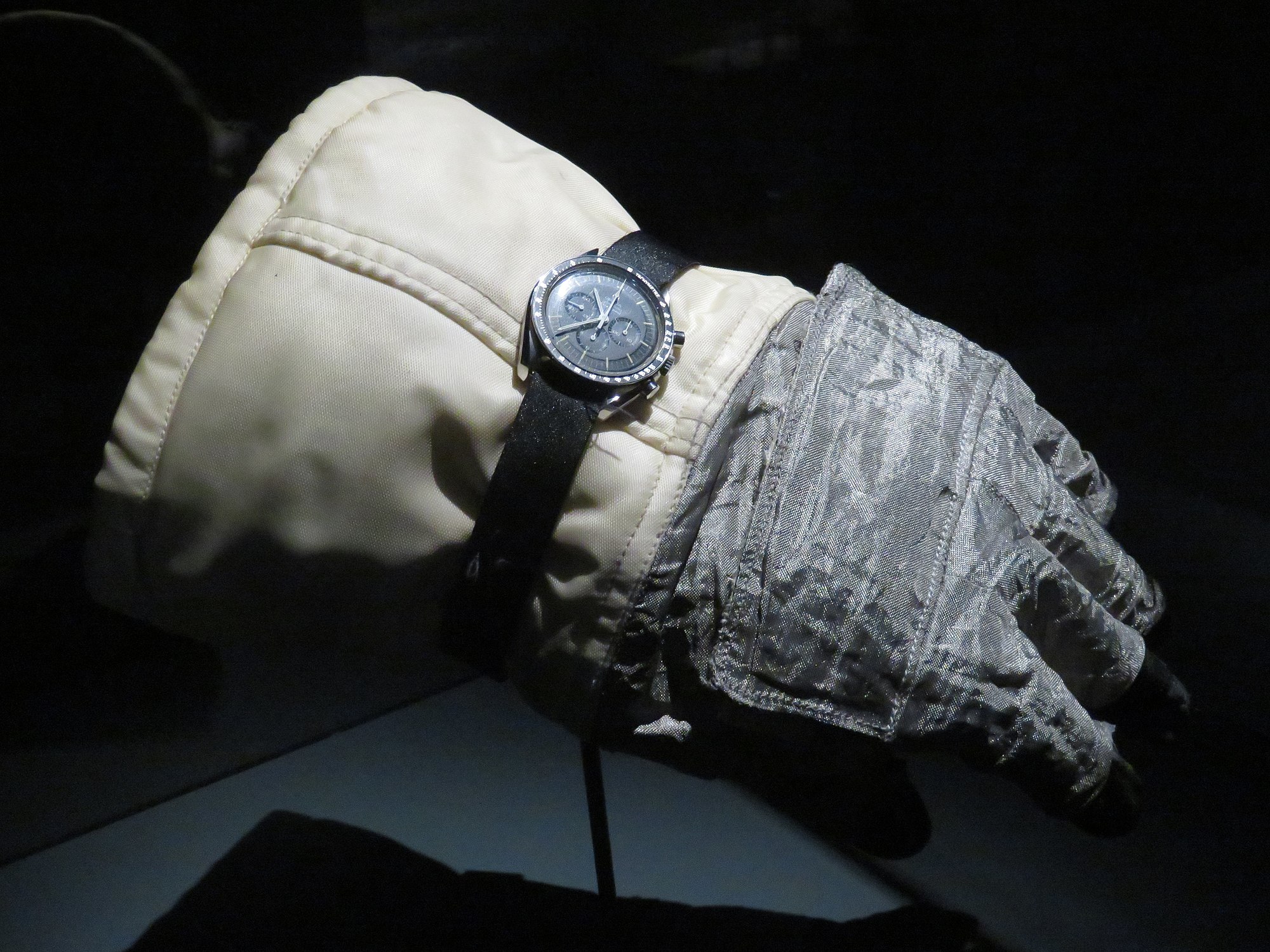
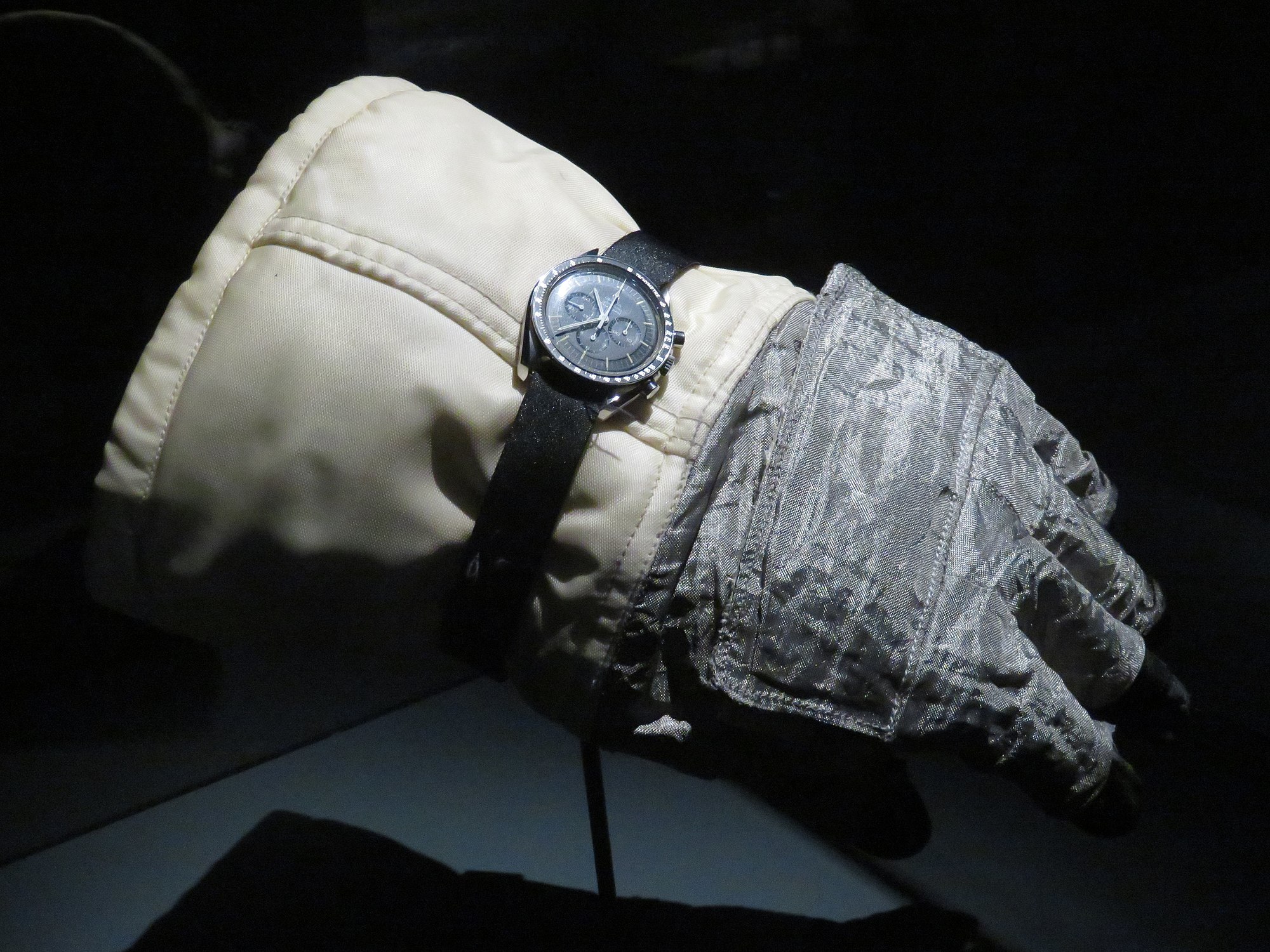
The Speedmaster's crowning achievement came on July 20, 1969. While Apollo 11 commander Neil Armstrong was the first to step onto the lunar surface, he had left his Speedmaster inside the Eagle lunar module as a backup for a malfunctioning onboard timer. Therefore, when Buzz Aldrin followed him 19 minutes later, the Omega Speedmaster on his wrist—a reference 105.012—became the first watch worn on the Moon. From that moment, the Speedmaster was immortalized as the "Moonwatch."
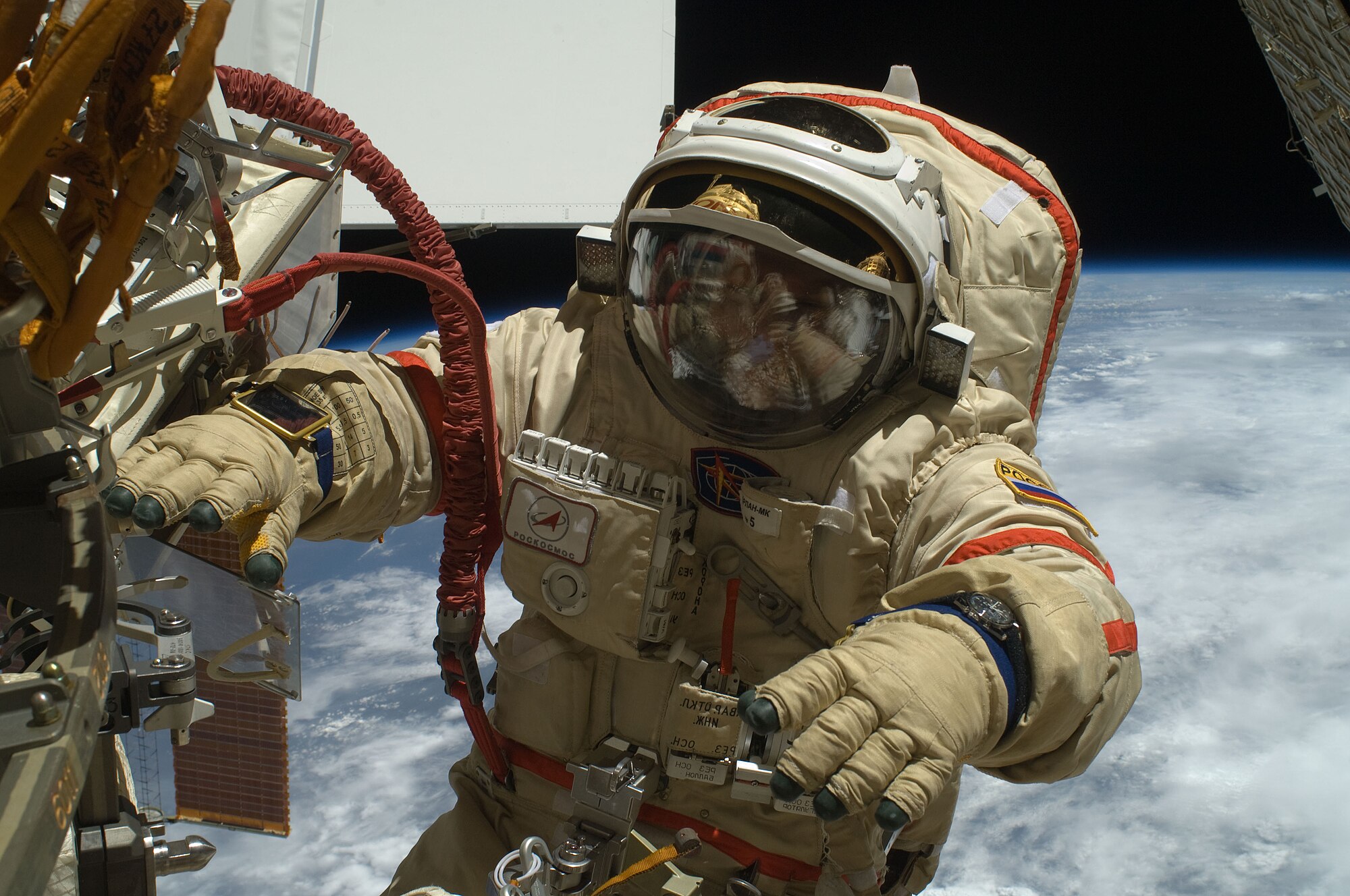
The Speedmaster Professional remains one of several watches qualified by NASA for spaceflight and is still the only one so qualified for EVA (Extravehicular Activity).
Houston, We've Had a Solution
The Speedmaster proved its worth again during the perilous Apollo 13 mission in 1970. After an oxygen tank explosion crippled the spacecraft, the crew had to rely on their Speedmasters to time a critical 14-second engine burn to correct their course for a safe re-entry to Earth. The watch performed flawlessly under immense pressure. In recognition of this vital contribution, Omega was awarded NASA’s prestigious "Silver Snoopy Award," an honor bestowed by astronauts for outstanding achievements related to mission success. This event inspired a series of highly collectible "Snoopy" edition Speedmasters, beloved by enthusiasts for their whimsical design and historical connection.
An Enduring Legacy of Design and Collectibility
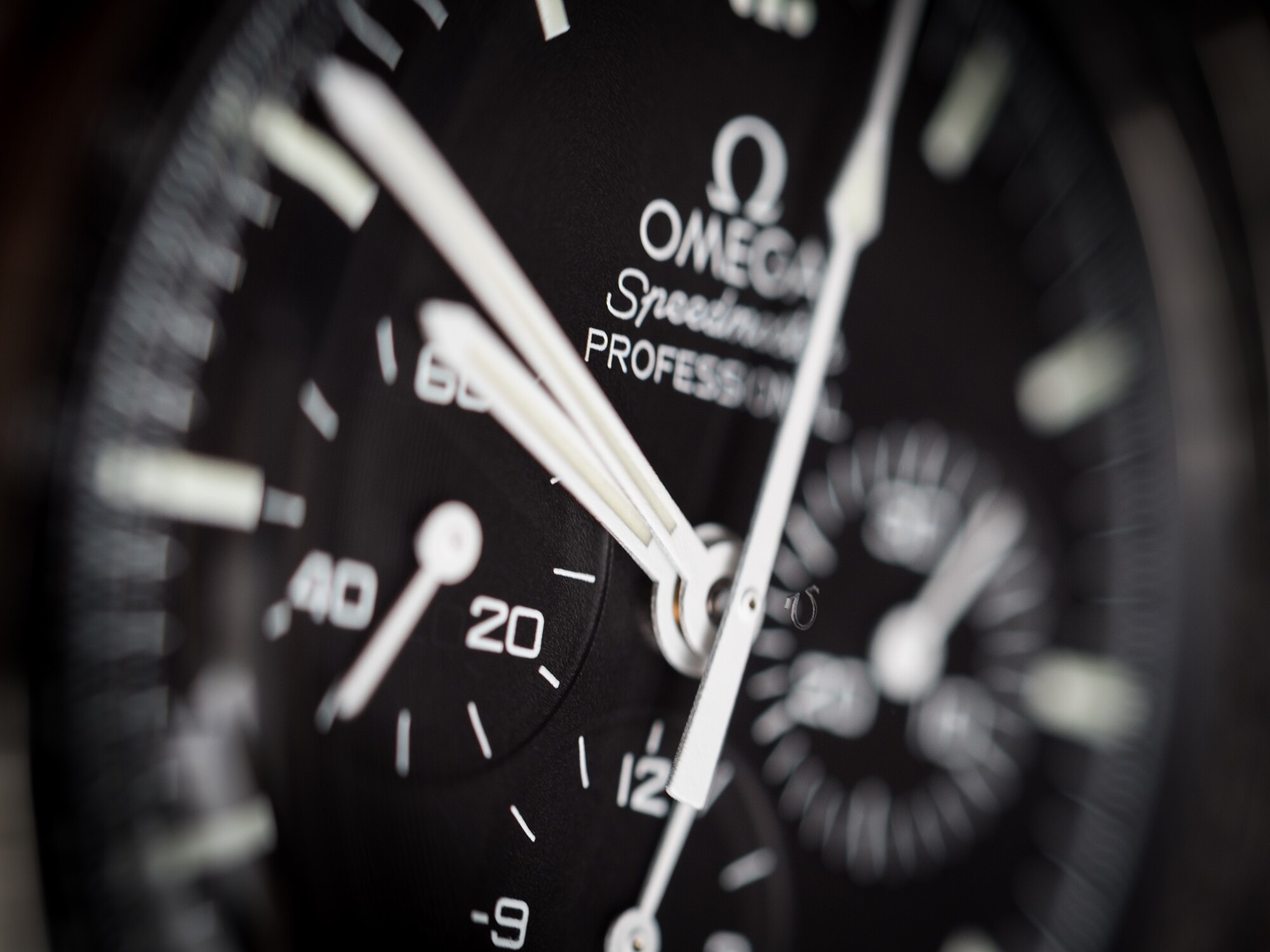
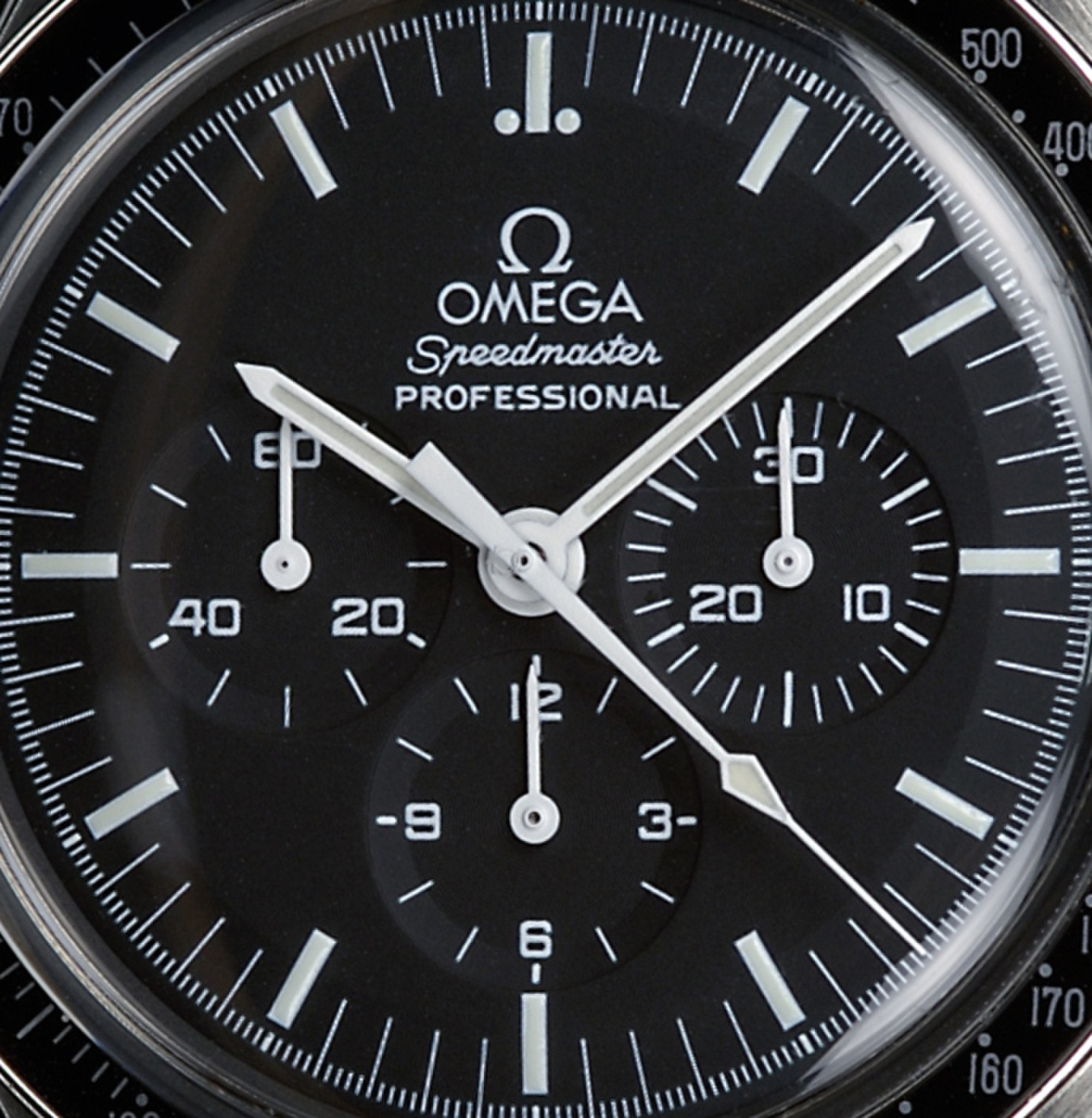
Despite its stratospheric legacy, the core design of the Speedmaster Professional has remained remarkably consistent, a testament to its functional perfection. The key visual identifiers—the 42mm asymmetrical case with twisted "lyre" lugs (introduced in 1964 to protect the crown and pushers), the black dial with high-contrast white hands and markers, and the external tachymeter bezel—are all present in the modern Moonwatch.
Over the decades, Omega has evolved the movement within the Speedmaster. The original column-wheel Calibre 321 was replaced by the more easily produced cam-actuated Calibre 861 in 1968, which later evolved into the Calibre 1861. Today, the standard Moonwatch is powered by the Calibre 3861, a Master Chronometer certified movement with a Co-Axial escapement, offering superior anti-magnetism and precision. Yet, for the purists, Omega thrillingly reintroduced the legendary Calibre 321 in 2019, making it available in select, highly sought-after models.
The Speedmaster's rich history, timeless design, and mechanical prowess make it a cornerstone of any serious watch collection. From the early "pre-Moon" straight-lug models to the numerous limited editions celebrating space milestones, there is a vast and fascinating world for collectors to explore. It is a watch that has proven its mettle under the most extreme circumstances imaginable, transcending its function to become a symbol of human ambition and achievement.
A Final Thought
The Omega Speedmaster is more than just a chronograph. It is a cultural icon, a reliable tool that played a critical role in one of humanity's greatest adventures. Whether you are captivated by its racing origins, its connection to the space program, or its timeless aesthetic, the Moonwatch offers a story that is, quite literally, out of this world. It’s a tangible piece of history that continues to inspire and perform, a true legend in the world of horology.
GALLERY
WRITTEN BY
Nick
I originally started VELOCE to put my skills to work, hone my app design and web development practices, and dive deeper into the world of horology. I wanted to learn more about the watches, the brands, and the incredible people behind them - the creators, the designers, and the collectors. I love discovering new timepieces and sharing their stories with the world. VELOCE is my ultimate passion project and hobby, the creative space I head to after my full-time job to build something I truly care about.