The Journal By Nick·May 20, 2026· 5 min read
Q Timex NASA: Universe on Your Wrist! Explore This Iconic Watch
By Nick·May 20, 2026· 5 min readIn the vast universe of watch collecting, few things capture the imagination quite like the intersection of horology and space exploration. There's a certain charm to a watch that celebrates the cosmos with accessibility and style. Enter the Q Timex NASA.
0 views
IN THIS ARTICLE
From the Quartz Crisis to the Cosmos: A Deep Dive into the Q Timex NASA
In the vast universe of watch collecting, few things capture the imagination quite like the intersection of horology and space exploration. While the Omega Speedmaster rightfully holds its legendary "Moonwatch" title, there's a certain charm to a watch that celebrates the cosmos with accessibility and style, appealing to every dialhead. Enter the Q Timex NASA, a timepiece that marries the brand's '70s retro-cool aesthetic with a heartfelt tribute to one of humanity's greatest achievements. It's a watch that doesn't claim to have been to the moon, but instead, brings a piece of the stars down to earth for the everyday enthusiast.
This isn't just another novelty release; it's a thoughtful homage built on a platform that itself represents a pivotal moment in watchmaking history. Let's take a closer look at this stellar release, from its historical roots to its cosmic details.
A Nod to the Past: The Q Timex Legacy
To understand the Q Timex NASA, you first have to appreciate the "Q" itself. First launched in the 1970s, the original Q Timex was the brand's answer to the quartz crisis that was upending the traditional Swiss watch industry. The "Q" proudly stood for quartz, a new, hyper-accurate, and affordable technology that Timex embraced. These watches, with their distinctive case shapes, hooded lugs, and often colorful dials, became icons of their era.
In 2019, Timex brilliantly tapped into the vintage revival trend by reissuing the 1979 Q Timex, a move that was met with massive enthusiasm from the watch community. The success of this reissue paved the way for a whole collection, and the NASA edition feels like a natural and inspired evolution of this beloved, retro-styled family.
Houston, We Have a Looker: Design and Specifications
At first glance, the Q Timex NASA presents a familiar, yet distinct, chronograph-like appearance. It has that tool-watch vibe that gets a collector's heart ticking, but with a clever twist.
Rather than manufacturing a heritage story it doesn't own, the brand is treating this as a tribute, and the design reflects that approach. The result sits comfortably in the Q collection's broader design language.
Case and Crystal
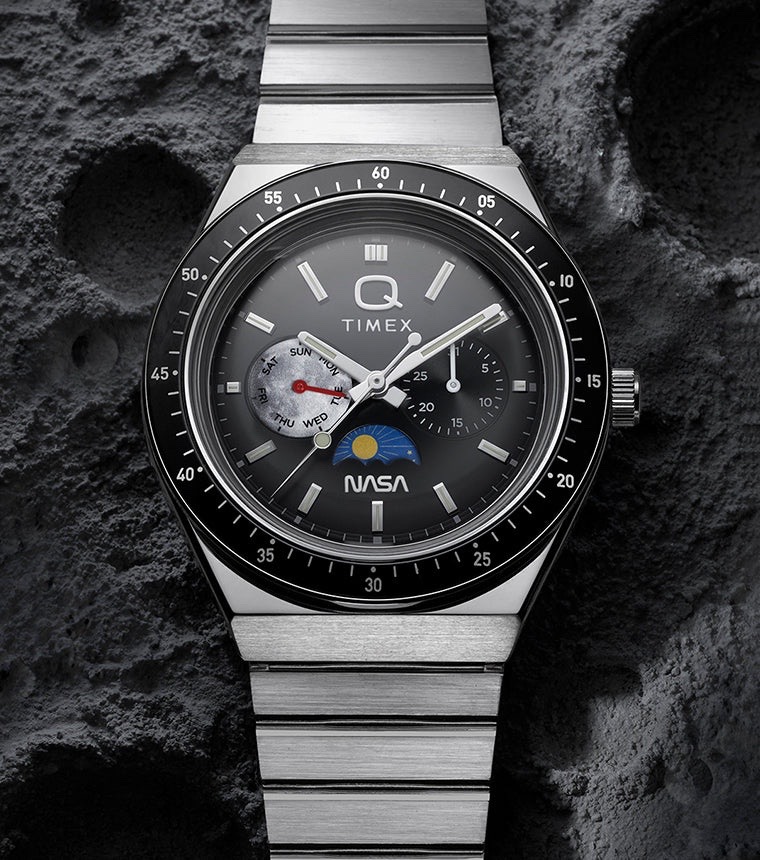
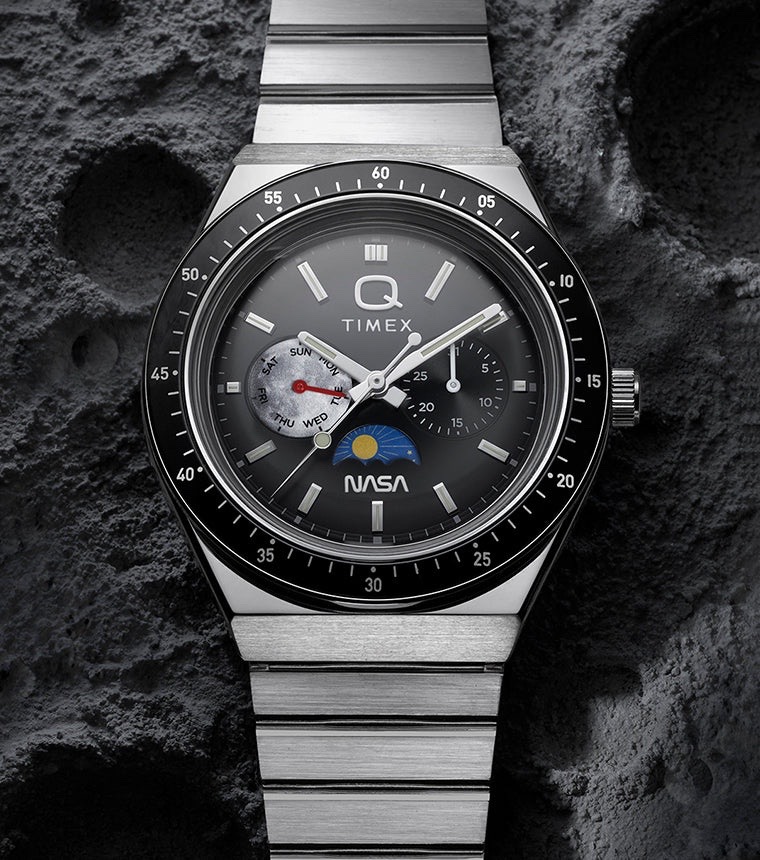
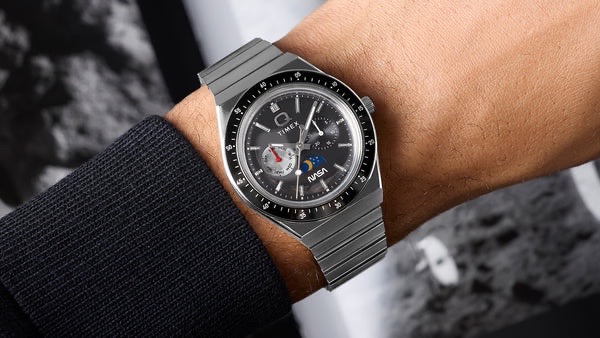
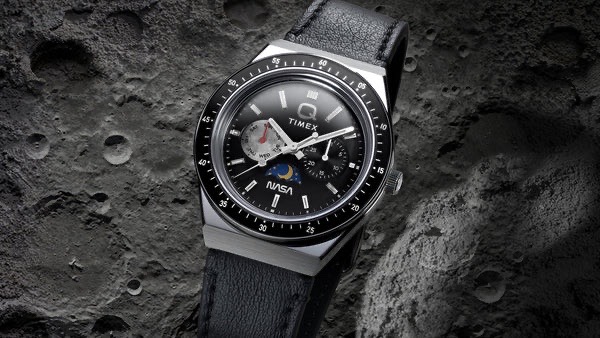
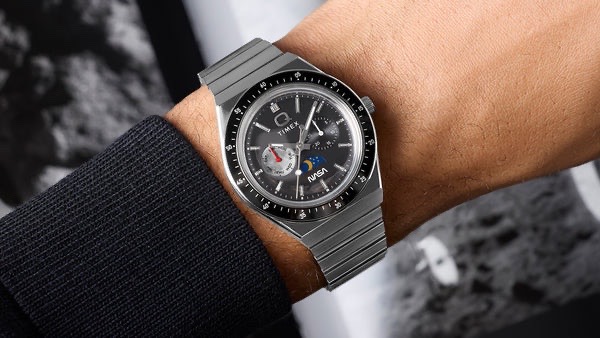
The watch features a versatile 40mm stainless steel case, which strikes a great balance for a variety of wrist sizes. It has a thickness of 13.5mm, a dimension that includes the wonderfully vintage, heavily domed acrylic crystal. This crystal choice is key to the watch's retro charm, creating warm, distorted views of the dial at sharp angles, just like its 1970s predecessors. With a water resistance of 50 meters, it's more than capable of handling daily wear, though it's not intended for serious water activities.
The Multifunction "Chronograph" Dial
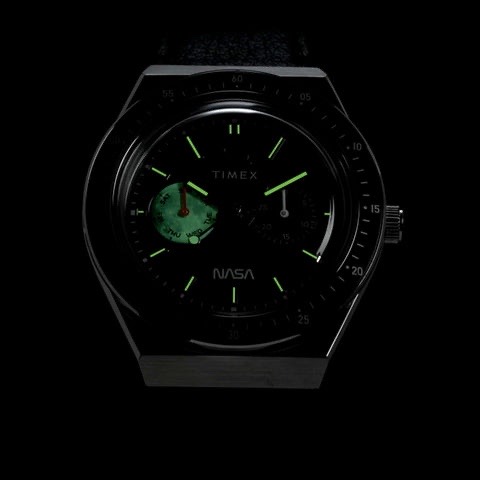
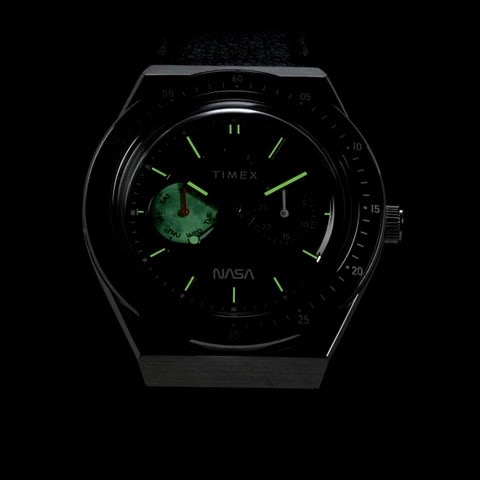
Here's where Timex got creative. The tri-compax layout (three sub-dials) immediately evokes classic space chronographs, but this watch is powered by a quartz multifunction movement, not a stopwatch. Instead of measuring elapsed time, the sub-dials offer practical calendar functions:
- 3 o'clock: A simple date indicator.
- 6 o'clock: A day/night indicator, featuring sun and moon graphics, along with the iconic NASA "worm" logo.
- 9 o'clock: A day-of-the-week display.
The real star of the show, however, is a detail within that 9 o'clock sub-dial. It's styled to look like a photorealistic lunar surface, and, in a fantastic touch, the moon graphic is fully luminescent. When the lights go down, it glows along with the hands and hour markers, a small but deeply satisfying feature for any space nerd.
Bezel and Caseback: The Cosmic Details
Surrounding the dial is a fixed black bezel with 60-minute markings. While it looks like a tachymeter or a diving bezel, it's purely ornamental, contributing to the watch's overall tool-watch aesthetic without adding a function the movement doesn't support.
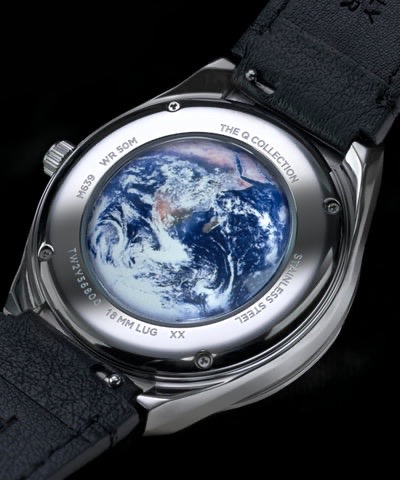
Flip the watch over, and you're greeted with a beautiful tribute. The solid caseback features a full-color reproduction of the "Blue Marble," the famous photograph of Earth taken by the Apollo 17 crew in 1972 on their journey to the moon. It's a stunning detail that reinforces the watch's theme and inspiration.
A Tribute to Apollo 17
While Timex watches have been used by astronauts in training and aboard the space shuttle, the brand is clear that this watch is a tribute, not a historical reproduction. The Q Timex NASA specifically honors the Apollo 17 mission of 1972, which was the last time humans walked on the Moon. This inspiration is woven throughout the watch, from the "Blue Marble" caseback to the glowing lunar sub-dial, creating a cohesive and compelling story.
Pricing and Where to Buy
One of the most attractive aspects of the Q Timex NASA is its accessibility. Timex has delivered a feature-packed, thoughtfully designed watch at a price point that's hard to argue with. The watch is available in two variations:
- On a retro-styled, flat-link stainless steel bracelet, the price is $249 USD.
- On a sleek black leather strap, the price is $229 USD.
The watch can be purchased directly from the official Timex website. While availability can fluctuate due to demand, these links will take you right to the source:
Closing Thought
The Q Timex NASA is a resounding success. It avoids the pitfall of being a derivative homage and instead carves out its own identity. It's a fun, stylish, and thoughtfully designed piece that captures the spirit of space exploration without the five-figure price tag. By cleverly using a multifunction movement within a chronograph-style design, Timex delivers a watch that is both visually engaging and practically useful. For collectors who love the Q series, '70s design, or the romance of space, this watch is an affordable ticket to the cosmos. It's a reminder that you don't need to be an astronaut to have a watch with a story that's truly out of this world.
GALLERY
WRITTEN BY
Nick
I originally started VELOCE to put my skills to work, hone my app design and web development practices, and dive deeper into the world of horology. I wanted to learn more about the watches, the brands, and the incredible people behind them - the creators, the designers, and the collectors. I love discovering new timepieces and sharing their stories with the world. VELOCE is my ultimate passion project and hobby, the creative space I head to after my full-time job to build something I truly care about.