The Journal By Nick·August 11, 2025· 7 min read
The Wristwatch Was Born in the Trenches
By Nick·August 11, 2025· 7 min readWristwatches transitioned from a women's accessory to essential military gear during the Boer War, paving the way for their modern popularity.
0 views
IN THIS ARTICLE
The Horological Crucible: How the WWI Trench Watch Forged the Modern Men's Wristwatch
Before the turn of the 20th century, wristwatches were predominantly viewed as a women’s fashion statement—delicate "wristlets" lacking the robustness required for daily wear, a notion that would make any modern dialhead chuckle. Men carried pocket watches, full stop. But when British soldiers deployed to South Africa for the Second Boer War in 1899, they discovered a lethal logistical problem: digging out a pocket watch from beneath heavy tunics in the middle of a firefight wasn’t just inconvenient; it could get you killed.
Necessity, the mother of invention, sparked an improvisational shift. Officers began soldering crude wire lugs onto the cases of their pocket watches, threading thick leather straps through them, and wearing them securely on the wrist. These rudimentary “trench watches” kept the time exactly where it was needed most: right in view, leaving both hands free to handle weaponry and coordinate maneuvers. What began as a makeshift battlefield modification rapidly evolved into a horological revolution.
Table of Contents
Quick Overview: The Archetypal Trench Watch
Reference / Era
Circa 1914-1918 (WWI British War Office Specifications)
Material
Sterling Silver, Nickel, or Gunmetal (Often François Borgel threaded cases)
Movement
Swiss Lever Escapement, Manual Wind (13 to 15 Lignes)
Strap
Thick raw leather threaded through fixed soldered wire lugs
Deep Dive: A History Forged in Mud
By the time World War I plunged Europe into chaos, the British War Office had thoroughly recognized the tactical superiority of the wristwatch. The coordination of artillery barrages and infantry charges relied entirely on synchronized timing down to the second. They issued a formal specification for a soldier’s wristwatch, and horological powerhouses like Omega, Longines, Zenith, and a young company named Rolex stepped up to the plate.
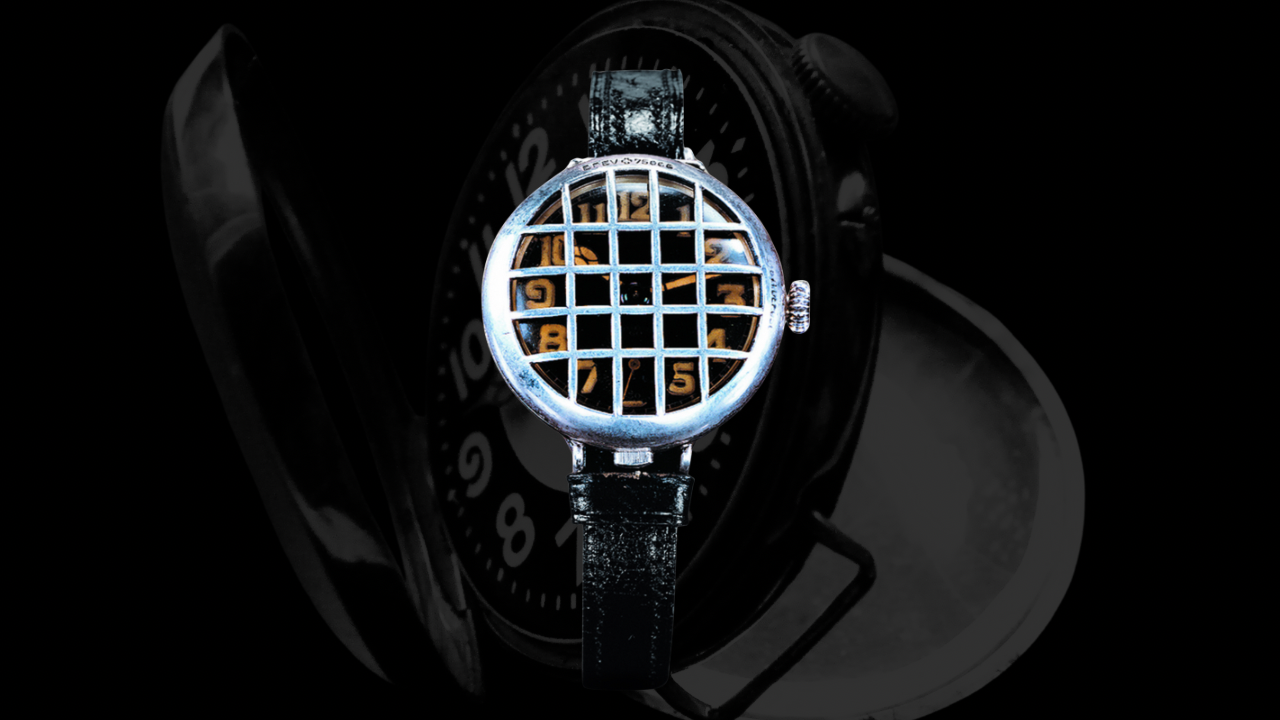
These manufacturers built rugged, no-nonsense timepieces engineered for survival in the unimaginable squalor of trench warfare. They ceased to be luxury novelties; they became vital pieces of military kit. The staggering production numbers during the Great War permanently decentralized the pocket watch from men's fashion.
Deep Dive: Design Driven by Survival
The design language of the WWI trench watch is defined by sheer utility. The dials were crafted from bright white enamel, offering high contrast against large, hand-painted Arabic numerals. Crucially, these numerals, along with the cathedral or syringe handsets, were heavily painted with highly toxic but intensely glowing Radium-226. This allowed officers to read the time in pitch-black dugouts without lighting a match and risking a sniper's bullet.
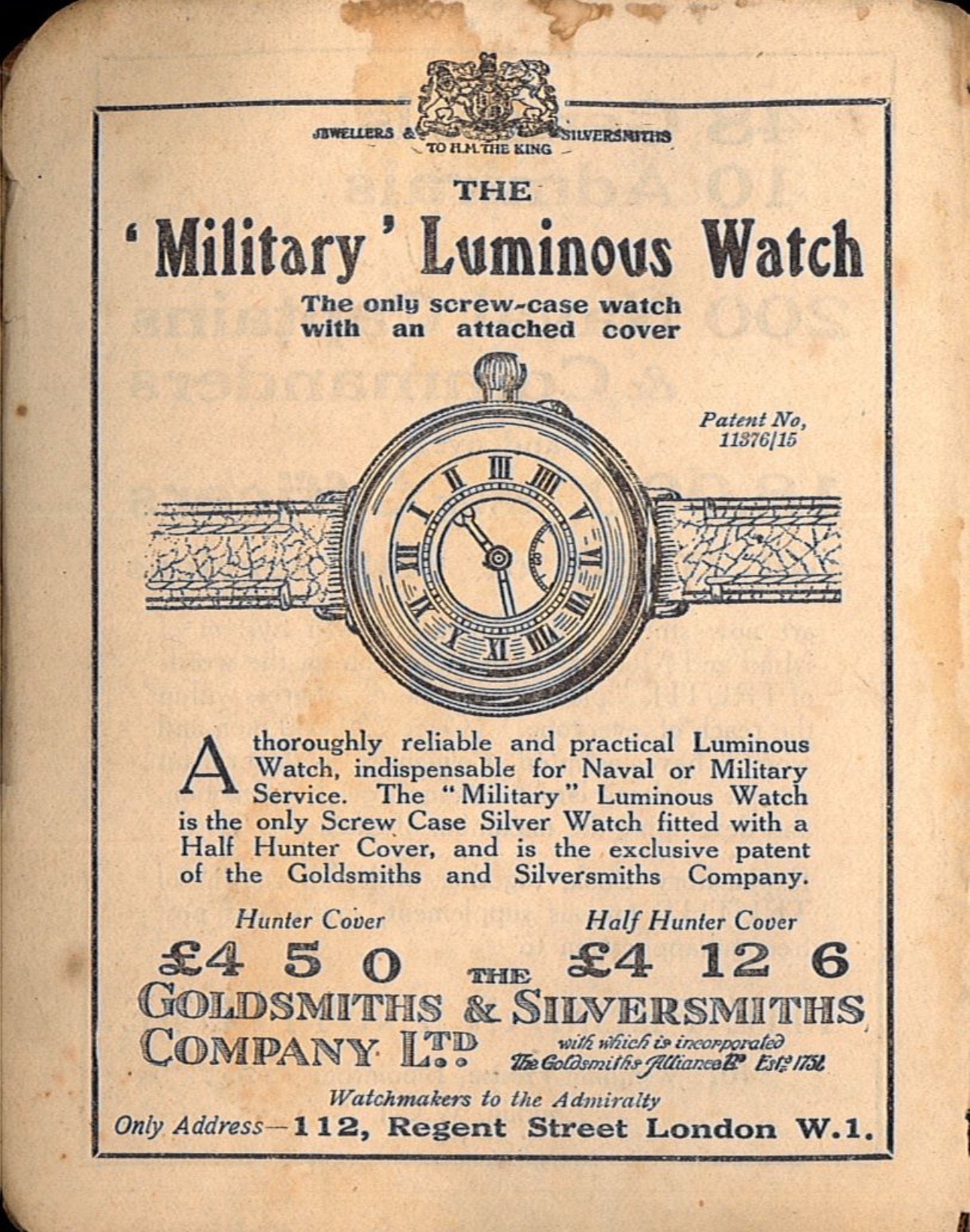
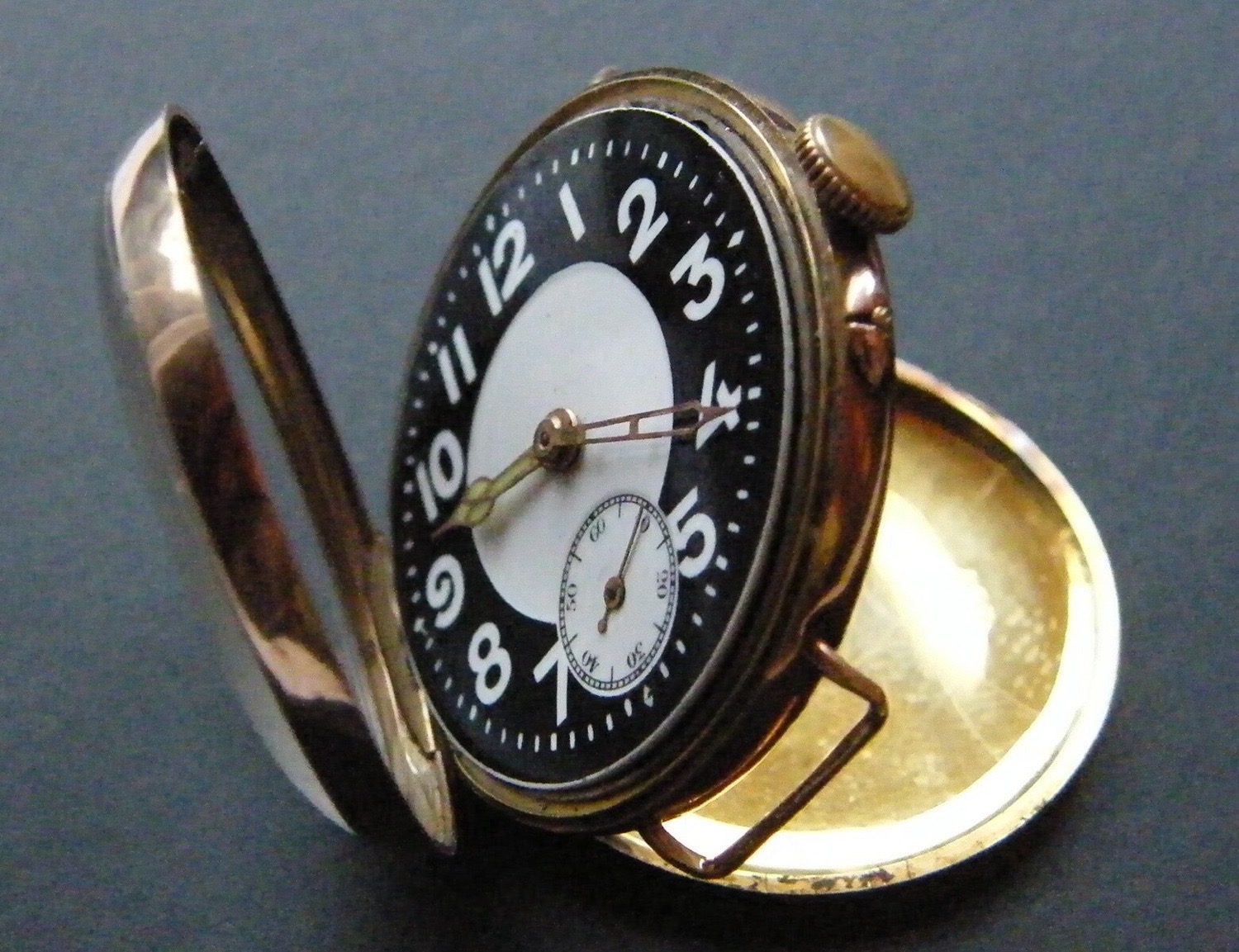
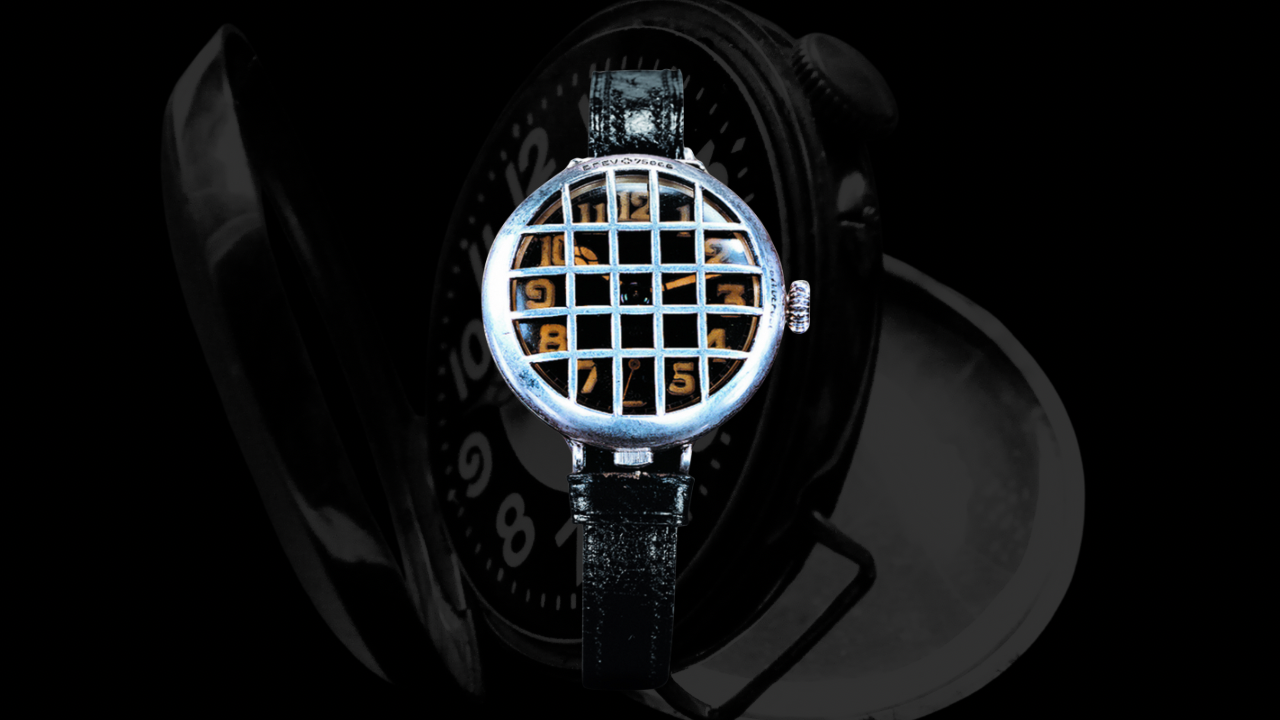
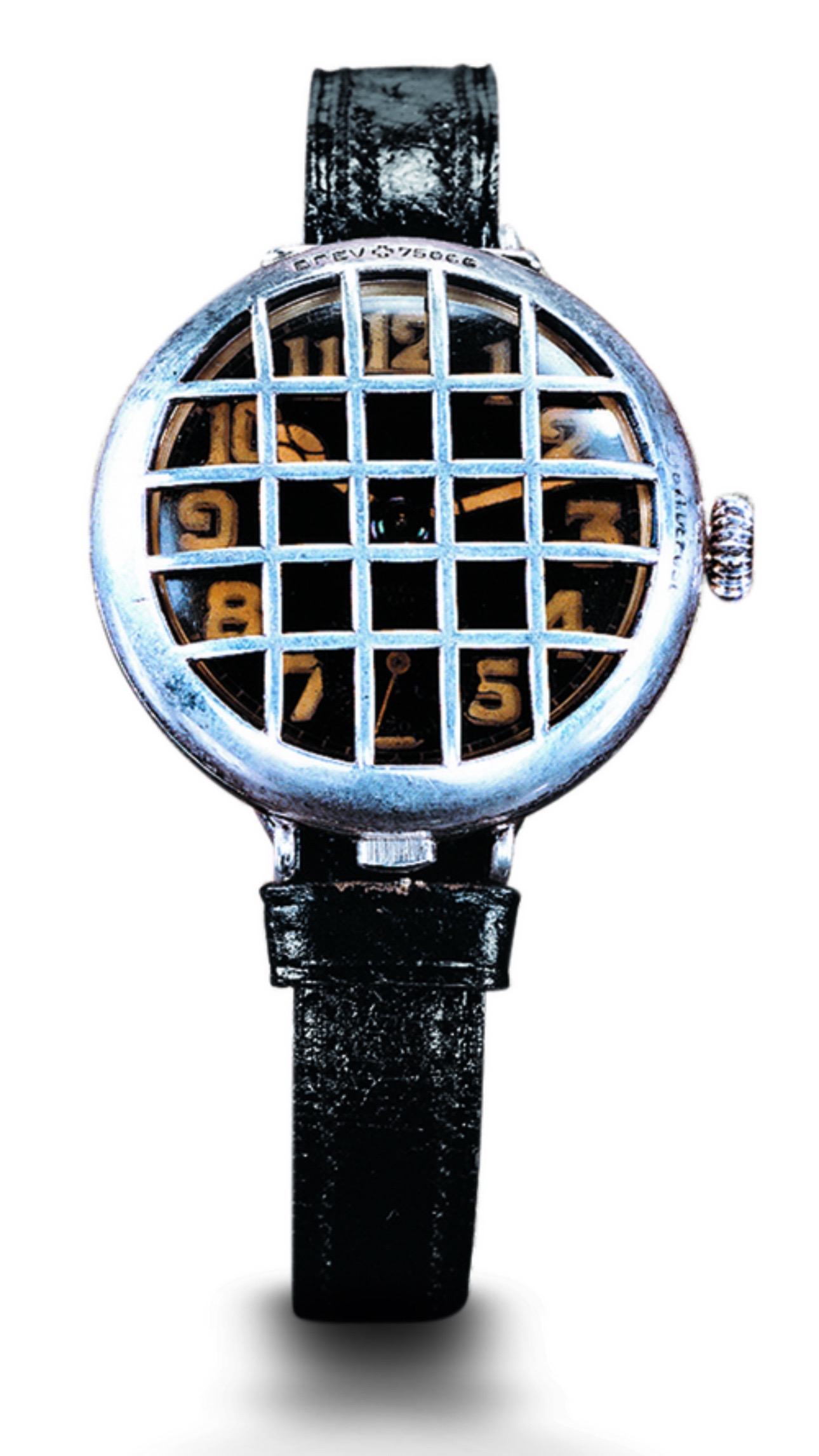
Furthermore, because the thin glass crystals were incredibly prone to shattering, many soldiers outfitted their watches with "shrapnel guards"—stamped metal grilles that snapped over the bezel. While it partially obscured the dial, it protected the fragile crystal from flying debris and the concussive force of artillery fire.
Deep Dive: Materials & Mechanical Prowess
The transition to the wrist exposed watch movements to unprecedented hazards: dust, extreme humidity, and constant physical shock. To combat this, casemakers adopted innovative techniques. The François Borgel case patent, featuring a threaded movement carrier that screwed tightly into the case back, became the gold standard for early water and dust resistance.
Inside these protective shells beat robust Swiss lever escapement movements, often utilizing 15 jewels. They bypassed the delicate cylinder escapements of cheaper pocket watches in favor of reliability. When the war finally ended, soldiers returned home still wearing these battle-tested instruments. The stigma of the "ladies' wristlet" was obliterated. In two short decades, the wristwatch transitioned from a niche curiosity to the undisputed standard for timekeeping, all because the realities of modern warfare demanded a faster, tougher way to track the hour.
"What I love about these early trench watches isn't just the history—it's the raw utility. You're looking at thick soldered wire lugs and threaded Borgel cases that were engineered purely to keep mud and moisture out of a Swiss lever movement during a literal war. There's no fluff. It’s function dictating form in its absolute purest sense."
— Nick @ VELOCEFrequently Asked Questions
Q: Why do early trench watches have thick metal grilles over the dial?
A: Those are called shrapnel guards. Before the invention of shatter-resistant acrylic or sapphire crystals, early watches used standard glass. The guards protected the fragile glass from breaking due to impacts, flying dirt, and concussive blasts in the trenches.
Q: Are the luminescent dials on vintage trench watches dangerous?
A: Yes. The paint used on these dials contains Radium-226, which is highly radioactive. While the paint loses its "glow" over decades as the phosphor degrades, the radium remains dangerous. They should never be opened outside of a highly controlled, professional watchmaking environment.
Q: How did they achieve water resistance before modern gaskets?
A: The most successful method was the Borgel case, patented in the late 19th century. Instead of a snap-on case back, the movement and dial were mounted into a threaded ring that screwed tightly into a single-piece case, creating a tight mechanical seal against dust and moisture.
GALLERY
WRITTEN BY
Nick
I originally started VELOCE to put my skills to work, hone my app design and web development practices, and dive deeper into the world of horology. I wanted to learn more about the watches, the brands, and the incredible people behind them - the creators, the designers, and the collectors. I love discovering new timepieces and sharing their stories with the world. VELOCE is my ultimate passion project and hobby, the creative space I head to after my full-time job to build something I truly care about.