MORE FROM SĒL INSTRUMENT

In the watch world, the term “tool watch” is frequently diluted by marketing fluff, yet SēL Instruments builds what are undisputedly the ultimate tool watches on Earth through pure, uncompromising over-engineering. Grade 5 Titanium (6Al-4V) * Superior Metallurgy: Grade 2 titanium is relatively soft and prone to deep gouging. Grade 5 is an alloy mixed with aluminum and vanadium, making it dramatically harder, stiffer, and vastly stronger than 316L stainless steel. * Grade 5 titanium is notoriously brutal on manufacturing equipment, quickly destroying tool bits and requiring specialized, high-speed CNC milling processes. SēL welcomes this challenge, leaving subtle tool-cutter marks on final components as a proud nod to pure, raw utility over superficial polishing. Traditional dive bezels rely on thin, click-spring wires bent into shape. These wires rust, snap, or jam the moment fine sand, salt crust, or thick mud enters the mechanism. * SēL completely rewrote the rulebook by building a bezel that operates on ceramic and Teflon ball bearings. The unidirectional clicking is controlled by heavy-duty, dual-indexing pistons rather than a fragile spring. * This design eliminates all vertical “slop” or back-play. It delivers a crisp, mechanical sweep that cannot be accidentally bumped out of alignment or jammed by battlefield grime. Furthermore, SēL uses solid metal bezel inserts rather than brittle ceramic or scratch-prone aluminum, ensuring the insert will never crack or shatter under impact. SēL watches are engineered around failure modes. The flagship OmniDiver is designed to handle pressures that would instantly flat-pack a standard watch case. * Utilizing the proprietary Labyrinth Flux shock system, the internal watch movement and its sapphire crystal sit suspended in a “floating” inner case. This structure isolates the sensitive movement components from catastrophic drops and heavy vibrational shock. #selturday #toolwatch #badasswatch #divewatch #titaniumwatch

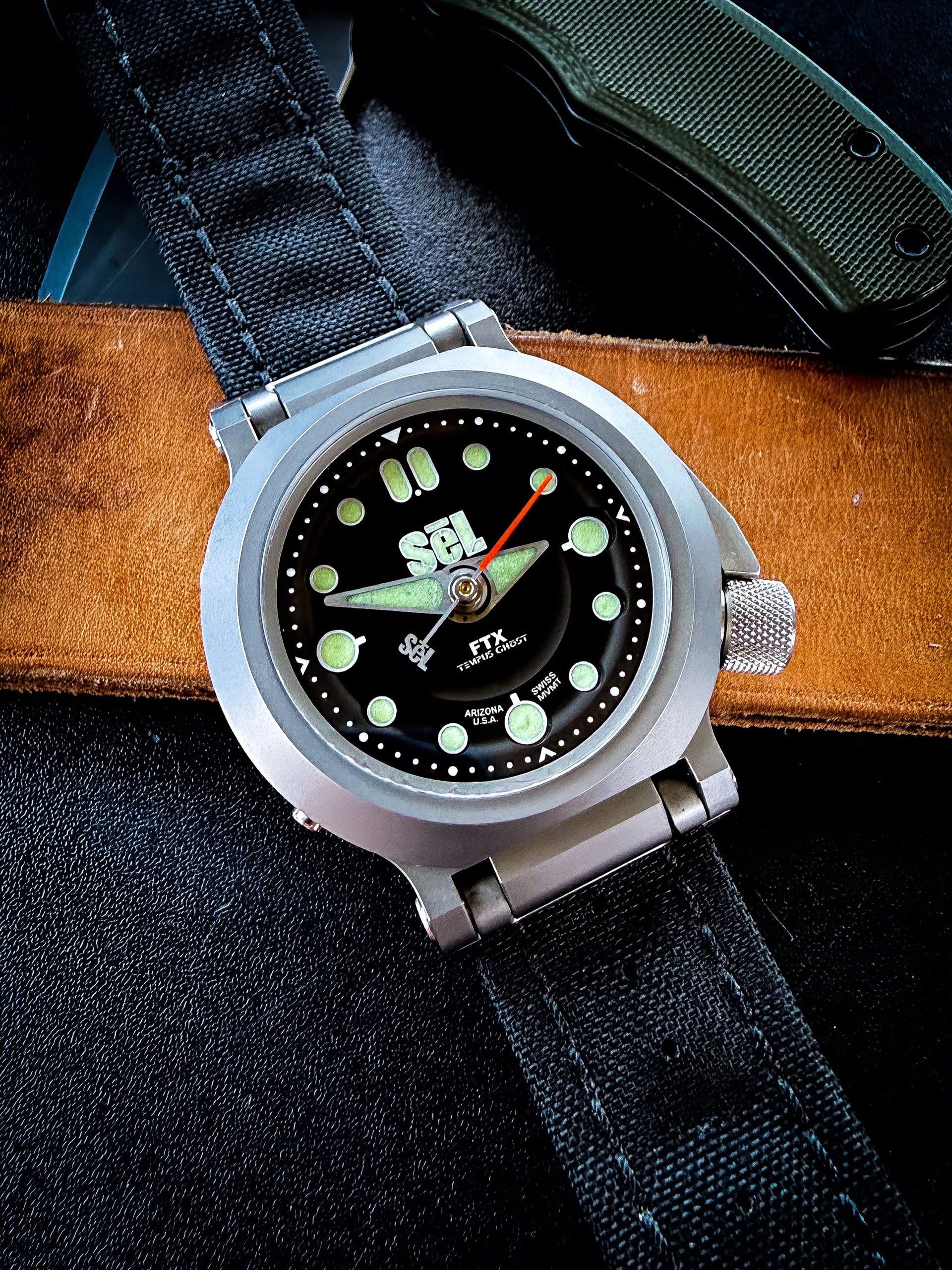
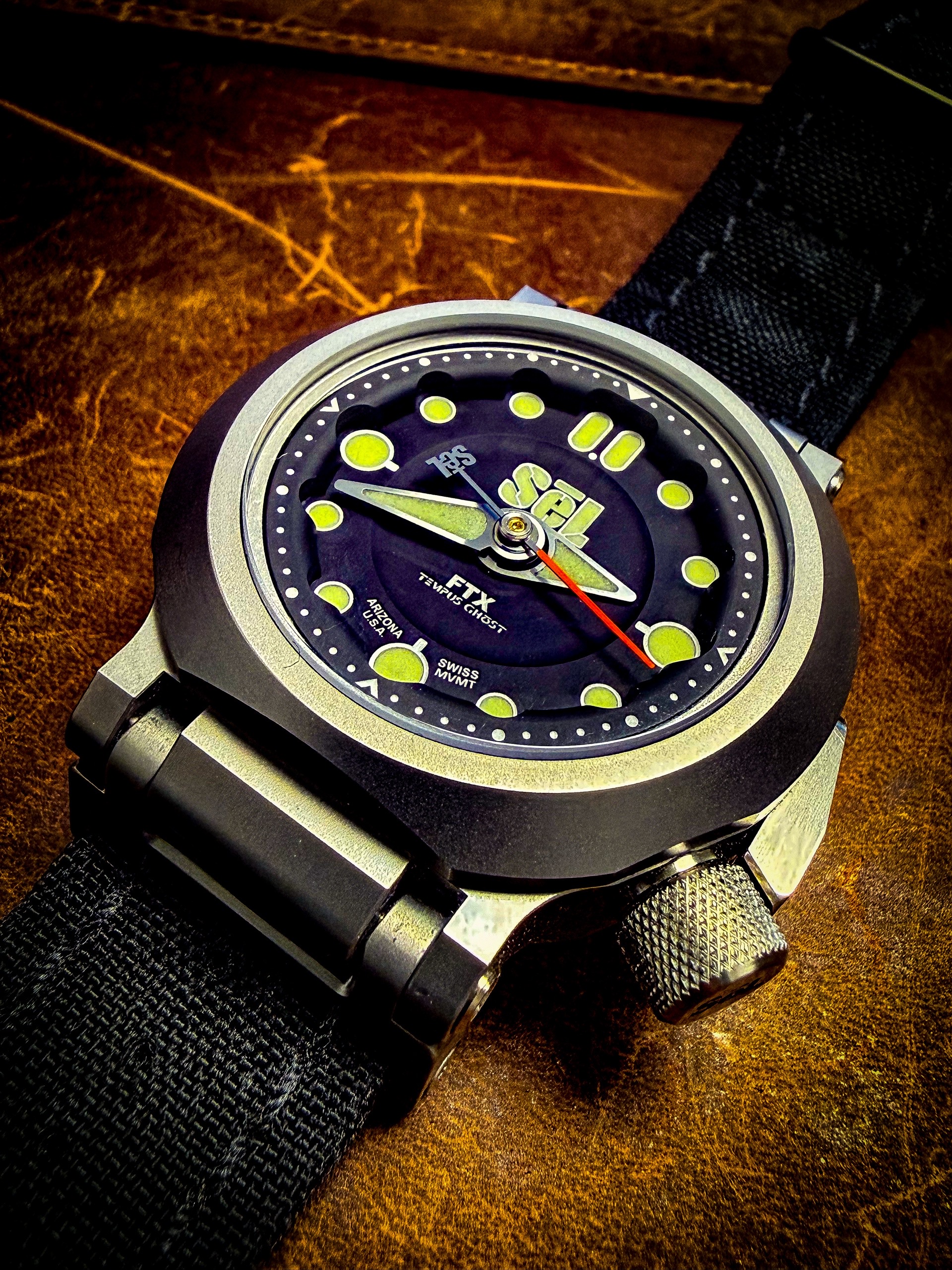
The SēL Instrument MK1 OmniDiver is the absolute peak of over-engineered tool watches. While most luxury brands build watch cases to survive a splash in a swimming pool, SēL Instrument founder Andrew McLean built the MK1 in Tucson, Arizona to survive the crushing depths of the abyss and the absolute worst environments on Earth. True tool watches have a comprehensive system of engineered solutions for environmental protection. Here is why the MK1 OmniDiver earns the crown as the ultimate tool watch. While typical dive watches rely on standard 316L stainless steel or soft Grade 2 titanium, the entire MK1 OmniDiver case, bezel, and bracelet are CNC-milled from certified Grade 5 titanium. Grade 5 titanium is an alloy blended with aluminum and vanadium, making it dramatically harder and more scratch-resistant than pure titanium. It shrugs off brutal impacts, extreme temperature drops, and abrasive sand, making it a favorite for tactical users and field professionals. Watch enthusiasts obsess over bezel action, but SēL took it to a completely mechanical, industrial level. The MK1 eschews traditional click springs—which can bend, rust, or jam with grit—in favor of a piston-indexing system riding on ceramic and Teflon ball bearings. The result is an ultra-smooth, crisp, unidirectional click that cannot be accidentally bumped out of place and is entirely immune to being clogged by mud or salt. Furthermore, SēL utilizes a solid metal bezel insert rather than fragile ceramic, ensuring it will never crack or shatter when slammed against an engine block or dive cage. Nuclear-Grade Lume Legibility is a life-or-death requirement for a true field instrument. SēL mixes its illumination compound in-house using a proprietary blend of europium and dysprosium doped grade-0 particles combined with UV-transparent binders. This creates an absurdly bright strontium-aluminate glow that easily lasts for over 18 hours in pitch-black environments, ensuring readability long into a deep-sea dive or an overnight operation.

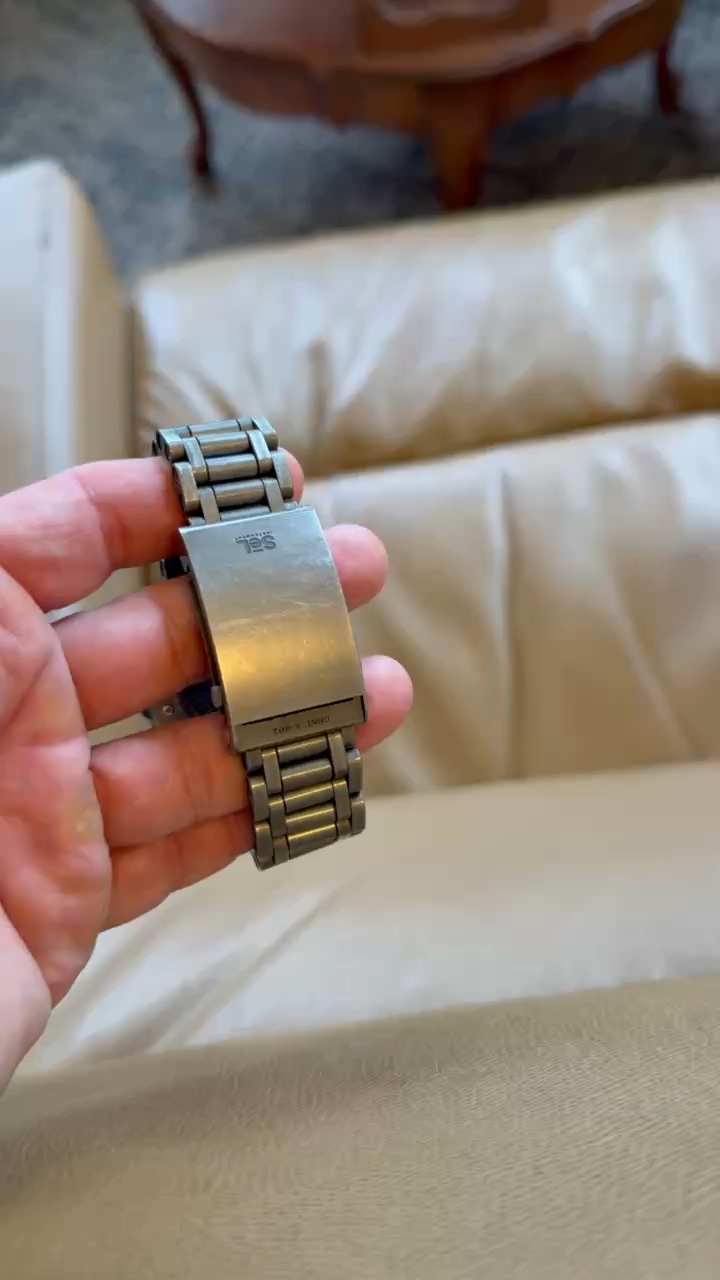
Welcome to #selturday . A day to celebrate a true tool and not some silly marketing bullshit about a dress watch marketed as a “tool watch” while the bezel falls apart but it’s defended as some purpose verbal diarrhea nonsense. Tried the new multiple caption option, each pic has a different caption in this series. Let me know what you think?!? The SēL Instrument OmniDiver stands out as one of the most unapologetically over-engineered mechanical objects on the planet. Founded by Andrew McLean—a former private contractor—the Arizona-based brand was born out of pure frustration with standard luxury watches failing in extreme environments. Instead of tweaking existing designs, SēL engineers everything from scratch, building a literal “bombproof” timepiece. Here is a deep dive into the insane engineering that defines the OmniDiver line. 🛡️ The Structural Foundations Standard dive watches rely on basic cases and spring bars. The OmniDiver treats case architecture like aerospace engineering: * Grade 5 Titanium: The entire case, bezel, and bracelet are machined from solid Grade 5 titanium (Ti-6AL-4V) rather than the softer Grade 2 used by mainstream luxury brands. * No Spring Bars: Straps and bracelets are secured via heavy-duty machine screws that are captive at both ends, entirely eliminating the weakest point of a traditional watch. * 6 O’Clock Crown: The screw-down crown is uniquely tucked between the lugs at the 6 o’clock position, shielding it completely from lateral impacts. * Unprecedented Testing: SēL had to custom-build their own 20,000 psi hydrostatic test system just to find the breaking points of their designs during R&D. . . ⌚️ @selinstrument 📸 @watches_in_nature . . . . . . . . . . #toolwatch #edccarry #diverwatch #moodywatchshots Deep-Sea Hydromechanical Seals While the massive flagship models achieve an astronomical water resistance of 6,000 meters, even the compact OmniDiver Xos 42 handles a bone-crushing 2,000 meters while keeping a slim 13.7mm profile. * Two-Stage Seals: The watch utilizes distinct low-pressure and high-pressure seals that react dynamically, using hydrostatic pressure to tighten the seal as you go deeper.