From Concrete Jungles to Your Wrist: The Timex x Hodinkee Lab Archive and the Rise of Brutalist Design
In the often-predictable world of watch design, where heritage reigns and circular cases are king, a new aesthetic is making its presence felt. It's raw, uncompromising, and pulls no punches. It’s a design language born from post-war necessity that champions raw materials and functional form over ornamentation. We’re talking about Brutalism, and it has found a compelling home on our wrists, perfectly encapsulated by a recent, and remarkably affordable, release born from an unexpected partnership, delighting many a dialhead: the Timex x Hodinkee Lab Archive.
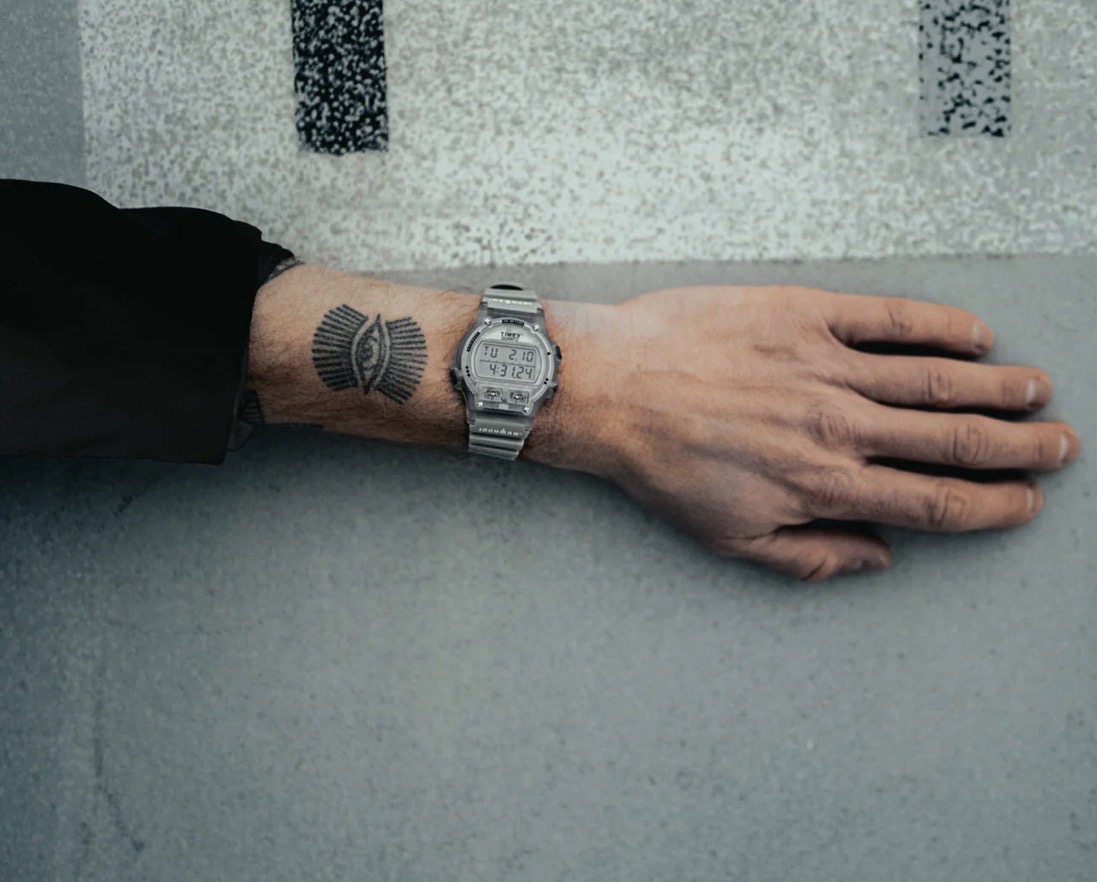
What may appear at first glance to be a solo effort from Timex is, in fact, a thoughtfully executed collaboration with the tastemakers at Hodinkee. This partnership is key to understanding the watch's appeal, as it represents a curated dive into the most utilitarian corners of Timex's back-catalog. For decades, watch enthusiasts have associated specific design codes with certain styles—dive watches have rotating bezels, pilot's watches have legible numerals, and dress watches are slim and polished. But the Timex x Hodinkee Lab Archive, specifically the TW5M73300JR, doesn't neatly fit into these categories. Instead, it feels like something pulled from a different archive altogether—one filled with experimental, function-first prototypes from the 1980s.
While we often associate Brutalism with massive, imposing concrete buildings, its ethos translates surprisingly well to the miniature world of horology. Stripped of decorative flourishes, a Brutalist watch emphasizes its case architecture, its material honesty, and its core purpose: telling the time. It’s a philosophy that values function-first minimalism, a concept Timex has championed for over a century.
"Brutalist design emerged in the post-World War II era as an efficient architectural solution, characterized by exposed concrete surfaces, minimal decoration, and an emphasis on functionality."
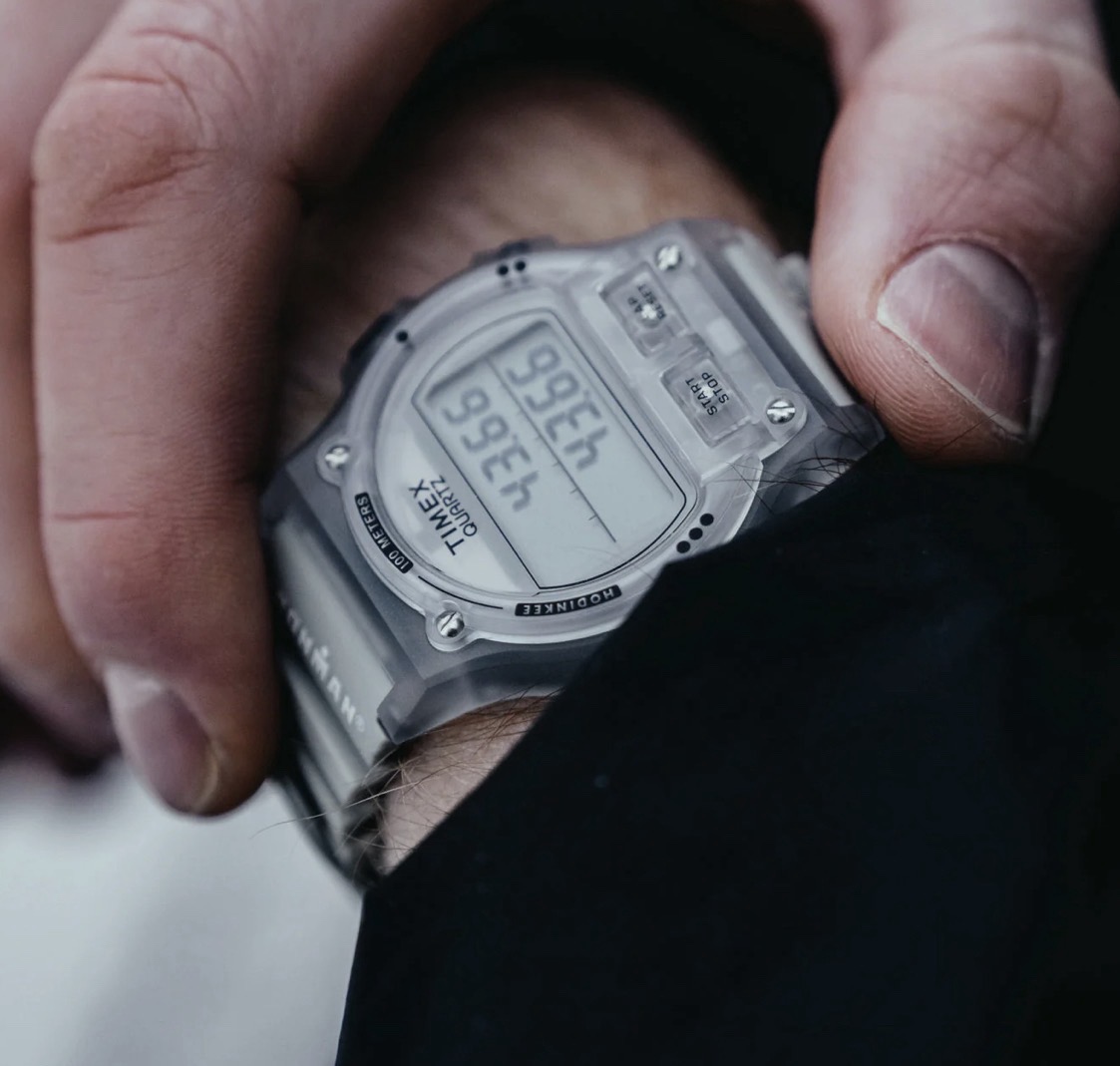
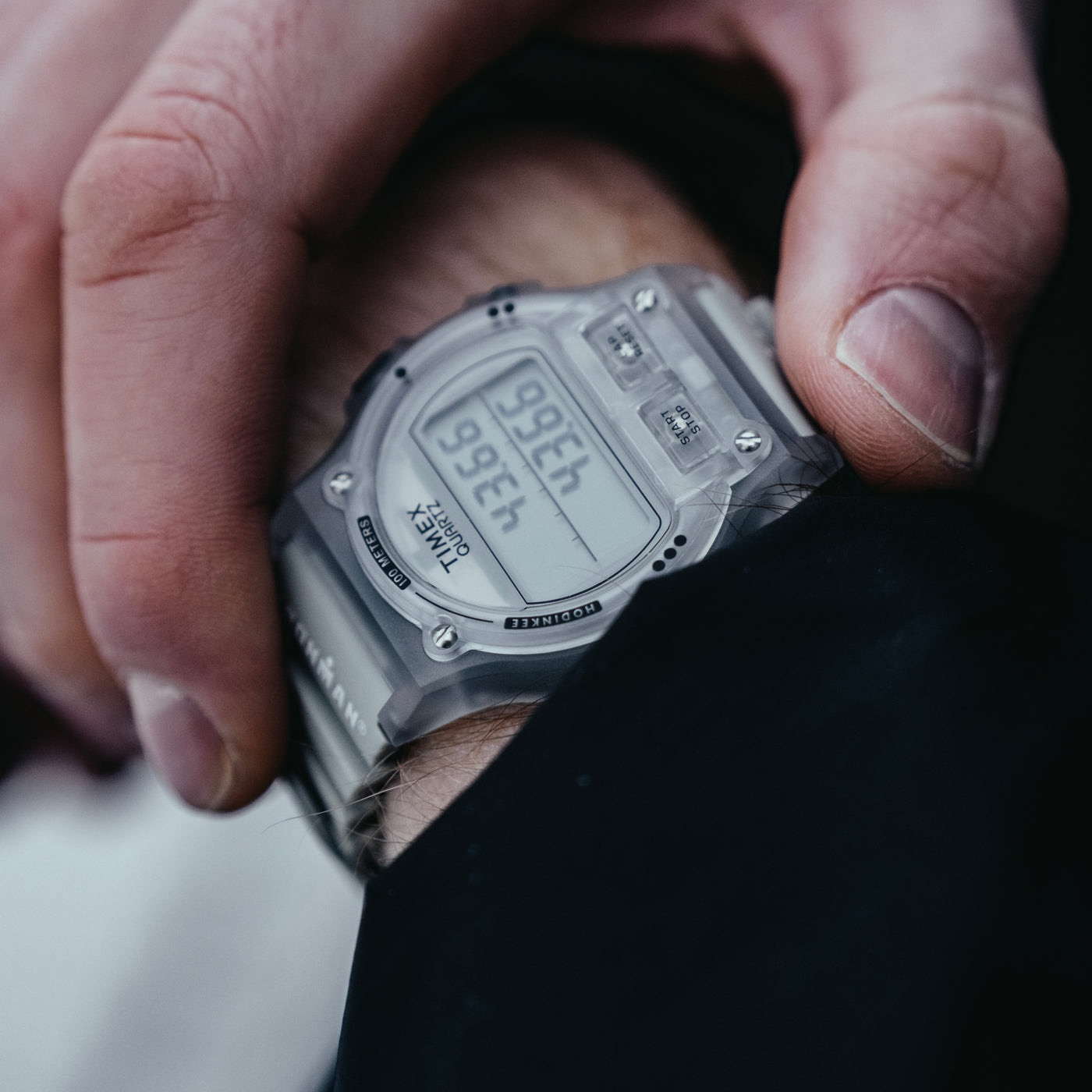
The Lab Archive's sharp, angular resin case, which flows seamlessly into the integrated strap, forms a monolithic structure. The design is honest—what you see is what you get. There are no polished chamfers or contrasting finishes, just the raw, matte texture of the case material itself, a choice clearly celebrated by the Hodinkee team in their interpretation.
A Legacy of Purpose-Built Design
To understand why a watch like the Lab Archive feels so authentically Timex, you have to look back at the brand's history. From its origins as the Waterbury Clock Company in 1854, Timex has always been about making timekeeping accessible and durable. This military-industrial heritage is key. In the 1980s, Timex produced a disposable plastic field watch for the US military, the MIL-W-46374B. This piece, built for only a couple of months in 1982, was the antithesis of luxury: it was plastic, disposable, and purely functional—a perfect, if unintentional, example of Brutalist principles in a watch.
The Timex x Hodinkee Lab Archive is a spiritual successor to this era. It taps into this history, but with a modern, curated perspective that elevates the original's utilitarian roots into a distinct design statement.
The 80s Digital DNA and the Hodinkee Touch
The design is a clear homage to the Timex Atlantis 100, a watch that first appeared in the mid-80s with a focus on robust water resistance and a no-frills digital interface. These watches were tools first. Their success wasn't built on elegance, but on resilience and innovative features.
The collaboration with Hodinkee hones in on this specific piece of history, reinterpreting the Atlantis with a new level of aesthetic consideration. The key features of the Lab Archive collaboration include:
A Monochromatic Palette: The all-black colorway gives the watch a stealthy, architectural feel that enhances its angular design.
Translucent Resin Case: A subtle but significant choice, the semi-transparent case offers a glimpse of the digital module within, celebrating the watch's construction in a way the opaque originals never did.
Minimalist Dial: The dial is stripped back to its essentials, with clean white markings and a notable lack of extraneous branding, putting the focus squarely on the form and function.
This collaboration feels less like a simple reissue and more like a restoration of an idea. Hodinkee's involvement ensured that the chosen reference was not just a random piece from the past, but one that perfectly captured the spirit of 80s functionalism.
Illuminating an Icon: The INDIGLO® Factor
Of course, no discussion of a modern, functional Timex is complete without mentioning its most famous innovation: the INDIGLO® backlight. Introduced in 1992, this electroluminescent technology was a game-changer, illuminating the entire dial with a soft, even glow. It was a revolutionary leap in legibility that quickly became a signature feature.
The inclusion of INDIGLO® in the Lab Archive is more than just a practical feature; it's a direct link to Timex's history of user-focused innovation. It underscores the "tool watch" nature of the piece. While the all-black aesthetic is stylish, the bright white markers and the iconic blue-green backlight ensure its primary function—readability in all conditions—is never compromised.
A Closing Thought: Accessible Authenticity, Curated
The world of Brutalist-inspired watches often includes high-end, architectural pieces. What makes the Timex x Hodinkee Lab Archive so compelling is that it delivers this raw, uncompromising aesthetic at a price point that remains true to the Timex philosophy. The collaboration is a masterclass in storytelling, reaching into the archives to distill the spirit of Timex's experimental, function-first design lab of the 80s into a new, contemporary form.
For enthusiasts who appreciate design with intent, durability, and a story to tell, the Lab Archive is a powerful statement. It proves that compelling, historically-rooted design doesn’t need a four-figure price tag. It just needs to be honest—and sometimes, it takes a partnership with a keen eye to remind us just how cool that honesty can be.
GALLERY
WRITTEN BY
Nick
I originally started VELOCE to put my skills to work, hone my app design and web development practices, and dive deeper into the world of horology. I wanted to learn more about the watches, the brands, and the incredible people behind them - the creators, the designers, and the collectors. I love discovering new timepieces and sharing their stories with the world. VELOCE is my ultimate passion project and hobby, the creative space I head to after my full-time job to build something I truly care about.
 By Nick·April 16, 2026· 5 min read