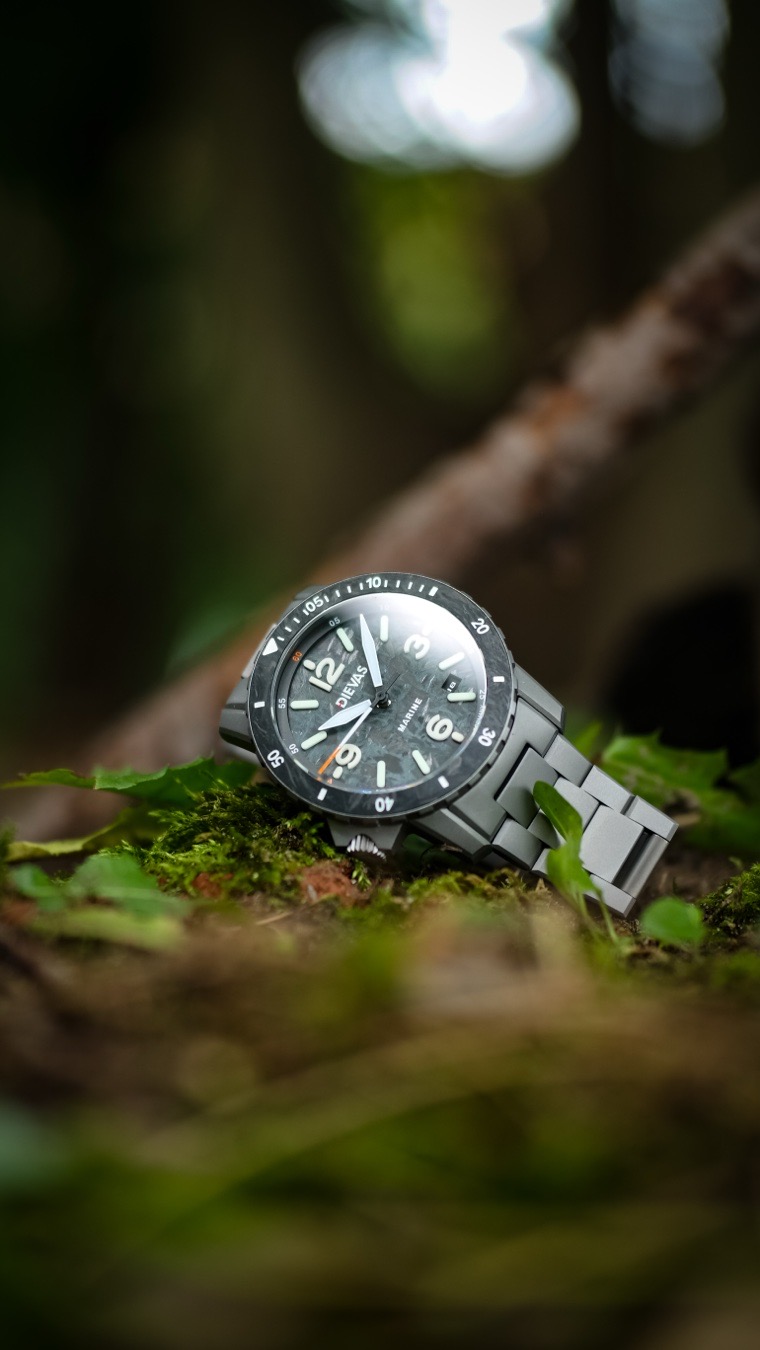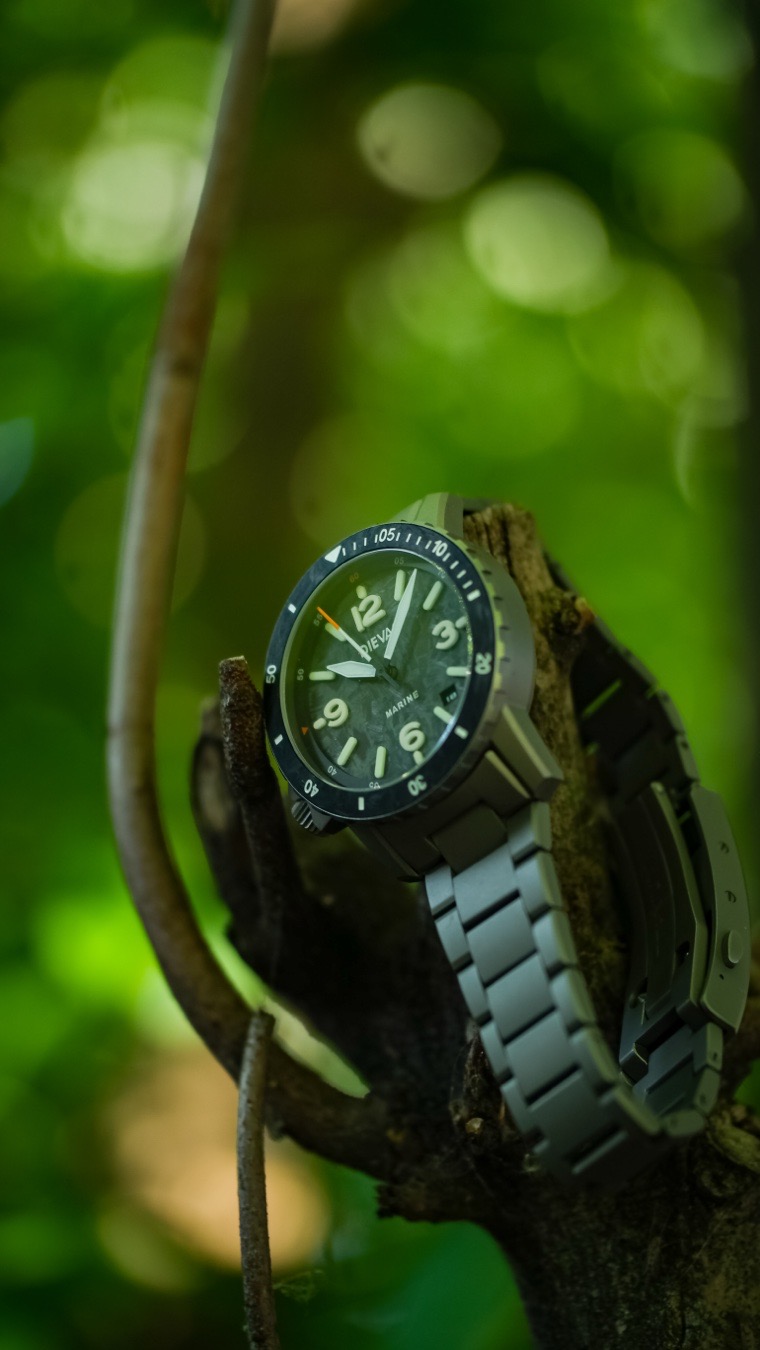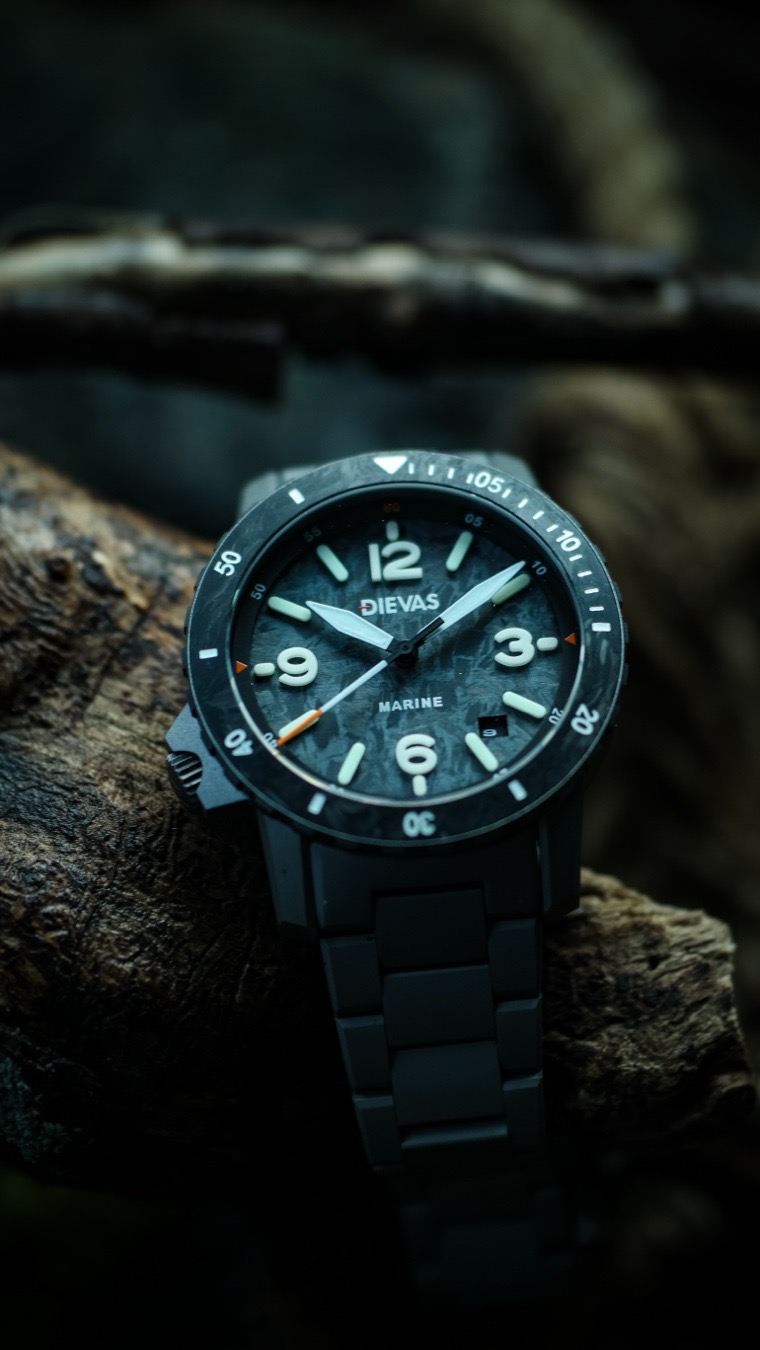
The Dievas Vortex Marine is a vastly superior choice over the Crepas Megamatic because it balances extreme teutonic engineering with absolute daily wearability. While both watches appeal to enthusiasts who love over-built, unapologetic tool watches, the Dievas outclasses the Crepas in materials, execution, and ergonomics.
* The Case Dimensions: The Crepas is a massive, polarizing brick. It features an aggressive 55mm overall case width and a 24mm lug width. Conversely, the Dievas Ti features refined proportions a 39.5mm diameter, 12mm thickness, and a highly wearable 46mm L2L
* Crown Placement: The Crepas utilizes a standard, oversized right-side crown that I heard people complain about who owned it. The Dievas Marine series utilizes a destro crown orientation, ensuring it never catches on clothing.
When it comes to advanced metallurgy, Dievas operates on another level.
* Proprietary Titanium: The Dievas is forged from UltraWerk™ Titanium, a microblasted proprietary alloy that offers incredible scratch resistance while remaining feathers-weight on the wrist.
* The Steel Alternative: The Crepas relies on standard, heavy 316L stainless steel. While robust, the sheer mass of the Crepas, whereas the Dievas offers a “disappear-on-the-wrist” experience without sacrificing structural integrity.
* The Crepas is explicitly a reissue/homage of a shelved, highly experimental 1980s Omega prototype. It is a historical conversation piece, but its blocky geometry is highly impractical for anything outside of saturation diving.
* The Dievas is born from a long-standing German engineering ethos. It features a cutting-edge forged carbon bezel and a beautifully textured matte carbon dial paired with premium 3D SuperLuminova markers. It is modern, functional, and highly legible without relying on historical gimmicks.
The Megamatic is a fun, novelty for collectors who want a giant piece of steel history. However, if you want an elite, German-engineered tactical instrument that brings premium titanium, high-end forged carbon, and perfect daily architecture to the table, the Dievas wins by a landslide.
#dievaswatches #germanwatches #moodywatchshots
#fieldwatch #watchnerd
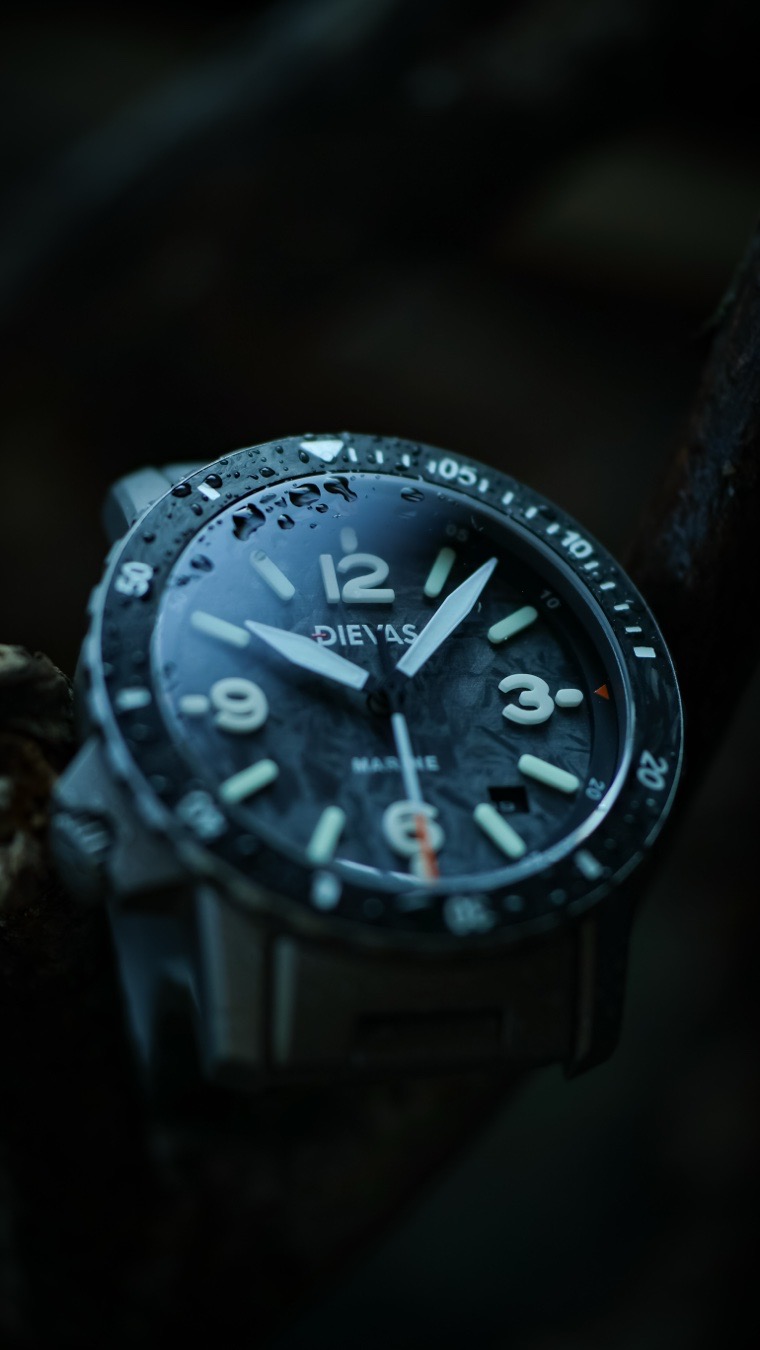
Dievas UltraWerk™ is a proprietary transparent surface technology that hardens titanium at its core instead of merely masking it with a cosmetic topcoat. Developed to provide maximum protection for military-grade tool watches, this metallurgical engineering breakthrough significantly increases scratch, abrasion, and corrosion resistance. Unlike traditional physical vapor deposition (PVD) or diamond-like carbon (DLC) coatings that can chip or flake off under impact, UltraWerk™ integrates directly into the atomic matrix of the metal. This approach maintains the crisp case geometry, microblasted matte finish, and the raw industrial slate-gray hue of the underlying Grade 5 titanium.
Rather than layering a thick chemical shield over the case, UltraWerk™ works through an advanced surface modification process.
* Atomic Fusion: The treatment is applied at a microscopic level, bonding with the titanium substrate rather than sitting loosely on top of it.
* Geometric Integrity: Traditional thick coatings round off sharp bevels and chamfers. UltraWerk™ is micro-thin and completely transparent, ensuring that high-precision CNC-milled lines remain razor-sharp.
* Tactile Preservation: The watch preserves its original, slightly warm, sand-blasted tactile grain. It avoids the artificial “plasticky” or excessively slick texture associated with cheaper clear coats.
This comprehensive engineering approach separates a professional-grade diving or field instrument from a standard wristwatch.
Dievas applies the UltraWerk™ treatment evenly to every external titanium element. This includes the midcase, the screw-down crown, the bezel assembly, and every link of the solid, screw-pinned H-link bracelet and micro-adjusting clasp.
Titanium is highly resistant to saltwater, but the integrated UltraWerk™ shield adds another layer of security against aggressive environmental factors like sweat, chemicals, and prolonged marine exposure.
Because the barrier is fundamentally a part of the metal’s structure, it will not fade, discolor, or wear away unevenly over decades of heavy daily abuse.