The Journal By Nick·October 13, 2026· 7 min read
Haunted Watches: Five Timepieces with Dark Histories
By Nick·October 13, 2026· 7 min readSome watches carry more than time – they hold dark histories. Uncover five legendary timepieces, from the 'cursed' Patek Philippe Graves Supercomplication to a modern diver linked to a murder, in these tales of horror horology.
0 views
EXPERIENCE THIS RELEASE
2 min listen
0:00 / 2:28
Haunted Watches: Five Timepieces with Dark Histories — watch the reel or listen to the full narration.
IN THIS ARTICLE
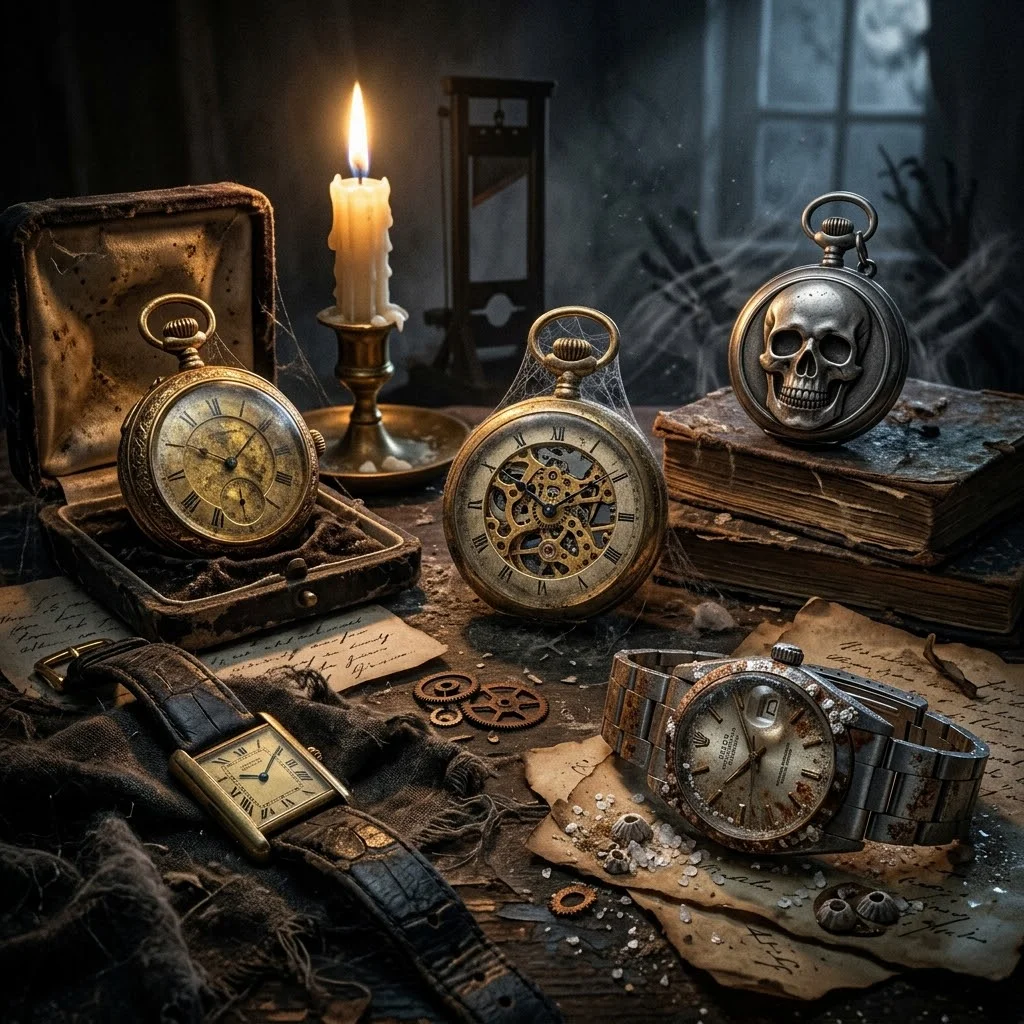
Some watches tell more than the time. They carry the weight of their owners, accumulating stories of ambition, tragedy, and crime. Just in time for Halloween, we’re looking at five watches whose legends have taken a dark turn, from cursed masterpieces of haute horology to a modern diver that became the key witness in a murder.
These are tales of folklore, forensic science, and auction-world lore. They remind us that a watch is never just an object; it’s a silent companion to a human life, and sometimes, a human death. Let's separate the documented facts from the ghoulish legends that follow these five timepieces.
These are tales of folklore, forensic science, and auction-world lore. They remind us that a watch is never just an object; it’s a silent companion to a human life, and sometimes, a human death. Let's separate the documented facts from the ghoulish legends that follow these five timepieces.
The Patek Philippe Graves Supercomplication: A Curse of Greed?
The Henry Graves Jr. Supercomplication is one of horology's undisputed titans. Commissioned in 1925 by New York banker Henry Graves Jr., it was built to win an informal watchmaking duel against automotive magnate James Ward Packard. The goal was simple: create the most complicated watch on Earth.
Patek Philippe delivered the result in 1933. It was a mechanical universe in an 18-karat gold case, boasting 24 separate complications. For 56 years, it held the title of the world's most complicated portable timepiece, a record only broken by Patek itself with the Calibre 89 in 1989.
The Legend of the Curse
Auction-world folklore claims the watch carried a heavy price beyond its commission fee. Legend says that soon after taking possession of the masterpiece, Graves suffered a series of personal tragedies, including the deaths of close friends and family. The story goes that he came to see the watch as a harbinger of misfortune.
The tale gained another dark chapter decades later. Sheikh Saud bin Mohammed Al-Thani of Qatar purchased it at a 1999 Sotheby's auction for a record $11 million. He later fell into severe debt, and died unexpectedly at age 48—just two days before the watch was scheduled for a 2014 auction to pay his creditors.
At that sale, it hammered for an astonishing 23.2 million Swiss francs. While the "curse" narrative makes for a great story, it remains firmly in the realm of legend. The documented history is that of a pinnacle of human achievement.
The Supercomplication's celestial chart wasn't generic. It was customized to show the exact night sky as seen from Henry Graves Jr.'s home in New York City.
Breguet No. 160 "Marie-Antoinette": The Ill-Fated Masterpiece
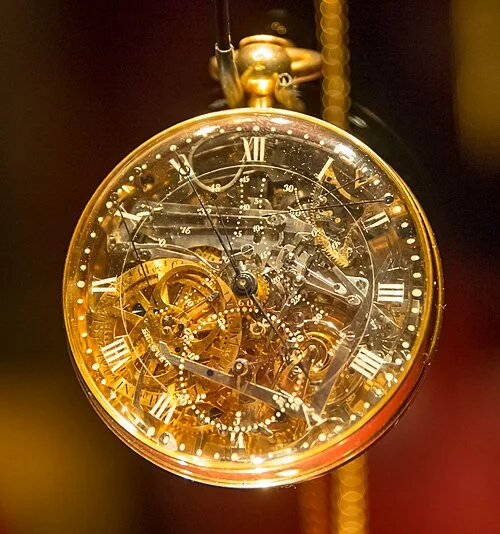
In 1783, an anonymous admirer of Queen Marie Antoinette commissioned Abraham-Louis Breguet to create the most spectacular watch possible. The budget was unlimited, and the timeline was open. The only rule was to incorporate every known complication and use precious metals wherever possible.
The project became an obsession that outlived both the Queen and Breguet himself. Marie Antoinette was executed in 1793, long before the watch was finished. Breguet died in 1823, and his workshop finally completed the piece, known as No. 160, in 1827—a staggering 44 years after it was ordered.
The Thief's Obsession
The Queen never saw her watch. For decades it was a prize of collectors until it landed in the L.A. Mayer Museum for Islamic Art in Jerusalem. In 1983, it was stolen in a brazen heist by master thief Na'aman Diller.
For over two decades, the watch vanished. Diller, a notorious Israeli cat burglar, hid the masterpiece along with dozens of other priceless clocks and watches in safes across Europe and the United States. Folklore suggests the watch consumed his life, casting a shadow of paranoia over him until his death in 2004.
He confessed to his wife on his deathbed, and she later attempted to sell the stolen items. The legendary Breguet No. 160 was recovered in 2007, its mystique only deepened by its decades in the criminal underworld.
Mary, Queen of Scots' "Death's Head" Watch
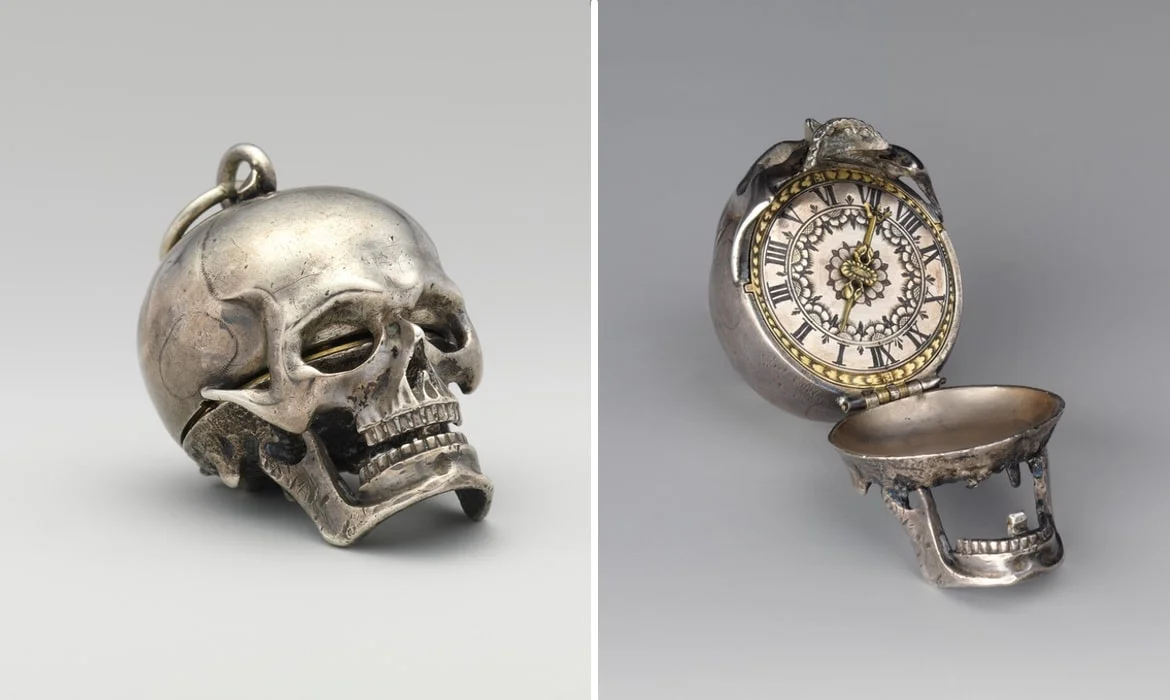
This timepiece is more artifact than watch, a chilling piece of *memento mori*. The object is a silver watch carved into the shape of a human skull. Engravings from the poet Horace and biblical quotes adorn its surface, reminding the owner that death is inevitable.
The tradition of *memento mori*—"remember you must die"—was common among the European elite in the 16th and 17th centuries. These objects were not meant to be morbid, but to encourage a life of virtue by keeping mortality front of mind. This one, however, is attached to a particularly grim royal end.
A Parting Gift at the Scaffold?
Legend holds that this skull watch belonged to Mary, Queen of Scots. The story claims she carried it with her to her execution at Fotheringhay Castle in 1587. Just before she was beheaded, she is said to have handed it to one of her ladies-in-waiting, Mary Seaton.
While the watch's design is authentic to the period, its direct connection to the execution is the stuff of historical folklore. There is no definitive provenance confirming she had it on the scaffold. Still, the tale has given the object a powerful and macabre aura that has persisted for centuries.
The "Kennedy Curse" Cartier Tank
The Cartier Tank is a design icon, worn by everyone from artists to presidents. But one particular gold Tank has become the subject of a modern urban legend: the "Kennedy Curse." The story is attached to a watch once owned by Jacqueline Kennedy.
The superstition claims that this specific watch is cursed. According to the tale, every woman who subsequently owned or wore it was tragically widowed while still in her thirties. This kind of story is impossible to verify and treads a fine line between folklore and exploiting personal tragedy.
From First Lady to Pop Culture
Jacqueline Kennedy was frequently photographed wearing her classic Cartier Tank. Her watch, a gift from her brother-in-law Prince Stanislaw Radziwill in 1963, is a well-documented piece of history. It sold at a Christie's auction in 2017 for $379,500.
The buyer was Kim Kardashian, which brought the old rumors of a "widow's curse" back into the celebrity news cycle. The curse itself, however, remains an unsubstantiated legend attached to the watch's high-profile history. It is a story about celebrity and superstition, not horology.
The original Tank design was inspired by the top-down view of the Renault FT-17 tanks used on the Western Front in World War I, connecting a symbol of elegance to an instrument of war.
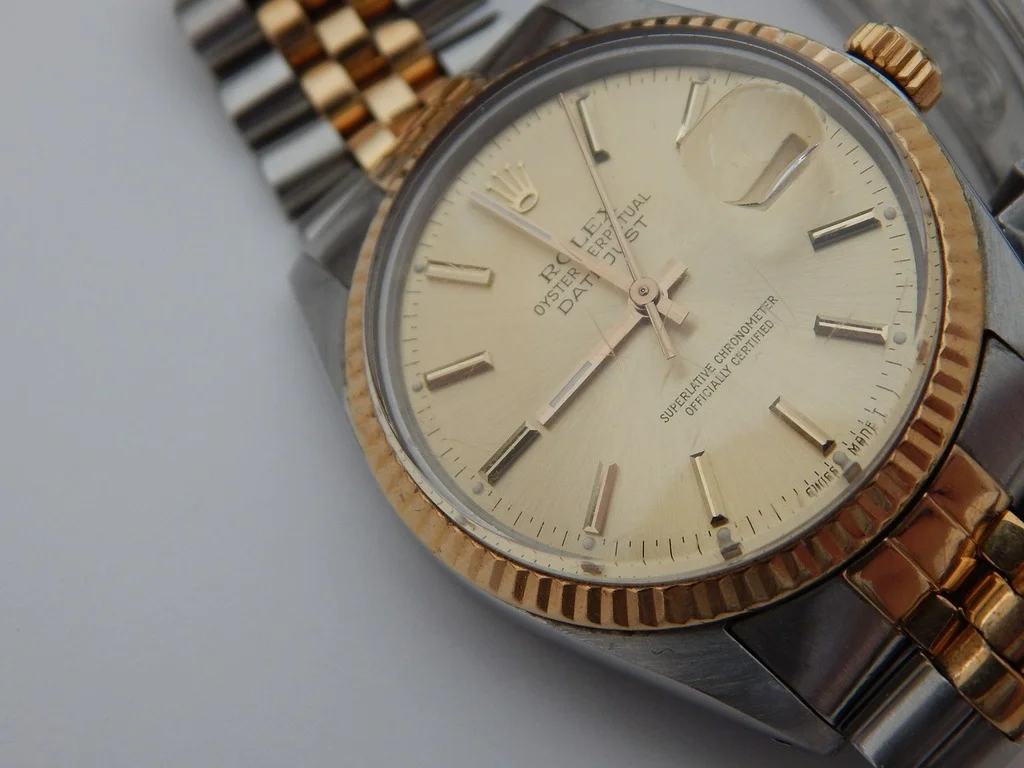
The Rolex That Solved a Murder
Some collectors have a superstition about wearing a "dead man's watch." This final story isn't about ghosts, but about a timepiece that became a silent witness to a brutal crime. It is a case of forensic history, not supernatural haunting.
In 1996, a body was pulled from the English Channel. The victim was Ronald Platt. His identity was unknown until investigators examined the one personal effect still on his wrist: a Rolex Oyster Perpetual. Despite weeks of saltwater immersion, the watch contained the key to the entire case.
The Watch as Witness
The Rolex's automatic movement had kept service records. Investigators used the watch's unique serial number to trace its ownership history through Rolex's meticulous archives. The records led them to Platt and, ultimately, to his killer.
The murderer was Albert Johnson Walker, a Canadian fugitive who had stolen Platt's identity. The Rolex on the victim's wrist was the thread that unraveled Walker's entire scheme, providing the crucial link that identified the body and sent a killer to prison. The watch didn't just survive; it testified.
The Takeaway
These five watches show how an object's story can become as important as its mechanics. Whether through documented history, criminal forensics, or pure folklore, their value is defined not just by gears and jewels, but by the human lives—and deaths—they have touched.
Frequently Asked Questions
How much did the Patek Philippe Henry Graves Supercomplication sell for?
The Patek Philippe Henry Graves Supercomplication sold for 23.2 million Swiss francs at a Sotheby's auction in Geneva in November 2014. At the time, this was a world record for any timepiece sold at auction.
Did Marie Antoinette ever actually own or wear her Breguet watch?
No, she never saw it. The watch, Breguet No. 160, was commissioned for her in 1783, but she was executed in 1793. The watch was so complex that it wasn't completed by Breguet's workshop until 1827, 34 years after her death.
What is a "memento mori" watch?
A *memento mori* watch is a timepiece designed to remind its owner of their own mortality. These were popular from the 16th to the early 18th century and often featured motifs like skulls, skeletons, or hourglasses, along with philosophical or religious inscriptions about the fleeting nature of time.
How did a Rolex help solve a murder?
In the "Rolex Murder" case, the victim, Ronald Platt, was unidentifiable when his body was recovered. The Rolex Oyster Perpetual on his wrist, however, had a unique serial number. Investigators used this number to trace the watch's service history through Rolex's records, which led them to the victim's identity and ultimately to his murderer, Albert Johnson Walker.
GALLERY
WRITTEN BY
Nick
I originally started VELOCE to put my skills to work, hone my app design and web development practices, and dive deeper into the world of horology. I wanted to learn more about the watches, the brands, and the incredible people behind them - the creators, the designers, and the collectors. I love discovering new timepieces and sharing their stories with the world. VELOCE is my ultimate passion project and hobby, the creative space I head to after my full-time job to build something I truly care about.