The Journal 1Hamilton Khaki Field White Dial Mechanical H69439411 Men's Watch
 2Casio G-Shock Mudman Master Of G-Land Digital Green Resin Strap Solar GW-9500-3 200M Men's Watch
 3Orient Mako II Automatic 200M FAA02009D9 TAA02009D9 Men's Watch
 4Luminox Navy Seal Rubber Strap Black Dial Quartz Diver's XS.3501.F 200M Men's Watch
 5Hamilton Khaki Navy Belowzero Automatic Diver's Titanium H78505330 1000M Men's Watch
 By Nick·August 1, 2026· 10 min read
Top Tool Watches: Durable & Reliable Timekeepers
Top picks at a glance
1Hamilton Khaki Field White Dial Mechanical H69439411 Men's Watch2Casio G-Shock Mudman Master Of G-Land Digital Green Resin Strap Solar GW-9500-3 200M Men's Watch3Orient Mako II Automatic 200M FAA02009D9 TAA02009D9 Men's Watch4Luminox Navy Seal Rubber Strap Black Dial Quartz Diver's XS.3501.F 200M Men's Watch5Hamilton Khaki Navy Belowzero Automatic Diver's Titanium H78505330 1000M Men's WatchBy Nick·August 1, 2026· 10 min readForget flashy jewelry; a tool watch is an essential piece of equipment. Discover the best purpose-built timekeepers designed for legibility, durability, and reliability in demanding conditions, including picks like the Hamilton Khaki Field.
0 views
IN THIS ARTICLE
The Best Tool Watches: A Guide to Purpose-Built Timekeepers
Updated September 2026
Let's get one thing straight: a tool watch isn't jewelry. It’s not about precious metals or showing off a price tag. A true tool watch is a piece of equipment, purpose-built to do a job. It’s an instrument designed for legibility, durability, and reliability under specific, often demanding, conditions. Whether you're a diver, a pilot, a soldier, or just someone who needs a watch that can take a beating and keep on ticking, this is where you start.
| Watch | Price | Display | Case Material |
|---|---|---|---|
| Hamilton Khaki Field… | $595.00 | Analog | Stainless Steel |
| Casio G-Shock Mudman… | $380.00 | Digital | Bio-Based Resin |
| Orient Mako II Automa… | $330.00 | Analog | Stainless Steel |
| Luminox Navy Seal Rub… | $472.12 | Analog | Stainless Steel |
| Hamilton Khaki Navy B… | $1950.00 | Analog | Titanium |
The original tool watches were born from necessity. In the early 20th century, aviators needed to time flight legs, divers needed to track bottom time, and soldiers needed to coordinate attacks. The watch on their wrist was as critical as any other piece of gear. That ethos of function-first design lives on. We're looking for watches that prioritize telling the time, clearly and accurately, no matter what you throw at them. Here are the ones that make the cut.
Hamilton Khaki Field Mechanical H69439411
If you were to draw the archetypal field watch, you’d probably end up with something that looks exactly like the Hamilton Khaki Field Mechanical. Its design DNA goes straight back to the military-issued watches Hamilton produced for US soldiers for decades. At 38mm, with a bead-blasted stainless steel case that kills reflections, it's pure, distilled function. There's no date window to clutter the dial, just highly legible Arabic numerals and a classic 24-hour track. This is legibility perfected.
Inside is where it gets interesting for watch nerds. It runs on the Caliber H-50, a hand-winding movement with a massive 80-hour power reserve. This is a huge practical advantage—you can wind it fully on Friday and it will still be running on Monday morning. The manual-wind action also creates a direct connection to the watch that you just don't get with an automatic or quartz. It’s a simple, robust, and proven piece of engineering that honors its military roots while being perfectly suited for modern life.
Best for: The purist who values heritage and simplicity.- Pro: Excellent 80-hour power reserve from the H-50 movement.
- Pro: Superb legibility and classic, no-nonsense military design.
- Con: Manual-winding requires daily interaction (which can also be a pro!).

1
Hamilton Khaki Field White Dial Mechanical H69439411 Men's Watch
Best for a classic field watch
$595.00
Display: AnalogCase Size: 38mmCase Thickness: 10mm
Shop thisCasio G-Shock Mudman GW-9500-3
No conversation about tool watches is complete without a G-Shock, and the Mudman is one of the toughest of the tough. Part of the "Master of G" series, this watch is designed for the absolute worst conditions on land. The name isn't just for marketing; its buttons are sealed to prevent mud, dirt, and dust from getting in and compromising function. The case is a rugged bio-based resin, and the whole thing is built to withstand shocks that would turn a mechanical watch into a pile of tiny gears.
Functionally, it's a beast. It's solar-powered, so you’ll likely never need a battery change. It has Multi-Band 6 for radio-controlled timekeeping, ensuring perfect accuracy. And it’s packed with sensors: a digital compass, barometer, altimeter, and thermometer. The duplex LCD display layers information, allowing you to see the compass graphics over the time, for example. It's not subtle, it's not elegant, but if your primary concern is a watch that absolutely will not fail you in the field, this is it.
Best for: Anyone needing ultimate durability and digital functionality.- Pro: Extreme shock, dust, and mud resistance.
- Pro: Solar-powered and radio-controlled for maintenance-free accuracy.
- Con: Large size and purely functional aesthetic isn't for everyone.

2
Casio G-Shock Mudman Master Of G-Land Digital Green Resin Strap Solar GW-9500-3 200M Men's Watch
Best for extreme environments
$380.00
Model/Ref: GW-9500-3Gender: Men'sDisplay: Digital
Shop thisOrient Mako II Automatic Diver
For decades, the Orient Mako has been the go-to recommendation for anyone looking for their first "real" mechanical dive watch, and for good reason. For an incredibly reasonable price, you get a watch with legitimate dive specs and an in-house automatic movement. The Mako II features 200 meters of water resistance and a 120-click unidirectional rotating bezel—the two non-negotiable features of a proper diver.
The real star is the Orient Caliber F6922. Unlike older, cheaper automatics, this movement hacks (the seconds hand stops when you pull the crown) and hand-winds, making it much easier to set the time accurately. It’s a reliable workhorse that proves you don’t need to spend thousands for a robust, capable mechanical watch. Whether you’re actually diving or just want a watch that can handle a weekend at the lake without a second thought, the Mako II delivers incredible value.
Best for: The first-time mechanical watch buyer or value-conscious diver.- Pro: Incredible value for a 200m diver with an in-house automatic movement.
- Pro: Upgraded F6922 caliber allows for hacking and hand-winding.
- Con: The bracelet is functional but is often the first thing owners upgrade.

3
Orient Mako II Automatic 200M FAA02009D9 TAA02009D9 Men's Watch
Best for an entry-level diver
$330.00
Brand: OrientModel/Ref: FAA02009D9Gender: Men's
Shop thisLuminox Navy SEAL XS.3501.F
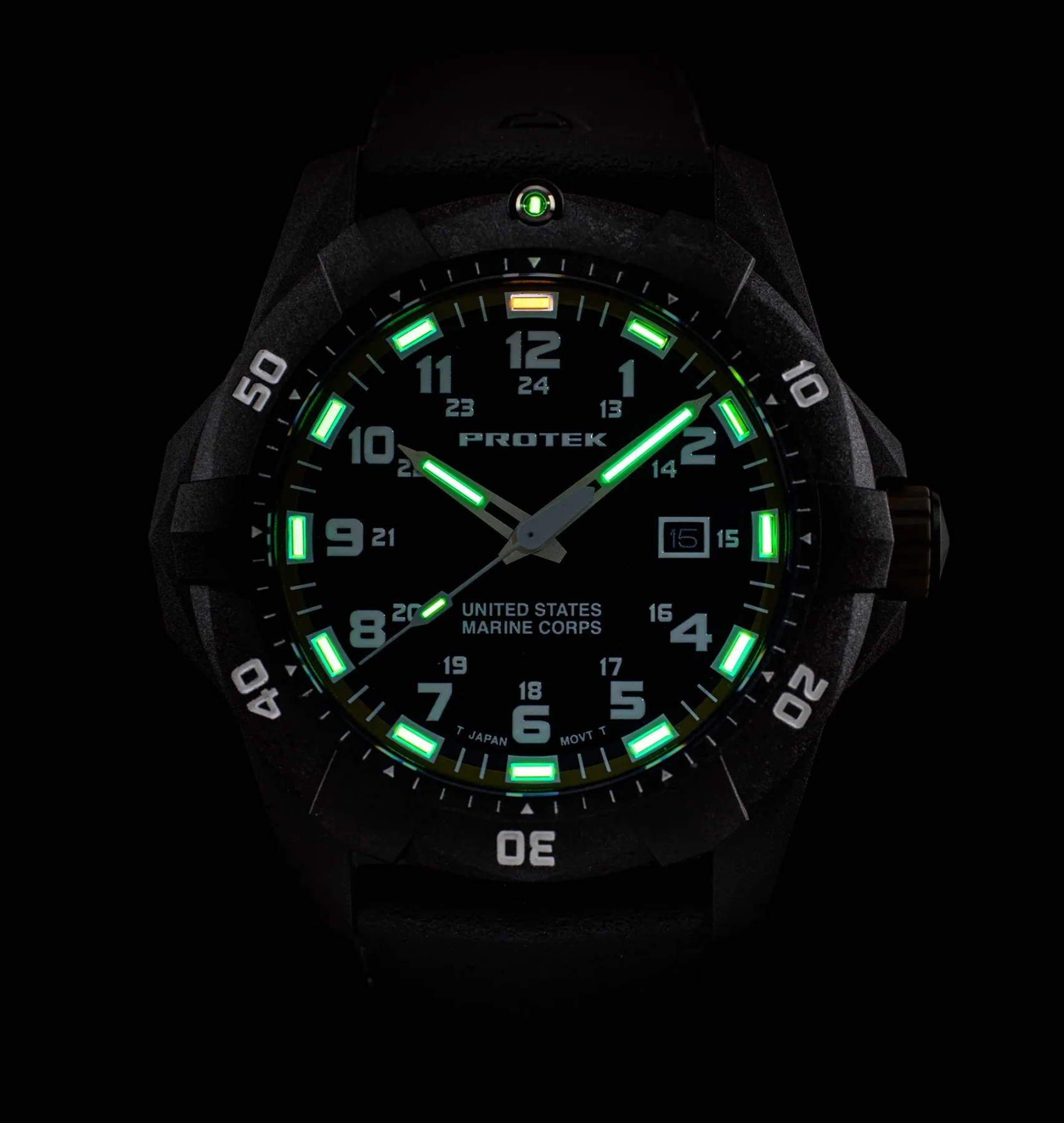
When your primary concern is telling the time in the dark, Luminox is in a class of its own. While most watches use phosphorescent paint (like Super-LumiNova) that needs to be charged by a light source and then fades over time, Luminox uses tiny, self-powered tritium gas tubes. This Luminox Light Technology (LLT) glows continuously for up to 25 years, regardless of light exposure. For low-light or no-light situations, it's the undisputed champion of legibility.
The watch itself is built to be a lightweight, durable tool. The case is made from CARBONOX, a carbon composite material that is six times lighter than steel but incredibly strong and shock-resistant. With 200 meters of water resistance and a Swiss Quartz movement for grab-and-go accuracy, it's a watch designed for people who can't afford for their gear to fail. It’s not a subtle watch, but its function is crystal clear.
Best for: Unbeatable low-light visibility and rugged, lightweight wear.- Pro: Tritium gas tubes provide constant, self-powered illumination for up to 25 years.
- Pro: The CARBONOX case is extremely lightweight and durable.
- Con: The bold, military-style design might be too aggressive for some.

4
Luminox Navy Seal Rubber Strap Black Dial Quartz Diver's XS.3501.F 200M Men's Watch
Best for night-time legibility
$472.12
Display: AnalogMovement: QuartzWater Resistance: 200m / 20ATM
Shop thisHamilton Khaki Navy Belowzero Titanium 1000M
If the standard tool watch is a dependable pickup truck, the Hamilton Belowzero is a military-grade armored vehicle. This is an exercise in over-engineering, and we love it for that. The specs are staggering: a 46mm case made of lightweight titanium, a sapphire crystal that's 5.6mm thick, and a water resistance rating of 1000 meters (or 3,280 feet). That’s deeper than 99.9% of humans will ever go, but it’s about knowing your watch *could*.
It includes a helium escape valve, a feature designed for saturation divers who spend extended periods in pressurized environments. Powering it is the H-10 automatic movement, the same family as the H-50 in the Khaki Field but with self-winding, again providing that excellent 80-hour power reserve. This watch is huge, purposeful, and completely uncompromising. It’s the definition of a professional-grade instrument that makes a serious statement.
Best for: The professional or enthusiast who wants ultimate water resistance.- Pro: Massive 1000-meter water resistance and a helium escape valve.
- Pro: Lightweight despite its size, thanks to the full titanium case.
- Con: At 46mm, it's too large for smaller wrists.

5
Hamilton Khaki Navy Belowzero Automatic Diver's Titanium H78505330 1000M Men's Watch
Best for serious deep diving
$1950.00
Brand: HamiltonModel/Ref: H78505330Gender: Men's
Shop thisHow to Choose the Right Tool Watch for You
Picking the right tool watch comes down to honestly assessing your needs. Here are the key factors to consider.
Movement: Automatic vs. Quartz vs. Solar
The engine of the watch is a critical choice. Automatic (or self-winding mechanical) movements are powered by the motion of your wrist and are appreciated for their intricate craftsmanship. They don't need batteries but do require periodic servicing. Quartz movements are battery-powered, incredibly accurate, durable, and affordable. They are often the most practical choice for a hard-use watch. Solar Quartz is a fantastic hybrid, using light to charge a cell that powers a quartz movement, offering grab-and-go convenience without the need for regular battery changes.
Water Resistance: What Do the Numbers Mean?
This is one of the most misunderstood specs. Here's a real-world breakdown:
- 50M (5 ATM): Splash resistant. Fine for washing your hands, but not for swimming.
- 100M (10 ATM): Suitable for swimming and snorkeling. This is a good baseline for an all-around tool watch.
- 200M+ (20 ATM+): The standard for recreational scuba diving. These watches are built with heavier-duty seals and construction to handle pressure.
Case Material: Steel, Titanium, or Resin?
Stainless Steel is the industry standard. It's strong, corrosion-resistant, and has a satisfying heft. Titanium offers the strength of steel at about half the weight, and it's also hypoallergenic. It's a premium material perfect for larger watches. Resin or Carbon Composites (like in G-Shocks and Luminox) are extremely lightweight, shock-absorbent, and affordable, making them ideal for high-impact activities.
Legibility and Lume: Can You Read It?
A tool watch must be easy to read at a glance. Look for clear, high-contrast dials with large hands and markers. Lume—the glowing material on the dial and hands—is just as important. Most watches use a photoluminescent paint like Super-LumiNova, which glows brightly after being charged by light. Others, like Luminox, use self-powered tritium gas tubes for a constant, albeit dimmer, glow that doesn't need charging.
Frequently Asked Questions About Tool Watches
What's the difference between a tool watch and a sports watch?
The line can be blurry, but it comes down to intent. A tool watch is designed primarily to perform a specific function (diving, flying, navigating), with aesthetics as a secondary concern. A sports watch might share a similar aesthetic but is often designed more for style and general daily wear.
Do I need an automatic movement in a tool watch?
Absolutely not. While many enthusiasts love the soul of a mechanical movement, a high-quality quartz or solar-powered movement is often more accurate, more shock-resistant, and requires less maintenance, making it arguably a more practical choice for a true "tool."
Is a more expensive tool watch always better?
No. Price often reflects the movement's complexity, finishing, brand heritage, and materials (like titanium or sapphire). An affordable watch like an Orient Mako or a G-Shock can be an incredibly effective tool, sometimes even more durable than a multi-thousand-dollar luxury piece. It's all about buying the right tool for the job you need it to do.
WRITTEN BY
Nick
I originally started VELOCE to put my skills to work, hone my app design and web development practices, and dive deeper into the world of horology. I wanted to learn more about the watches, the brands, and the incredible people behind them - the creators, the designers, and the collectors. I love discovering new timepieces and sharing their stories with the world. VELOCE is my ultimate passion project and hobby, the creative space I head to after my full-time job to build something I truly care about.