The Journal By Nick·August 11, 2026· 13 min read
Best Hunting & EDC Knives: Top Picks for Field & Daily Use
By Nick·August 11, 2026· 13 min readExplore our hand-picked selection of the best hunting and everyday carry knives. We delve into durable Scandinavian designs like the Helle Sigmund and robust Peltonen M95, perfect for field use and daily tasks.
0 views
IN THIS ARTICLE
Updated August 2026
A good knife isn't just a tool; it's a partner. Whether you're dressing game deep in the woods, making feather sticks for a fire, or just opening a stubborn box back at home, the right blade makes all the difference. But the market is flooded with options, from tactical folders to massive choppers. We’re cutting through the noise to focus on what really works: knives that are born for the field but are so useful and well-designed, you'll find a reason to carry them every day.
This guide leans heavily into the Scandinavian tradition. Why? Because for generations, makers in Norway, Sweden, and Finland have perfected the art of the simple, brutally effective fixed-blade knife. They prioritize function, ergonomics, and high-quality steel over flashy features. The result is a tool that feels less like a piece of gear and more like an extension of your hand. Here are our top picks for the do-it-all blades that excel in the hunt and handle the daily grind.
Helle Sigmund
Best for: The traditionalist who wants one beautiful, capable knife.- Pro: Classic Scandinavian looks with a highly functional laminated steel blade.
- Pro: Exceptionally comfortable and secure handle ergonomics.
- Con: The polished finish and leather accents might feel too nice to abuse for some users.

1
Helle Sigmund
Best for a timeless hunting tool
$194.00
Blade Material: Triple Laminated Helle Steel, StainlessBlade Length: 107 mmBlade Thickness: 3.0 mm
Shop thisPeltonen M95 Ranger Puukko
Best for: Hard-use applications and a modern, tactical approach.- Pro: Built like a tank with a military pedigree and a durable Cerakote finish.
- Pro: The TPE handle offers a fantastic, non-slip grip in wet or cold weather.
- Con: Lacks the traditional aesthetic and charm of a classic wood-handled Puukko.

2
Peltonen M95 Ranger Puukko OD Green Cerakote FJP142
Best for a military-grade workhorse
$115.99
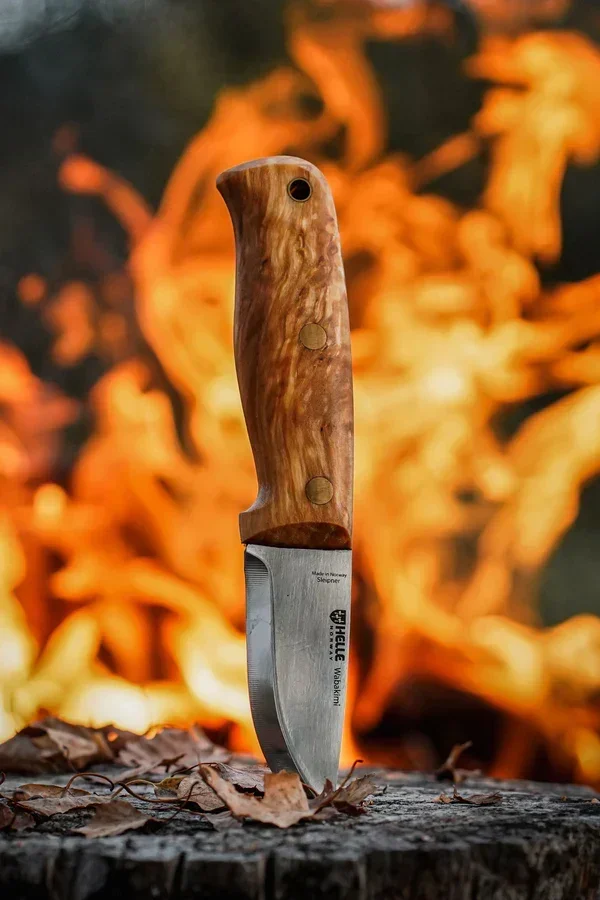
Shop thisHelle Wabakimi Sleipner
Best for: The serious bushcraft and survival enthusiast.- Pro: Premium Uddeholm Sleipner tool steel offers a fantastic balance of toughness and edge holding.
- Pro: Compact, versatile blade shape co-designed by survival expert Les Stroud.
- Con: Sleipner steel is tougher to sharpen in the field than simpler carbon steels.

3
Helle Wabakimi Sleipner
Best for the survivalist's choice
$209.00
Blade Material: Uddeholm Sleipner steelBlade Length: 80mm / 3.14 inchesBlade Thickness: 3.1mm / 0.122 inches
Shop thisRoselli Carpenter's Knife, UHC Steel
Best for: Users who prize edge retention above all else.- Pro: Roselli's UHC (Ultra High Carbon) steel holds a razor edge for an incredibly long time.
- Pro: The short, stout blade is perfect for powerful, controlled cuts and carving.
- Con: UHC steel is very high in carbon, making it brittle and prone to rust if not cared for properly.

Helle Mandra
Best for: Compact everyday carry or as a backup blade.- Pro: Small, lightweight design is perfect for wearing as a neck knife.
- Pro: Full-tang construction provides excellent strength for its size.
- Con: The handle is very short and may not be comfortable for users with large hands.

5
Helle Mandra
Best for a compact neck knife
$214.00
Blade Material: Triple Laminated Stainless SteelBlade Length: 2.7"Blade Width: 1.2"
Shop thisHelle Speider
Best for: A first high-quality Scandinavian knife or a budget-friendly camp tool.- Pro: Excellent value for a Norwegian-made knife with a quality sheath.
- Pro: Sandvik 12C27 is a reliable, easy-to-maintain stainless steel.
- Con: The prominent finger guard, while safe, can sometimes get in the way during fine carving tasks.

6
Helle Speider
Best for the best value Scandi
$79.00
Blade Material: Sandvik 12C27 Stainless SteelBlade Length: 90 mm / 3.54 inchesBlade Thickness: 2.6 mm / 0.102 inch
Shop thisRoselli Small Leuku Knife
Best for: Heavier camp chores and light chopping.- Pro: The Leuku design excels at chopping and heavier tasks a smaller knife can't handle.
- Pro: High-carbon steel blade is tough and easy to sharpen in the field.
- Con: At this size, it's more of a dedicated camp tool than an everyday carry knife.
Helle Steinbit
Best for: Fishermen and processing fish and game in the field.- Pro: Long, thin, flexible blade is purpose-built for filleting.
- Pro: 12C27 stainless steel provides excellent corrosion resistance for wet environments.
- Con: Its specialized design makes it less suitable for general-purpose utility tasks.
8
Helle Steinbit
Best for the ultimate fillet knife
$149.00
Blade Material: 12C27 Stainless SteelBlade Length: 153 mm / 6.02 inchesBlade Thickness: 1.6 mm / 0.063 inch
Shop thisHow to Choose a Hunting and EDC Knife
Navigating the world of knives can be complex. Here are the key factors to consider when making your choice.Blade Steel: The Heart of the Knife
Carbon Steel (like 80CrV2 or Roselli's UHC): These steels are known for their toughness and ease of sharpening. They can take a very fine, aggressive edge. The downside is their low chromium content, which means they will rust if not kept clean and dry. A patina (a dark gray oxidation) will form with use, which helps protect the steel.
| Watch | Price | Blade Material | Blade Length |
|---|---|---|---|
| Helle Sigmund | $194.00 | Triple Laminated Hell… | 107 mm |
| Peltonen M95 Ranger P… | $115.99 | — | — |
| Helle Wabakimi Sleipn… | $209.00 | Uddeholm Sleipner ste… | 80mm / 3.14 inches |
| Roselli RW210 Carpent… | $221.99 | — | — |
| Helle Mandra | $214.00 | Triple Laminated Stai… | 2.7" |
| Helle Speider | $79.00 | Sandvik 12C27 Stainle… | 90 mm / 3.54 inches |
| Roselli R151 The Smal… | $249.99 | — | — |
| Helle Steinbit | $149.00 | 12C27 Stainless Steel | 153 mm / 6.02 inches |
Stainless Steel (like Sandvik 12C27): With high chromium content, these steels are highly resistant to rust and corrosion, making them low-maintenance. They are generally a bit tougher to sharpen than carbon steels and may not hold an edge for quite as long as high-end carbon variants.
Laminated Steel (like Helle's Triple Laminated): This is a hybrid approach, offering a hard carbon steel cutting edge for performance, protected by softer, tougher stainless steel on the sides. It aims to give you the best of both worlds but often comes at a higher price.
Tool Steel (like Sleipner): These are high-alloy steels designed for industrial cutting tools. They offer extreme toughness and wear resistance but can be difficult to sharpen without specialized equipment.
Blade Shape & Grind
Most of the knives here feature a Scandinavian (or "Scandi") grind. This is a very wide, simple V-shaped grind that runs from the spine to the edge with no secondary bevel. It's incredibly strong, easy to sharpen (you just lay the whole bevel flat on the stone), and excels at woodworking and carving tasks. A drop point is a common blade shape where the spine curves down towards the tip, providing good control for fine work, making it a great all-around choice for hunting.
Handle Material
Wood (like Curly Birch or Oak): Traditional, beautiful, and offers a warm, comfortable grip. It can swell or shrink in extreme moisture if not properly cared for but provides excellent feel and control.
Synthetic (like TPE): Materials like the thermoplastic elastomer on the Peltonen offer superior grip in all weather conditions, especially wet and cold. They are impervious to water and require zero maintenance, but lack the classic look and feel of natural materials.
Frequently Asked Questions
What's the difference between a Puukko and a Leuku?
Both are traditional Finnish knives. The Puukko is a smaller, all-around utility and belt knife used for everything from carving to processing game. The Leuku is a much larger, heavier knife, almost like a short machete or camp knife, used for chopping wood, clearing brush, and butchering.
How do I care for a carbon steel blade?
The key is to keep it clean and dry. After use, especially with acidic foods or materials, wash and thoroughly dry the blade. Apply a thin coat of mineral oil or a dedicated knife oil to prevent rust. Over time, the steel will develop a gray patina, which is a stable oxide layer that helps protect it from red rust. Don't scrub this patina off.
What is a "Scandi grind" and why is it good for outdoor tasks?
A Scandi grind is a single, wide bevel that forms the entire cutting edge. This geometry makes the edge very strong and robust. It excels at woodworking and making feather sticks because the wide, flat bevels act as a guide on the wood. It is also one of the easiest grinds to sharpen, as you simply lay the entire bevel flat on your sharpening stone and work it until you form a burr.
Is a more expensive knife always better?
Not necessarily. Price is often dictated by the materials used (premium steels and handle materials), the country of origin, and the amount of hand-finishing involved. A $79 Helle Speider with 12C27 steel can perform 95% of the tasks a $500 custom knife can. The more expensive knife might use more exotic steel that holds an edge longer, but it will also be harder to sharpen. The best knife is the one that fits your budget, feels good in your hand, and uses a steel appropriate for your needs.
GALLERY


WRITTEN BY
Nick
I originally started VELOCE to put my skills to work, hone my app design and web development practices, and dive deeper into the world of horology. I wanted to learn more about the watches, the brands, and the incredible people behind them - the creators, the designers, and the collectors. I love discovering new timepieces and sharing their stories with the world. VELOCE is my ultimate passion project and hobby, the creative space I head to after my full-time job to build something I truly care about.
The Veloce Newsletter
New watches, every week
The community's best posts and fresh stories from the journal, straight to your inbox. No spam, unsubscribe anytime.