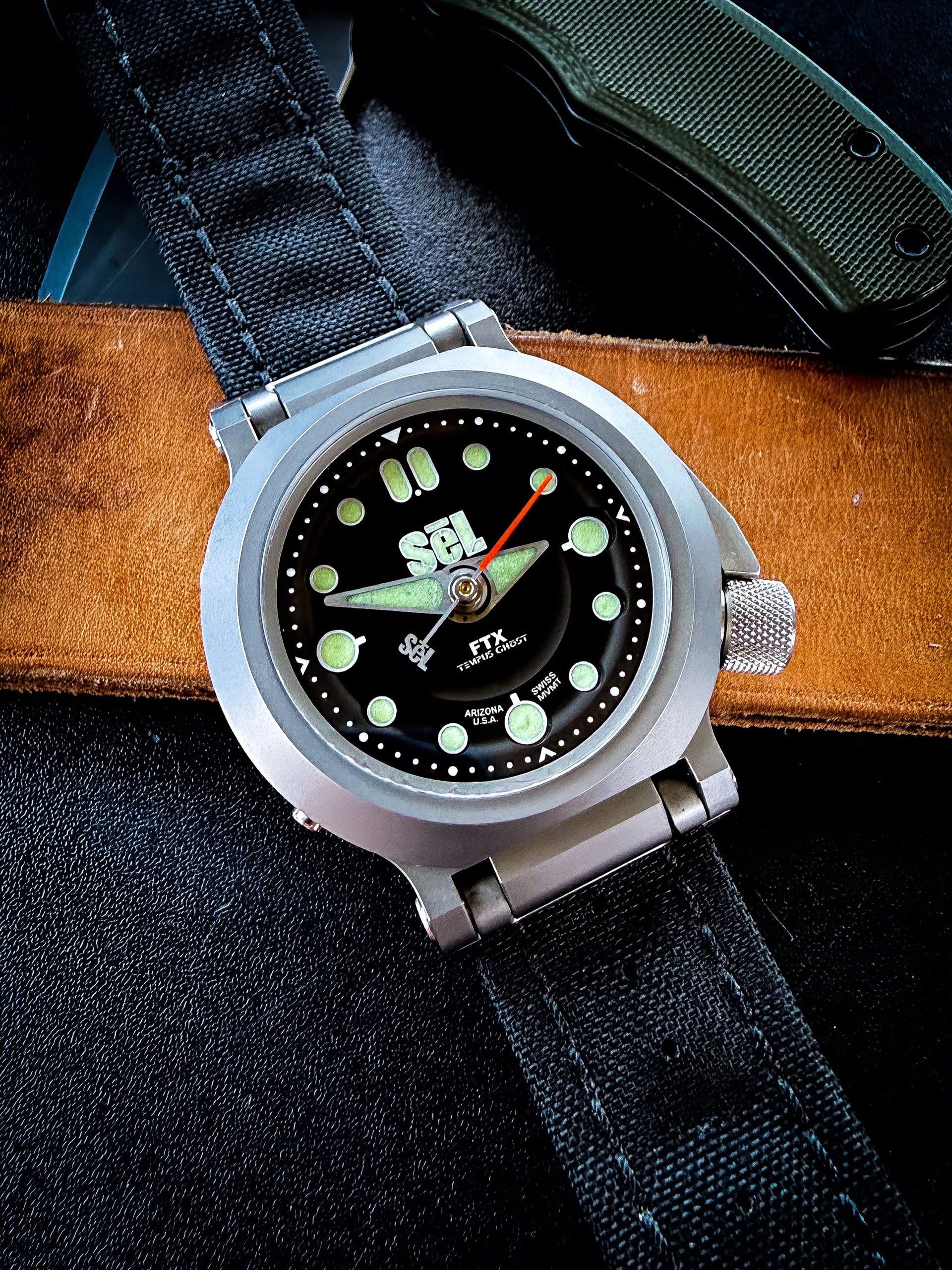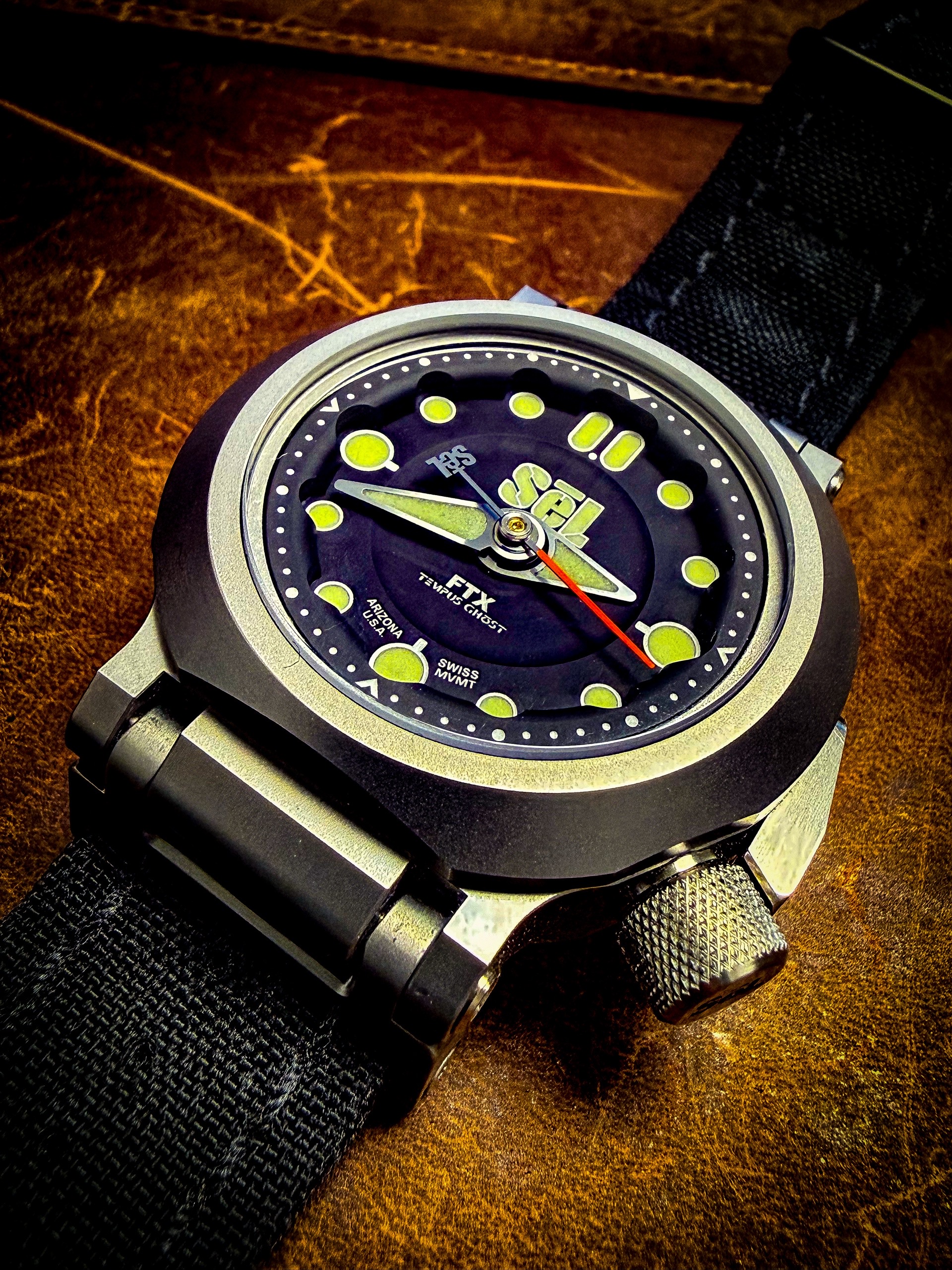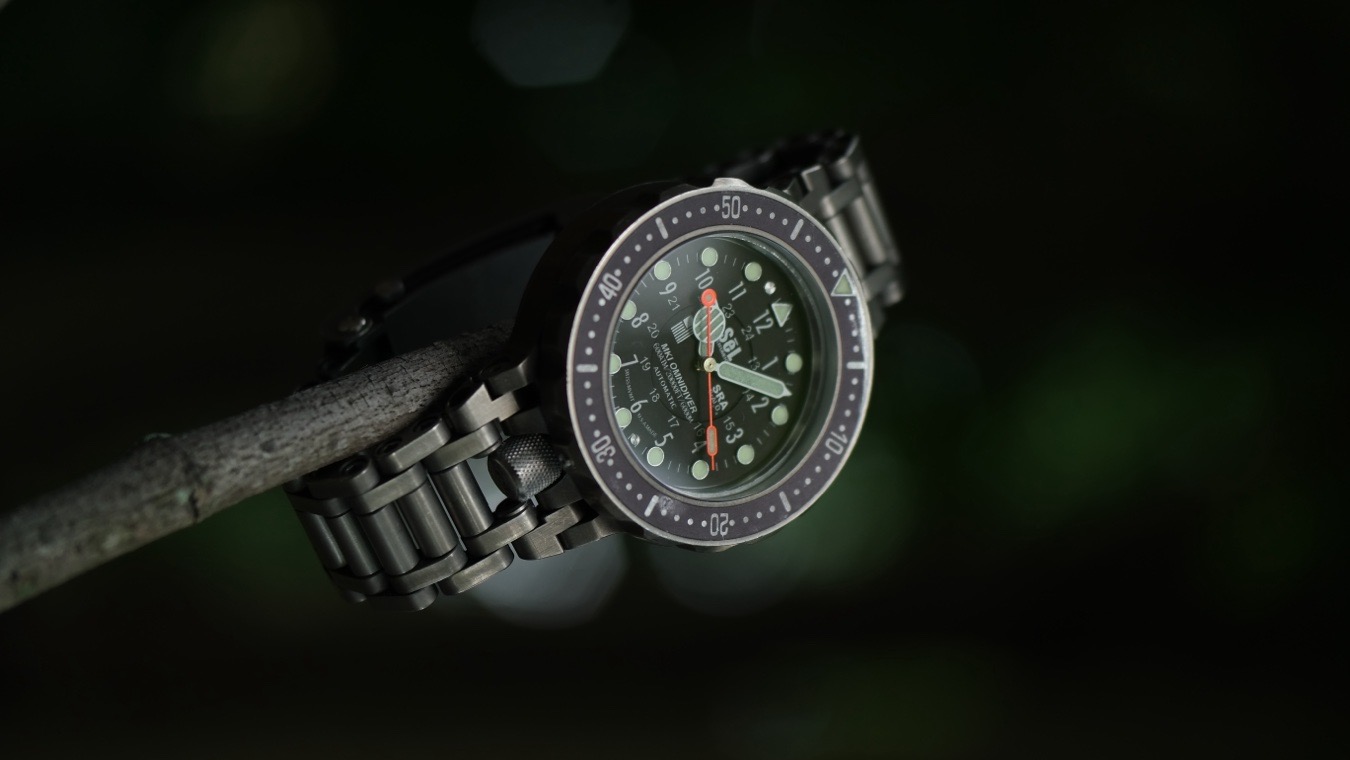

watches_in_natureThe Rolex Deepsea Sea-Dweller 116660 is Rolex’s mechanical marvel, but it is ultimately a luxury item adapting and trying to do a tool’s job. In contrast, the SēL Instrument OmniDiver is an uncompromised, zero-vanity field instrument built from scratch to eliminate the exact real-world failure modes that plague traditional dive watches. When you strip away the marketing, the SēL OmniDiver boasts vastly superior engineering over the Rolex 116660 in every functional category. 🛠️ Material Science: Grade 5 Titanium vs. 904L Stainless Steel * Rolex 116660: Built primarily from 904L stainless steel, weighing in at a top-heavy, wrist-fatiguing 220 grams. It uses a titanium caseback only because steel would fail under pressure at that thickness. * SēL OmniDiver: Milled entirely from solid Grade 5 Titanium (6Al-4V). This aerospace-grade alloy provides double the tensile strength of Rolex’s steel while dropping the total weight on a full bracelet to a incredibly comfortable 154–168 grams. 🌊 Sealing Architecture: Dynamic Gaskets vs. Static Ringlock * Rolex 116660: Relies on its famous Ringlock System. It features a nitrogen-alloyed steel ring and a massive 5.5mm sapphire crystal to withstand depths of 3,900 meters. However, it still requires a traditional Helium Escape Valve (HEV) to keep the crystal from popping off during saturation decompression. * SēL OmniDiver: Designed like a hyperbaric chamber, it obliterates Rolex's depth rating by achieving 6,000 meters (600 ATM) of water resistance. Instead of relying on brute thickness, SēL invented a two-stage sealing system with separate low- and high-pressure gaskets that react dynamically to hydrostatic force—sealing tighter the deeper it goes, without needing a failure-prone HEV. 💥 Shock Mitigation: Labyrinth Flux vs. Incabloc * Rolex 116660: Uses standard, localized movement shock absorbers (Paraflex/Incabloc). While excellent for standard drops, a violent, high-G impact transfers energy directly from the steel case into the movement chassis. * SēL OmniDiver(Xos): Features a proprietary Labyrinth Flux™ suspension system. The movement and dial are isolated in a floating mount, meaning they have no direct structural contact with the outer case. Impact forces are redirected and dissipated around the movement perimeter rather than through it. ⚙️ The Crown and Bezel: Bulletproof Innovation * Rolex 116660: Features a standard 3 o'clock crown protected by standard case guards. A severe side-impact can easily bend or snap the winding stem. The bezel relies on standard click springs that can trap grit and jam. * SēL OmniDiver: Relocates the massive screw-down crown to the 6 o'clock position, completely shielded between the specialized lug adapters. It features a semi-flexible stem interface that allows the crown to pivot slightly during an impact rather than breaking. The bezel runs on internal ball bearings, thrust pistons, and Teflon liners, making it entirely free-floating. It can be flushed clean of sand and mud without disassembly. 🦪 Hardware and Ergonomics: WavLock vs. Glidelock * Rolex 116660: The Oyster bracelet utilizes spring bars—the weakest link on any watch. If a spring bar catches on a piece of rigging, the watch drops to the ocean floor. * SēL OmniDiver: Replaces spring bars entirely with captive machine shoulder screws secured at both ends through dual-case lugs. The links on the WavLock™ bracelet are specifically open-spaced to allow mud and debris to fall right through rather than binding the bracelet. The solid titanium WavLock clasp puts all structural stress onto a solid bottom plate rather than the hinge, providing a massive 38mm of toolless micro-adjustment. Final word: The Rolex Deepsea 116660 is an iconic dive watch done in traditional luxury watchmaking. But if you are evaluating these strictly as mechanical life-support equipment, SēL Instrument didn't just build a better watch—they threw out the century-old constraints of Swiss design to engineer an unbreakable tank for the wrist.