Miyota JP21: The Unsung Hero of Accessible Watches | Veloce
The Journal
Miyota JP21: The Unsung Hero of Accessible Watches
By Nick·August 27, 2026· 5 min read
Often mistaken for a chronograph, the Miyota JP21 is a multi-function calendar movement offering a sporty look with unmatched quartz reliability. Explore why this accessible caliber is a quiet workhorse in the watch world.
There's a certain romance to a mechanical chronograph. The sweep of the seconds hand, the crisp snap of a pusher—it's watchmaking at its most interactive. But let's be honest, not every watch needs that complexity, or that price tag. Sometimes, you just want the balanced, sporty look of a multi-register dial powered by an engine that is utterly, relentlessly reliable.
12 ½'''Size
4.30mmThickness
3 YearsBattery Life
0Jewels
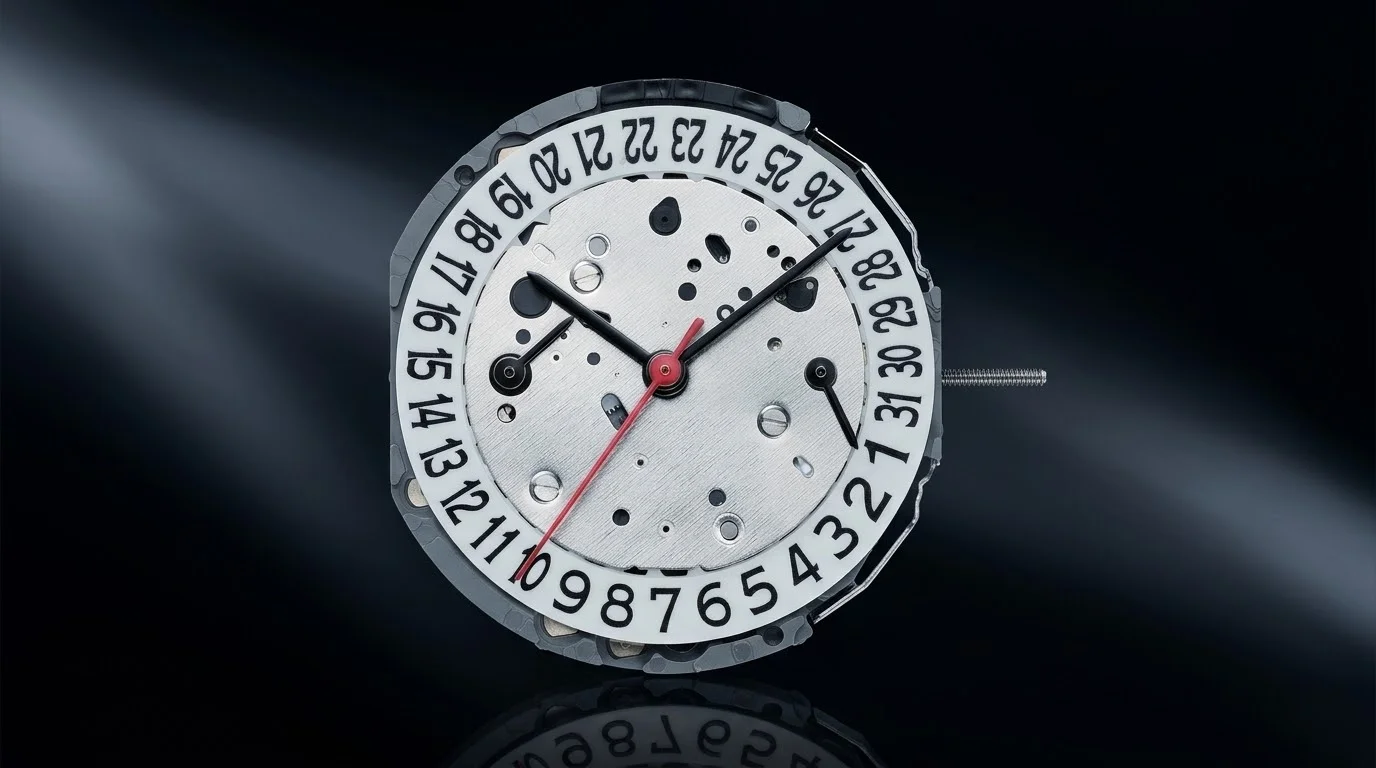
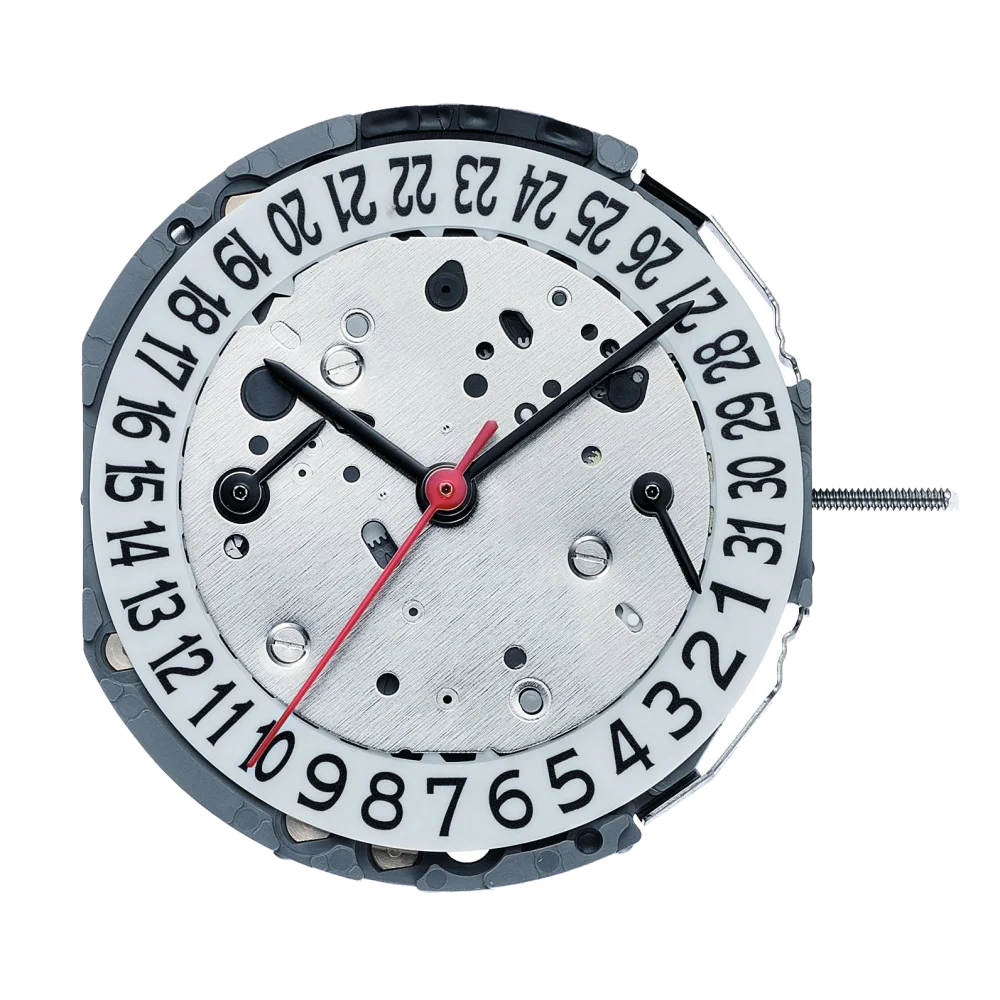
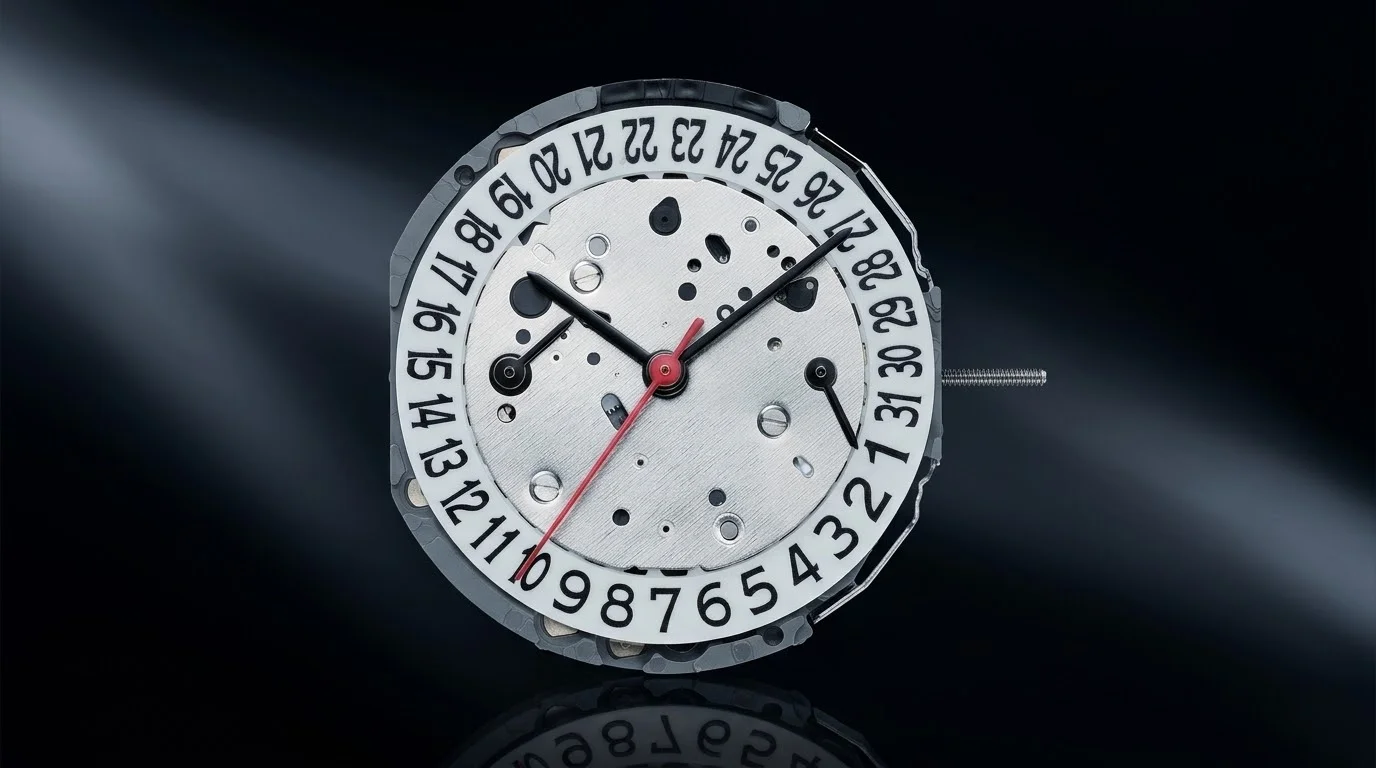
For decades, this is the role the Miyota JP21 has played. Built by the movement-making powerhouse under the Citizen Watch Group, the JP21 is one of the quiet workhorses of the watch world. It’s the engine that has powered countless microbrand and fashion watches, delivering a classic look with set-it-and-forget-it quartz accuracy.
It's a movement that deserves a closer look, not because it's exotic, but because it’s a pillar of accessible watch design. It represents a smart, practical approach to getting a specific aesthetic without breaking the bank.
Miyota JP21 Multi-Function: The People's Chrono-Look
At first glance, a watch with a Miyota JP21 inside looks like a classic bi-compax chronograph. You have two subdials, typically at 3 and 9 o'clock, giving it that sporty, symmetrical feel that collectors love. But here's the clever part: it isn't a chronograph at all.
The JP21 is a multi-function calendar movement. It uses the familiar subdial layout to display useful, everyday information, not for timing events. This is a brilliant move, offering brands the visual punch of a sports watch with the cost-effectiveness and reliability of a simple quartz caliber.
Decoding the Dial
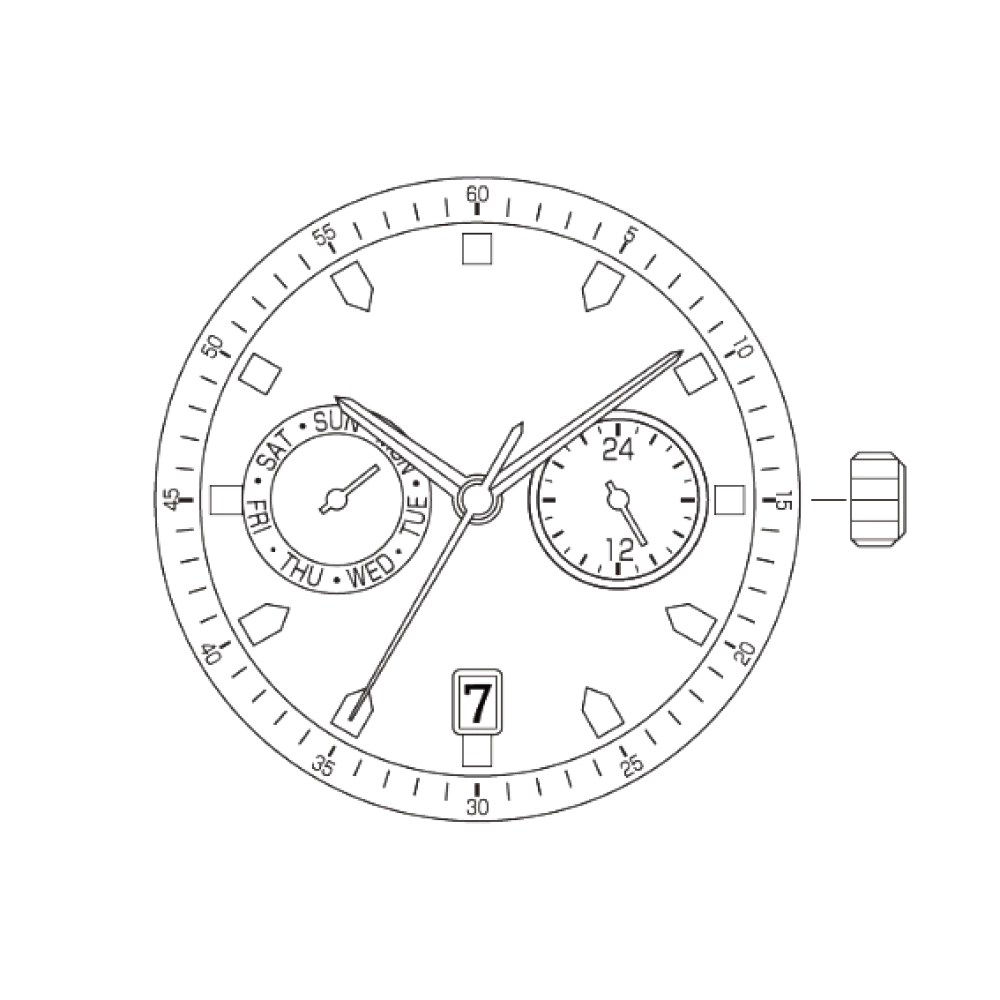
So what are those subdials actually doing? The layout is intuitive and genuinely practical.
The central handset handles the standard hours, minutes, and a sweeping seconds hand.
At the 9 o’clock position, you get a day-of-the-week indicator. At 3 o’clock, there's a 24-hour hand, which is slaved to the main timekeeping hands. It acts as a simple AM/PM indicator, which is incredibly useful when setting the date to avoid having it change at noon.
Speaking of the date, that’s handled by a clean, legible window at the 6 o'clock position. This combination of functions—time, day, date, and 24-hour time—covers all the essential information you’d want from a daily-wear watch.
A Note on Its Status
Here’s a detail that might surprise you. If you go to Miyota’s official catalog, the JP21 is listed as a discontinued product. Yet, you can still find it widely available from parts suppliers and even in newly released watches from smaller brands.
Even though it's officially discontinued, the Miyota JP21's massive production run means it remains one of the most accessible and widely-used multi-function movements on the market, a true unsung hero for any discerning dialhead.
This isn't uncommon for movements that were produced in massive quantities for years. The supply chain is still full of them, a testament to just how popular and foundational this caliber was. It’s a reliable, known quantity, so brands continue to build around it.
The Technical Side
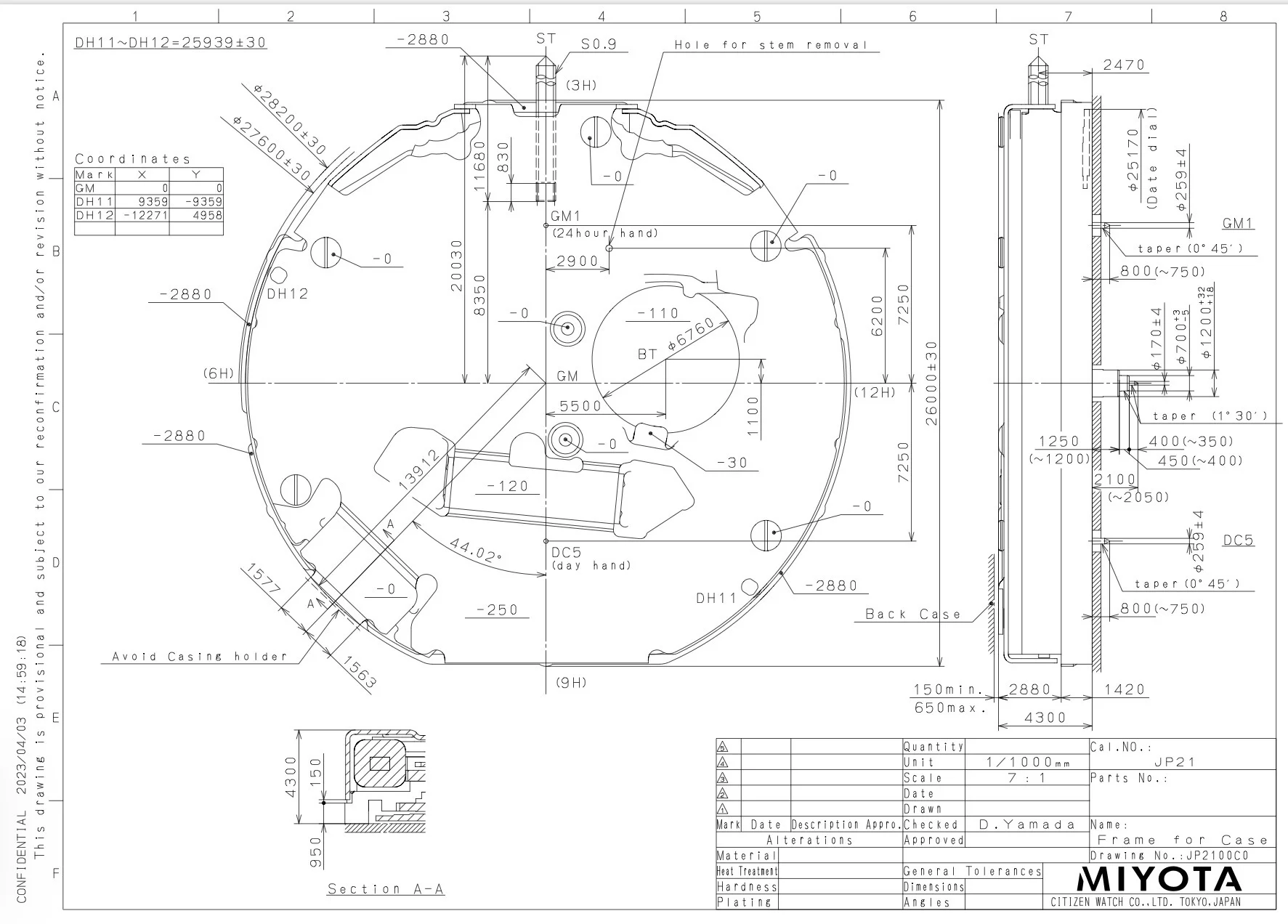
Under the hood, the JP21 is exactly what you'd expect from Miyota: efficient, industrial, and built to last. It measures 12 ½ Ligne (roughly 28mm), a versatile size that fits into a huge range of case designs, from classic 38mm field watches to larger 42mm sports models.
At just 4.30mm thick, it allows for a reasonably slim watch profile. This is a huge advantage for designers who want to create a comfortable, wearable piece without the bulk that often comes with mechanical chronographs.
It runs on a standard SR621SW battery, which provides a solid three years of life. This is the definition of a low-maintenance movement. You pop in a battery, and you're good to go for years without a thought.
You'll also notice it has zero jewels. In a quartz movement, where the gear train is under far less stress than in a mechanical watch, jewels aren't necessary for longevity. It’s a prime example of fit-for-purpose engineering. Miyota isn’t adding cost for something that provides no functional benefit.
This practical philosophy is what makes Miyota so dominant. While enthusiasts often celebrate mechanical calibers like The Miyota 9039: The Unsung Hero of No-Date Watches for its slim, high-beat performance, it's quartz engines like the JP21 that truly democratize watch design.
Editor's Take
The Miyota JP21 is pure pragmatism. It delivers a sought-after aesthetic with bombproof reliability and a low cost, enabling hundreds of brands to create cool, affordable watches. It's not high horology, but it's a critical component of the watch ecosystem we all enjoy.
Final Thoughts
The Miyota JP21 will never be the star of the show. It’s not a movement that people buy a watch *for*. But it’s a movement that has allowed countless people to buy a watch they love the look of, with the confidence that it will just work.
It’s an enabler of design. It proves that a great watch doesn’t need to be expensive or mechanically complex to be satisfying. For its honesty, its reliability, and its massive contribution to the world of affordable watches, the JP21 is a true unsung hero.
I originally started VELOCE to put my skills to work, hone my app design and web development practices, and dive deeper into the world of horology. I wanted to learn more about the watches, the brands, and the incredible people behind them - the creators, the designers, and the collectors. I love discovering new timepieces and sharing their stories with the world. VELOCE is my ultimate passion project and hobby, the creative space I head to after my full-time job to build something I truly care about.
 By Nick·August 27, 2026· 5 min read