The Journal By Nick·July 1, 2026· 6 min read
The Jump-Hour: Horology’s Most Satisfying Complication
By Nick·July 1, 2026· 6 min readUnlike most watches, a jump-hour puts on a show: a quiet tension for 59 minutes, then a sudden, satisfying snap as the new hour instantly clicks into place. Discover the mechanical theater of this unique complication.
0 views
IN THIS ARTICLE
At the top of the hour, most watches do nothing special. The hour hand just creeps a little further along its path. A jump-hour watch, however, puts on a show.
There's a quiet tension for 59 minutes, then a sudden, satisfying snap. The old hour disappears, and the new one clicks instantly into place. It’s a small piece of mechanical theater for your wrist.
This is the jump-hour complication. It ditches the traditional hour hand for a numbered disc viewed through an aperture. It’s a fundamentally different way to display time, and it changes everything about a watch's design.
A Different Kind of Engine
The core challenge of a jump-hour is energy management. A standard watch uses a consistent, tiny amount of energy to move its hands. A jump-hour movement has to be more clever.
It spends an entire hour accumulating and storing energy, usually in a spring or lever system. Then, precisely when the minute hand hits 60, it releases all that stored power in a single burst. This action is what drives the hour disc forward one position.
This makes the mechanism more demanding to engineer than a standard display. It requires precision timing and a robust power source to avoid affecting the watch’s overall timekeeping accuracy.
The movement has to build and store energy for 59 minutes, just to release it all in a single, instantaneous snap. It’s a simple display with a surprisingly demanding engine behind it.
An Art Deco Legacy
The jump-hour first gained traction in the early 20th century. It was a perfect match for the bold, geometric sensibilities of the Art Deco period. Designers loved it.
Ditching the hour hand allowed for cleaner, more symmetrical, and architectural dials. It felt modern and unconventional, a departure from centuries of watchmaking tradition. Today, that legacy continues, often appearing in watches with a strong design focus.
For collectors, these pieces are more than just time-tellers. They are kinetic sculptures, watches with a lively personality that perform every 60 minutes. The complication forces a unique dial layout, leading to some truly memorable designs.
Example 1: The Christopher Ward C1 Jump Hour Mk V
Christopher Ward offers one of the best modern interpretations of the complication. The C1 Jump Hour Mk V is a masterclass in making this niche mechanism feel refined and contemporary. It proves you don't need a five-figure budget to get a fantastic jump-hour.
The watch is built around the Calibre JJ01, the brand’s first in-house module. Developed by former Master Watchmaker Johannes Jahnke, it was designed to solve a common frustration with older jump-hours. His mechanism ensures the hour flips precisely at the top of the hour, not a second before or after.
This is achieved by distributing the power draw over the full hour. It creates a crisp, perfectly synchronized jump every single time. It’s a small detail, but for a watch like this, perfect execution is everything.
A Dial with Serious Depth
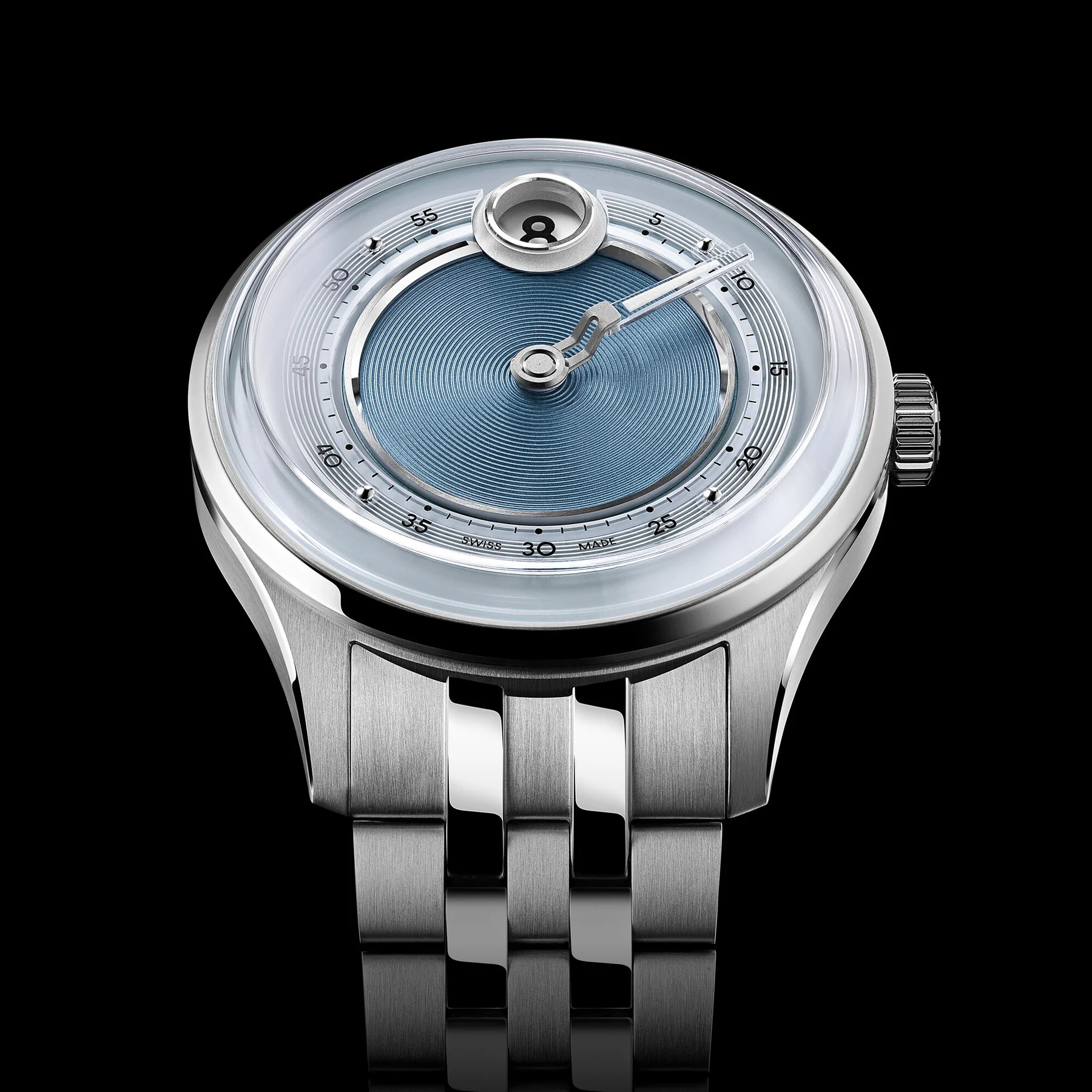
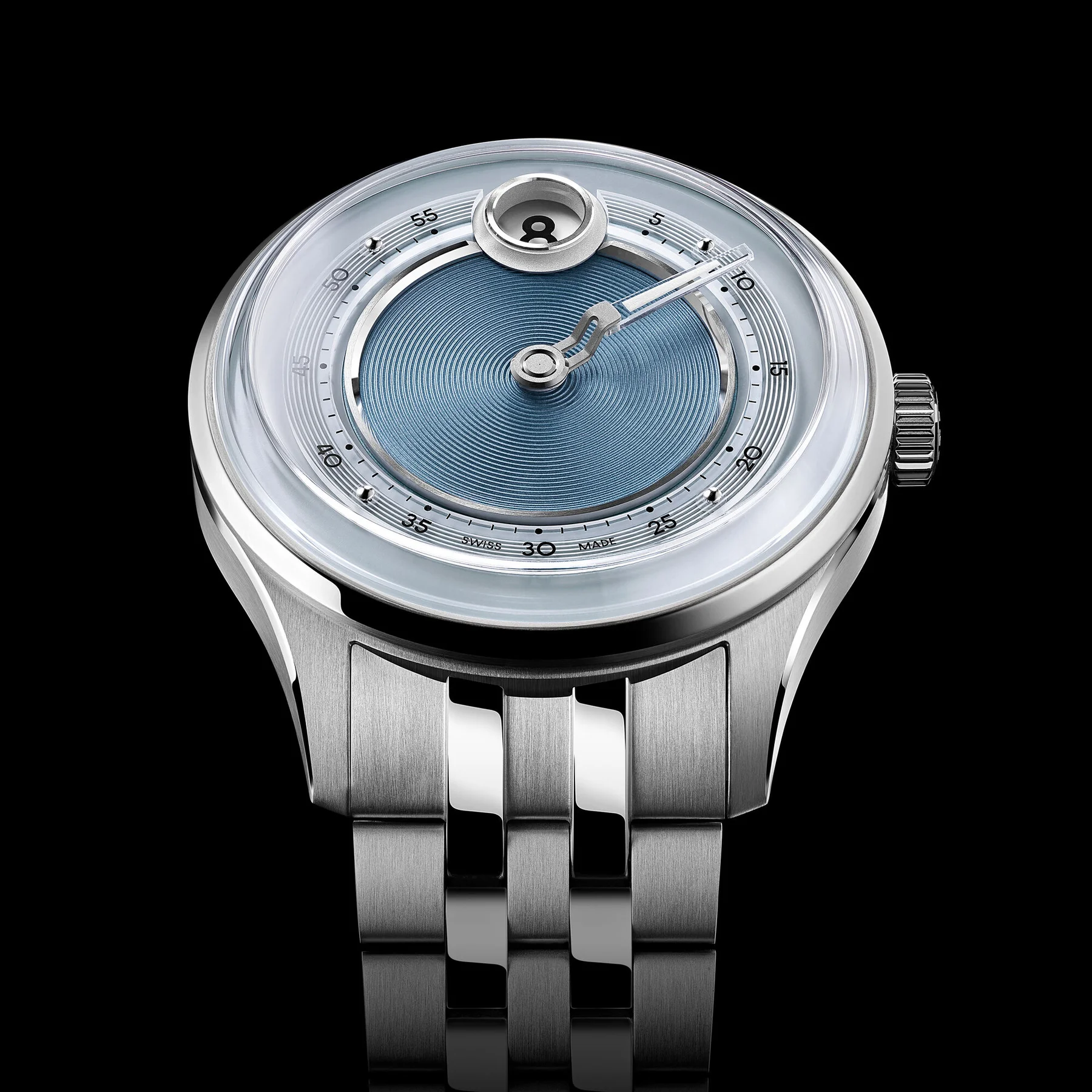
What really sets the C1 apart is its incredibly complex dial. It’s a four-tier construction that creates a sense of real visual depth. You don’t just look at this dial; you look into it.
At the center is a stamped piece with 27 concentric circles. Above that rises a circular-brushed metal ring, which is then surrounded by a sapphire ring printed with the minute markers. The hand itself is also made of sapphire, a first for the brand.
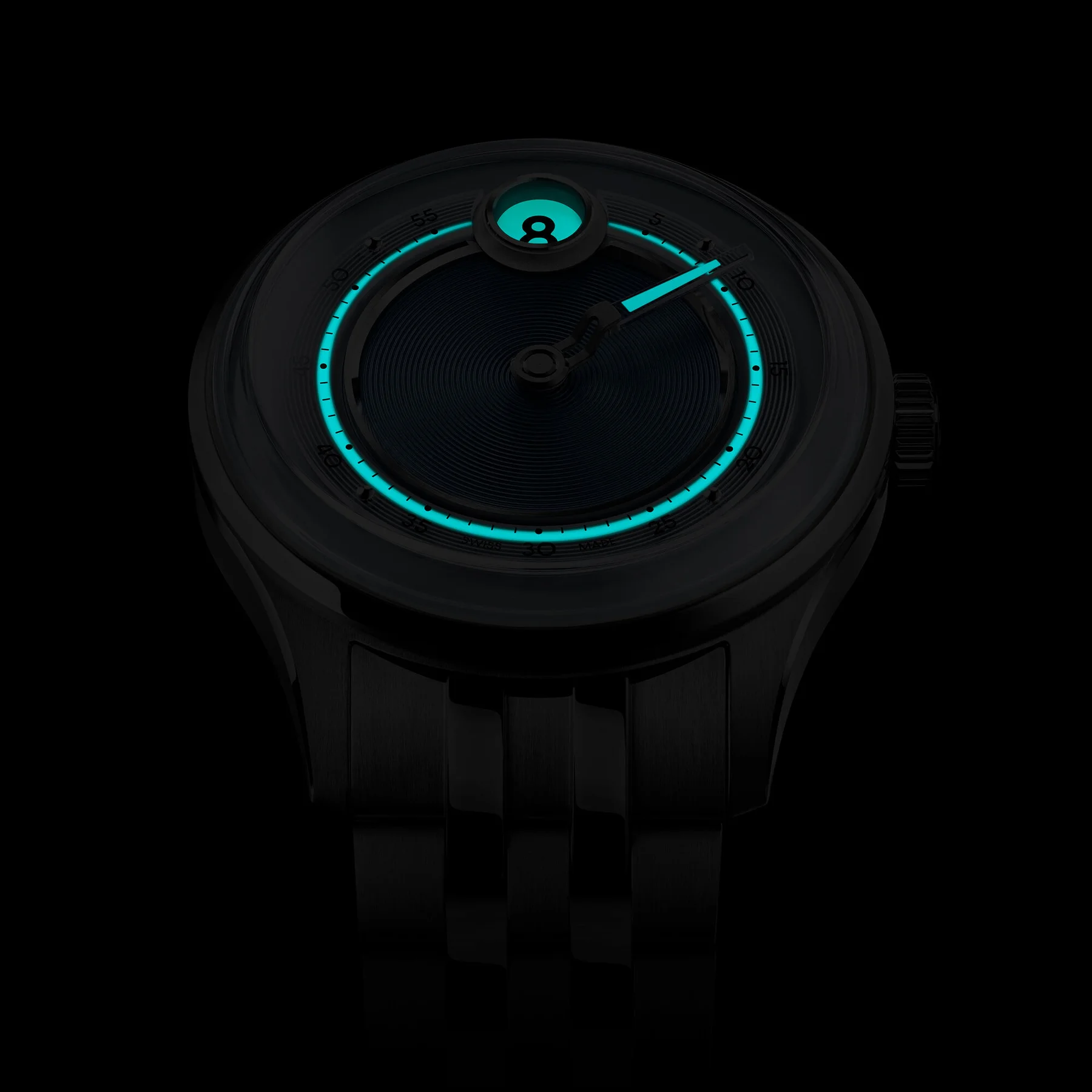
The hour aperture at 12 o’clock is the main event. It’s a two-part construction, beautifully finished, with a Globolight ceramic block behind it displaying custom, retro-futuristic numerals. The whole thing glows a cool blue in the dark.
| Case | 39mm Light-catcher™, stainless steel |
| Movement | Calibre JJ01 (module), automatic |
| Dial | Four-tier construction with sapphire elements |
| Lume | Super-LumiNova® and Globolight® |
| Bracelet | Consort™ bracelet with quick-release |
| Price | $3,295 USD |
The 39mm Light-catcher™ case is a smart choice, with a mix of brushed and polished surfaces that play with the light. It's wearable, elegant, and lets the dial do all the talking. This watch is for someone who appreciates both clever engineering and sharp design.
Example 2: Project Butters by Red 5 Watchworks
If the C1 is the refined establishment take, Project Butters is the passionate indie response. Coming from Red 5 Watchworks, this is a jump-hour built from the ground up to solve the complication's biggest problems: legibility and wearability.
The creator’s goal was simple: to design the jump-hour they always wanted to own. The result is a watch designed for people, not safes. It’s a direct answer to the many jump-hours that are either fascinating but unreadable or legible but boring.
The dimensions tell the whole story. A 41mm case with a 48.2mm lug-to-lug is modern but sensible. The real magic is the 6.7mm mid-case height, which ensures the watch sits low and comfortably on the wrist.
Clarity Above All Else
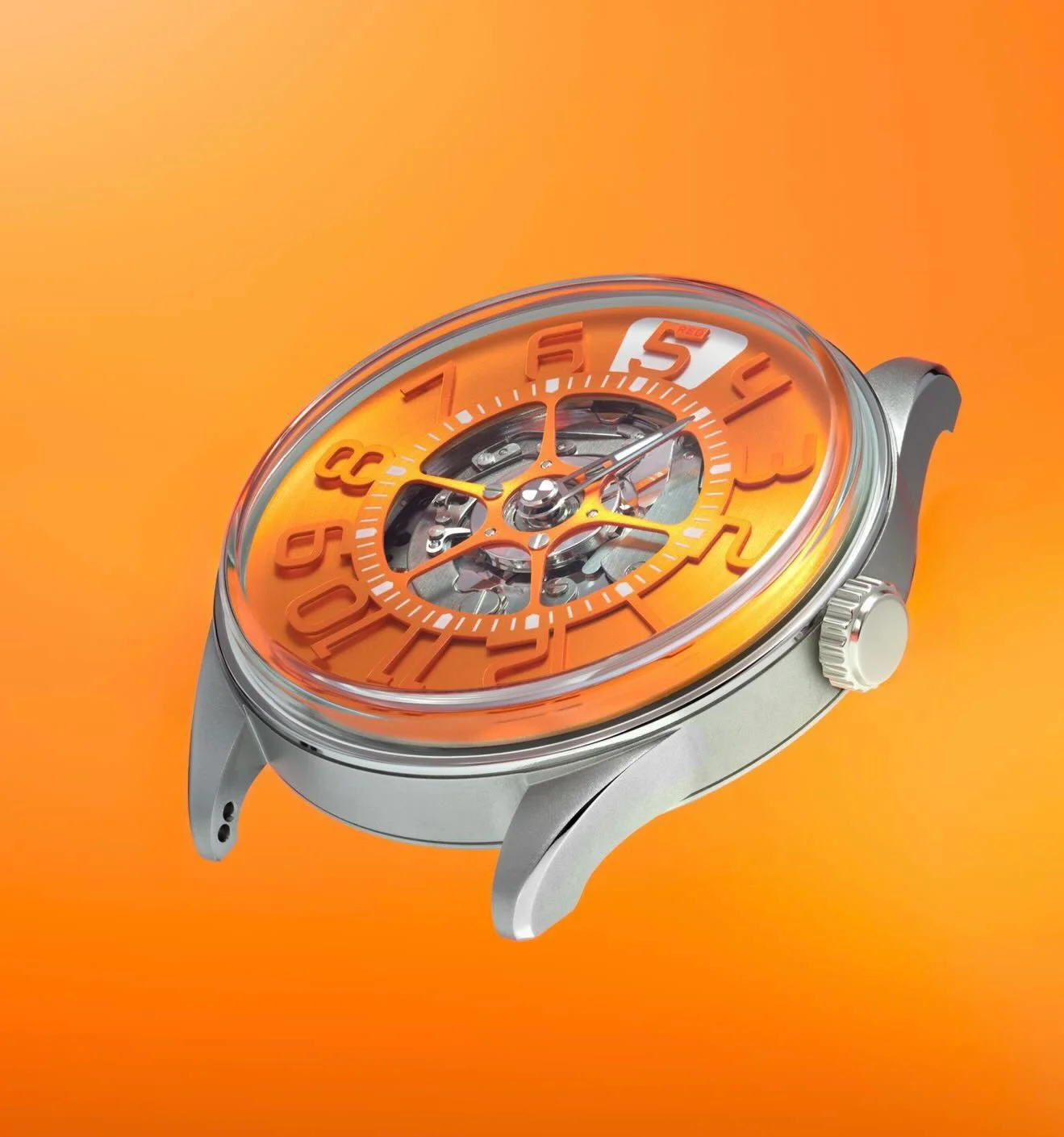
Project Butters attacks the legibility issue head-on. Instead of a tiny, hidden number, the hour numerals are a massive 4.85mm tall. This is a watch that wants you to know the time at a quick glance.
All the visual drama is pushed vertically. A towering 4.8mm tall crystal provides clearance for the "tall dial" architecture underneath. This gives the whole display room to breathe, avoiding the cramped feeling that plagues so many other complicated watches.
You can see the enthusiast mindset in the details. The 20mm lugs feature two sets of drilled holes—one for straight-end straps and another positioned for a flush fit with curved-end straps. It's a small touch that strap-swappers will absolutely love.
Built for a Keeper
Instead of an exhibition caseback, Red 5 chose solid steel. The reason is brilliant. It's left as a blank canvas, designed specifically for personalized engravings.
This reinforces the idea that Project Butters is meant to be a permanent part of a collection. It's a personal object, not just a product. It's a bold choice that prioritizes the owner's connection to the watch over showing off the movement.
While final details like the exact caliber and price are still under wraps, the project's clear vision is already building a serious following. This is grassroots watchmaking done right.
Editor's Take
Jump-hours are not for everyone, and that's the point. They trade effortless reading for mechanical drama. If you find joy in the 'click' and appreciate design that solves a problem, watches like the refined C1 and the purpose-built Project Butters prove this complication is more relevant than ever.
A Complication with Character
In a world of homogenous, three-hand watches, the jump-hour stands apart. It’s a complication that offers a genuine alternative, both mechanically and aesthetically. It reminds you that there's a tiny, intricate machine on your wrist.
Whether it’s the high-design execution of a brand like Christopher Ward or the user-focused philosophy of an indie like Red 5, the goal is the same. It's about creating a moment of mechanical delight.
And every sixty minutes, right on the dot, it delivers. Click.
GALLERY
WRITTEN BY
Nick
I originally started VELOCE to put my skills to work, hone my app design and web development practices, and dive deeper into the world of horology. I wanted to learn more about the watches, the brands, and the incredible people behind them - the creators, the designers, and the collectors. I love discovering new timepieces and sharing their stories with the world. VELOCE is my ultimate passion project and hobby, the creative space I head to after my full-time job to build something I truly care about.
The Veloce Newsletter
New watches, every week
The community's best posts and fresh stories from the journal, straight to your inbox. No spam, unsubscribe anytime.